
Der geteilte Rand
Tsuneshige · Tsuba · Shibuichi · NBTHK Hozon ·
Mittlere Edo-Zeit
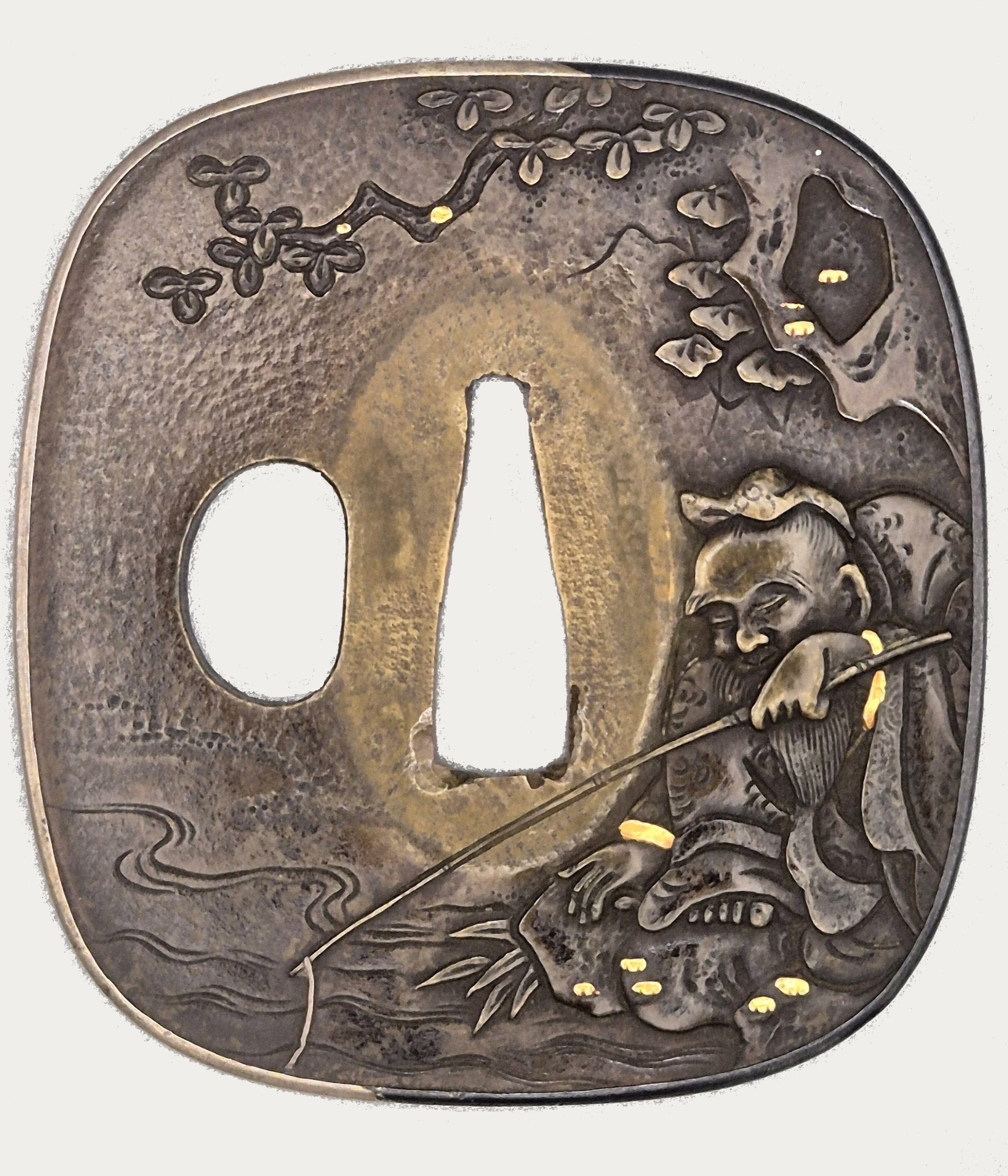
Scholar by Tsuneshige
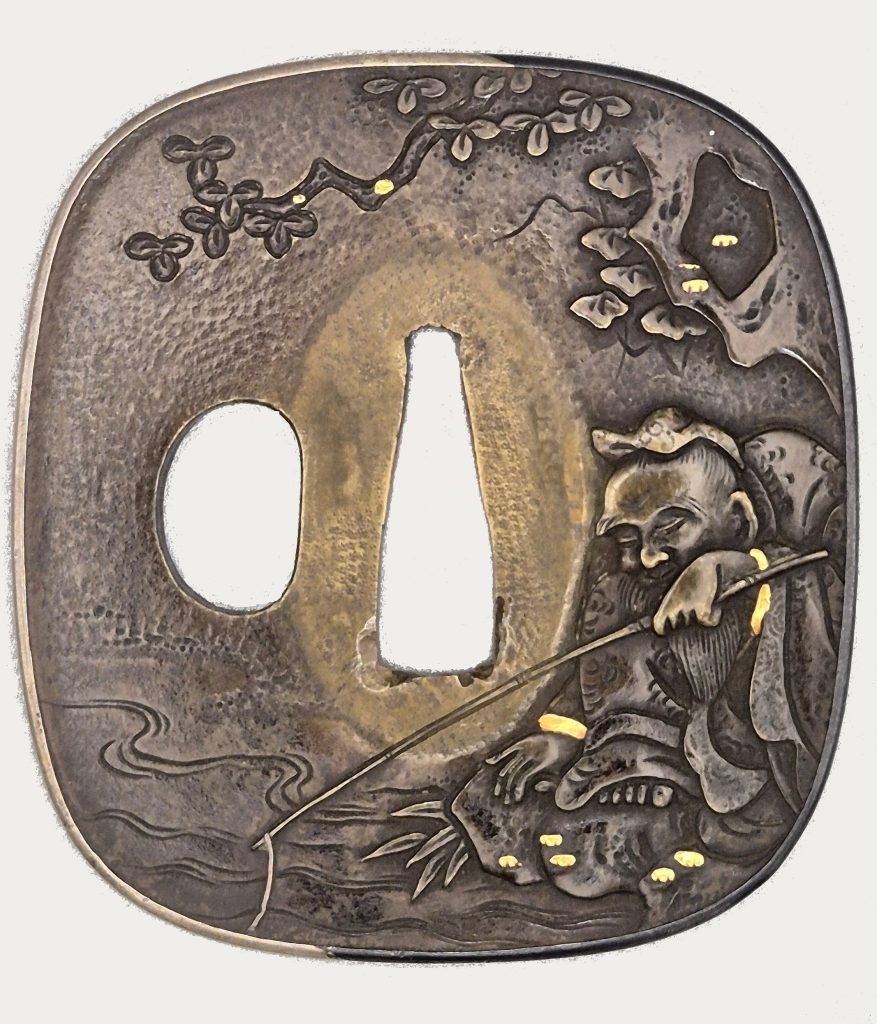
The figure is seated. A stream passes nearby. He holds a fishing pole with no particular urgency. The landscape around him is rocks and foliage, rendered in soft relief on a ground the color of old pewter. There is nothing dramatic here, and that is entirely the intention. What stops you is the rim.
Das Objekt
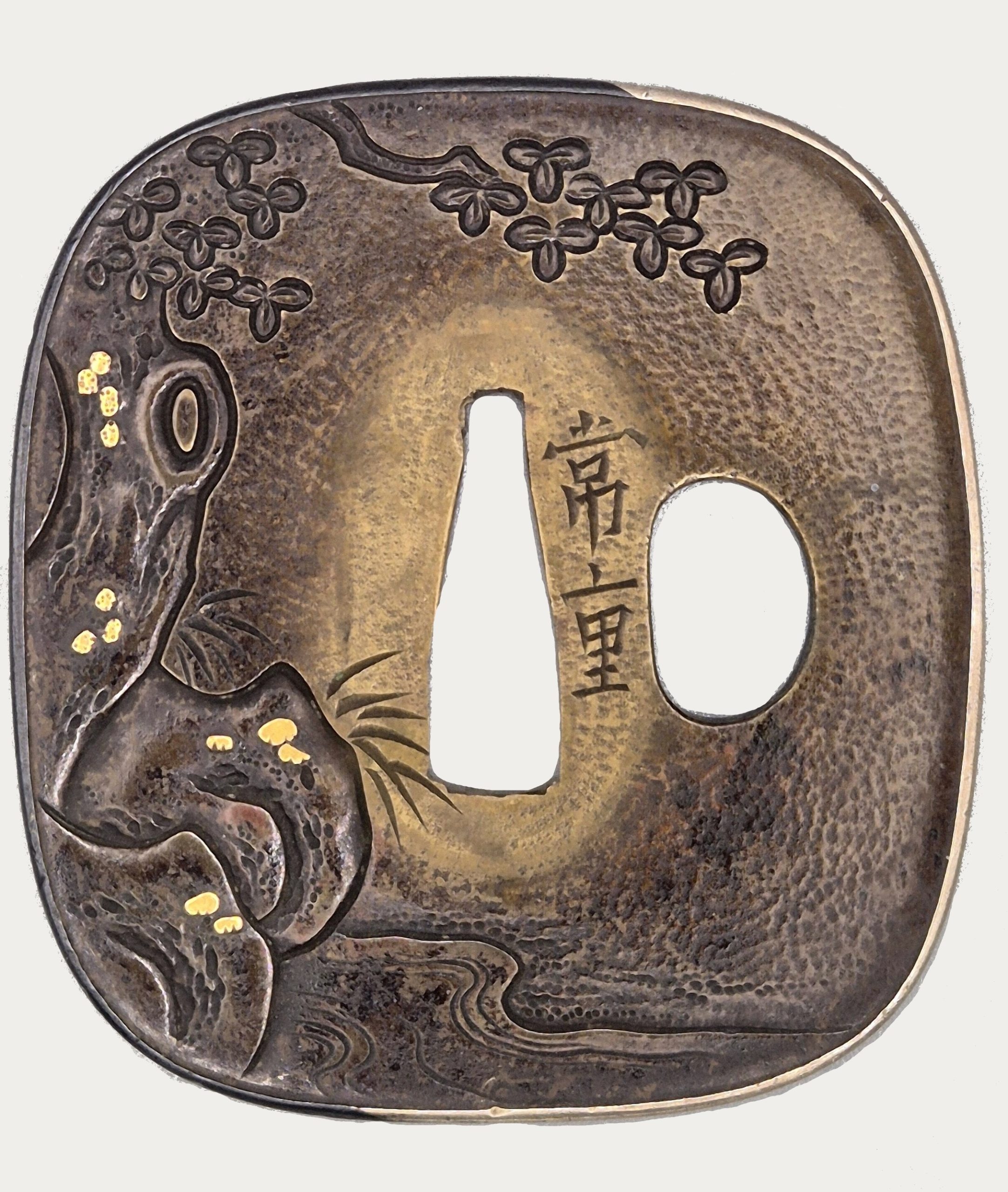
The mimi, the outer rim of a tsuba, is usually a single material. Here, Tsuneshige has divided it: half shakudo and half gin, silver. The line between them is exact. The join is invisible. Two metals that behave differently under every condition have been made to meet without compromise. This technique, sometimes called wari-mimi, is rare enough that encountering it becomes a question: why? The scene itself offers no obvious answer. A recluse by a stream does not call for a divided rim. The technical ambition exists on its own terms, as a statement made to those who know what they are looking at.
Die Szene
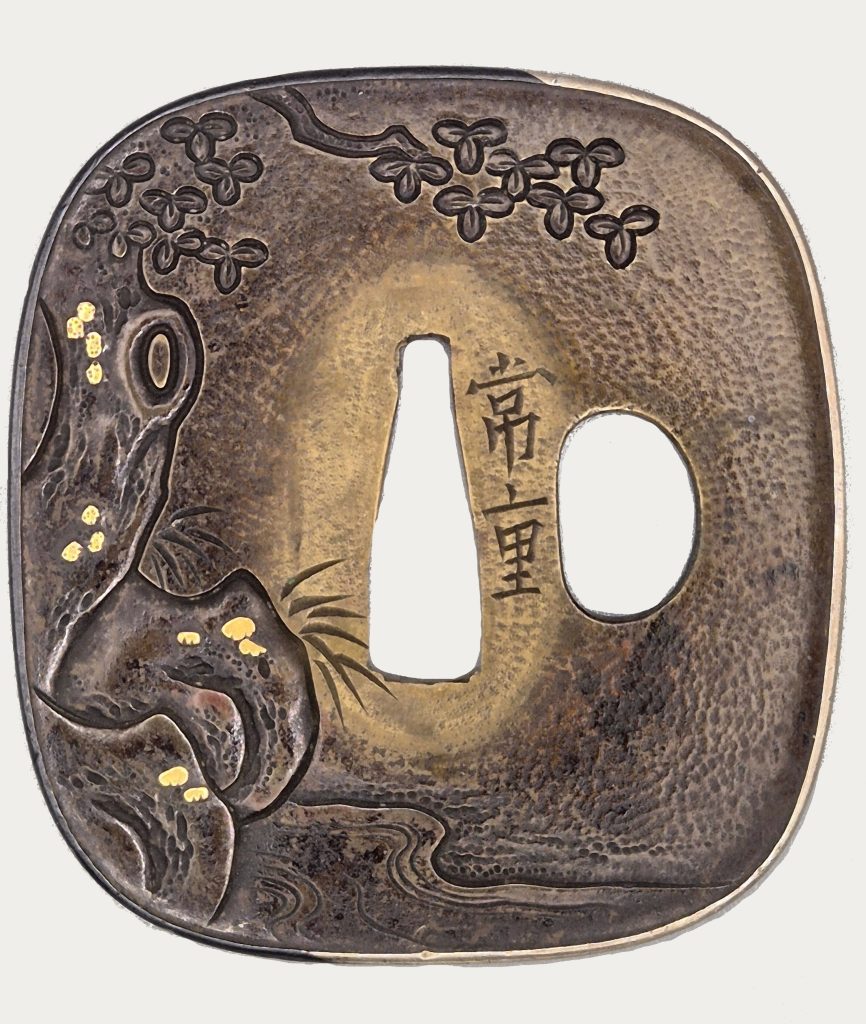
The recluse by water is one of the oldest themes in East Asian art. The scholar who retreats from the world, who exchanges power for stillness and ambition for patience, held a particular resonance for the samurai class. Not as an escape from their role, but as its counterweight. To carry such an image was to acknowledge that martial life was not the whole of a person. That the fishing pole was also a kind of discipline. Tsuneshige’s signature 常重 is clear on this piece. NBTHK Hozon confirmed.
Tsuneshige’s Scholar Tsuba
Tsuba. Tsuneshige. Shibuichi mit kin-zogan, wari-mimi in shakudo und gin. Edo-Zeit. Signiert. NBTHK Hozon. Privatsammlung, erworben in Europa.