
Die Sieben Weise im Bambushain
Omi Mogarashi Soten · Tsuba · Shakudo · NTHK Shoshin · Hikone-bori · Mittlere Edo-Zeit (1700–1780)
Soten Tsuba with 7 Sages
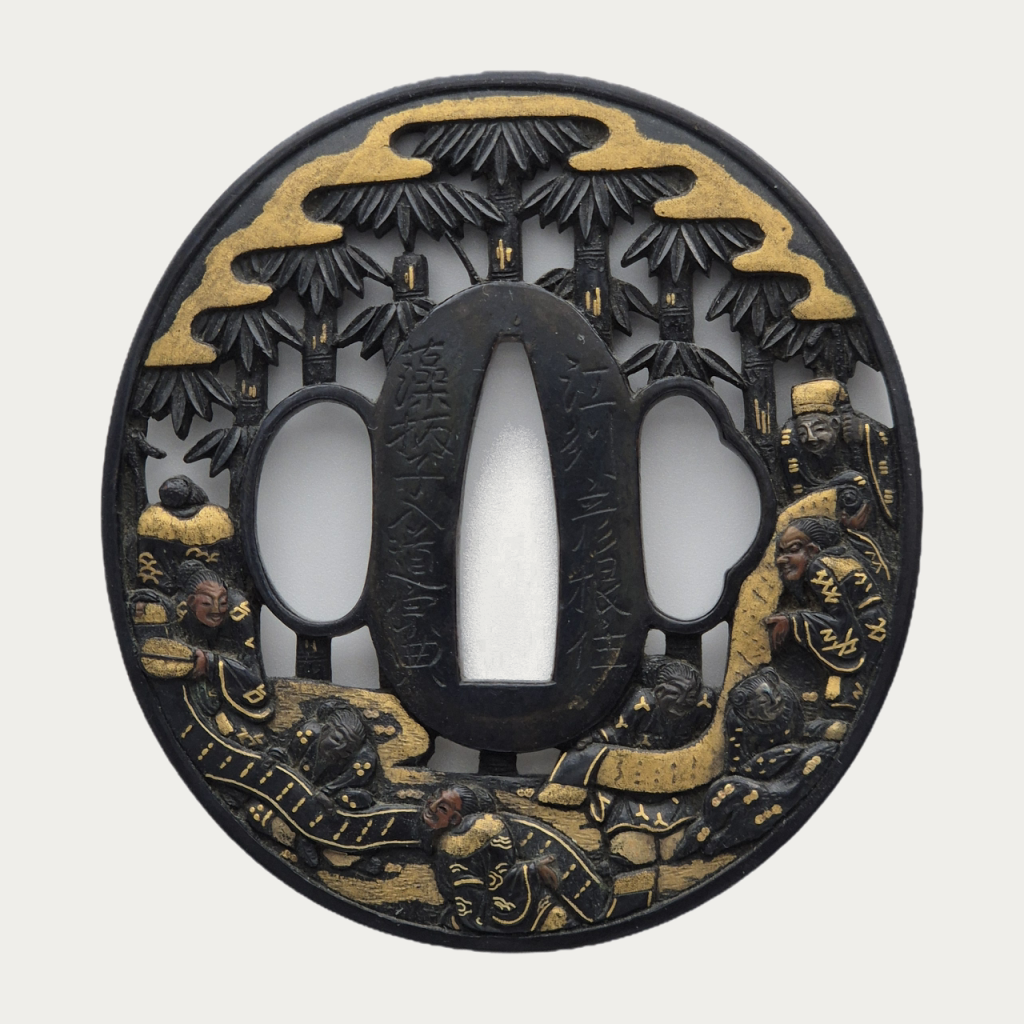
They have retreated from the world. Seven scholars of the Western Jin dynasty, living through a period of political collapse so complete that withdrawal was the only honest response — not cowardice but diagnosis. The world had become impossible to serve without compromising what made service worthwhile. The bamboo grove was the answer: a place of music, of wine, of conversation between people who had decided that truth mattered more than position. Mogarashi Soten chose them as his subject, and then placed them inside the bamboo itself.
Die Sieben Weisen
The Seven Sages of the Bamboo Grove is based on the legend of seven literati who secluded themselves outside the capital in China during the turbulent years of the early Western Jin dynasty (265–317). In Japan, the motif was known as early as the ninth century and widely represented in Japanese art from the sixteenth century to the Edo period. For a warrior in a period of long peace, the Chikurin Shichiken offered something worth thinking about.
Das Objekt und die Technik
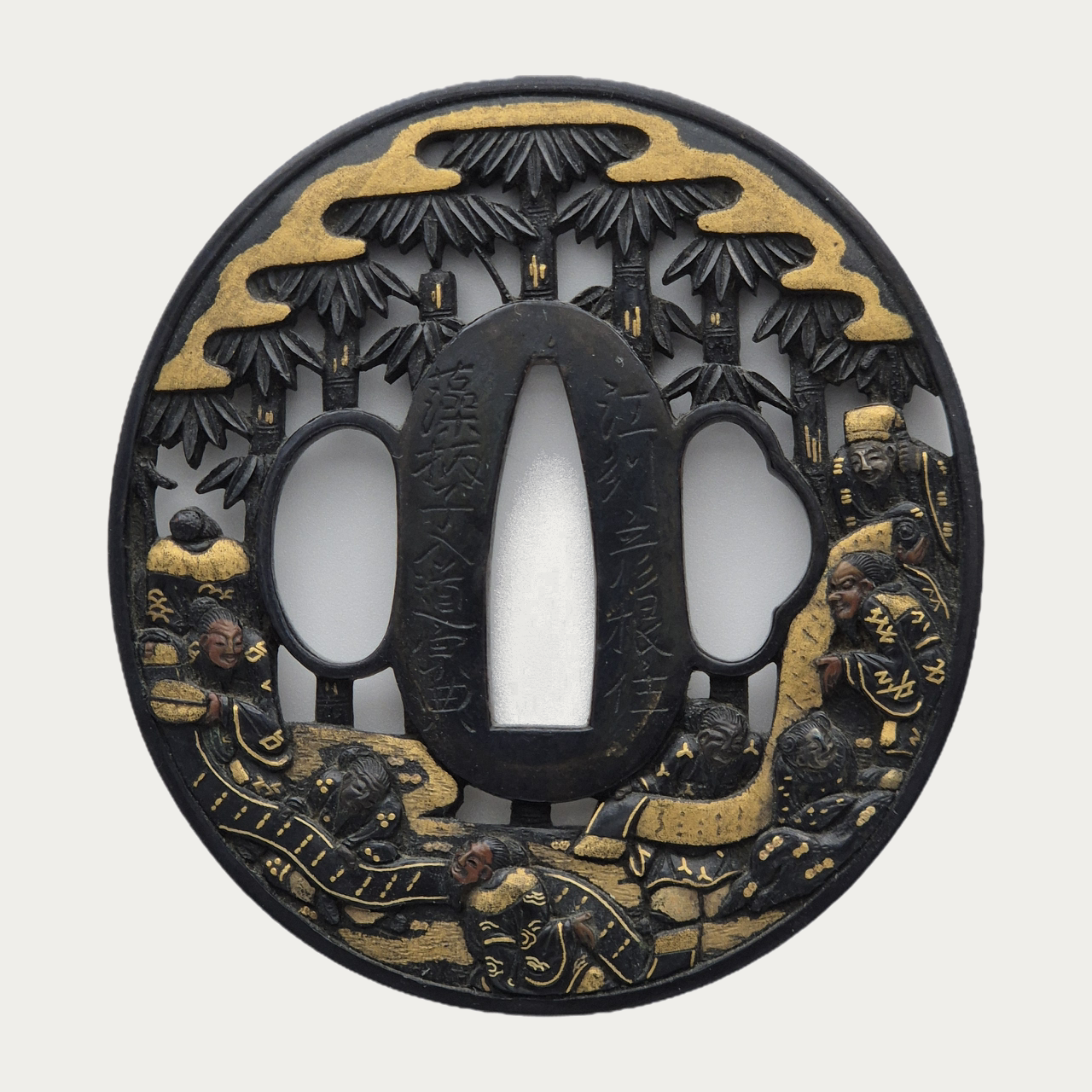
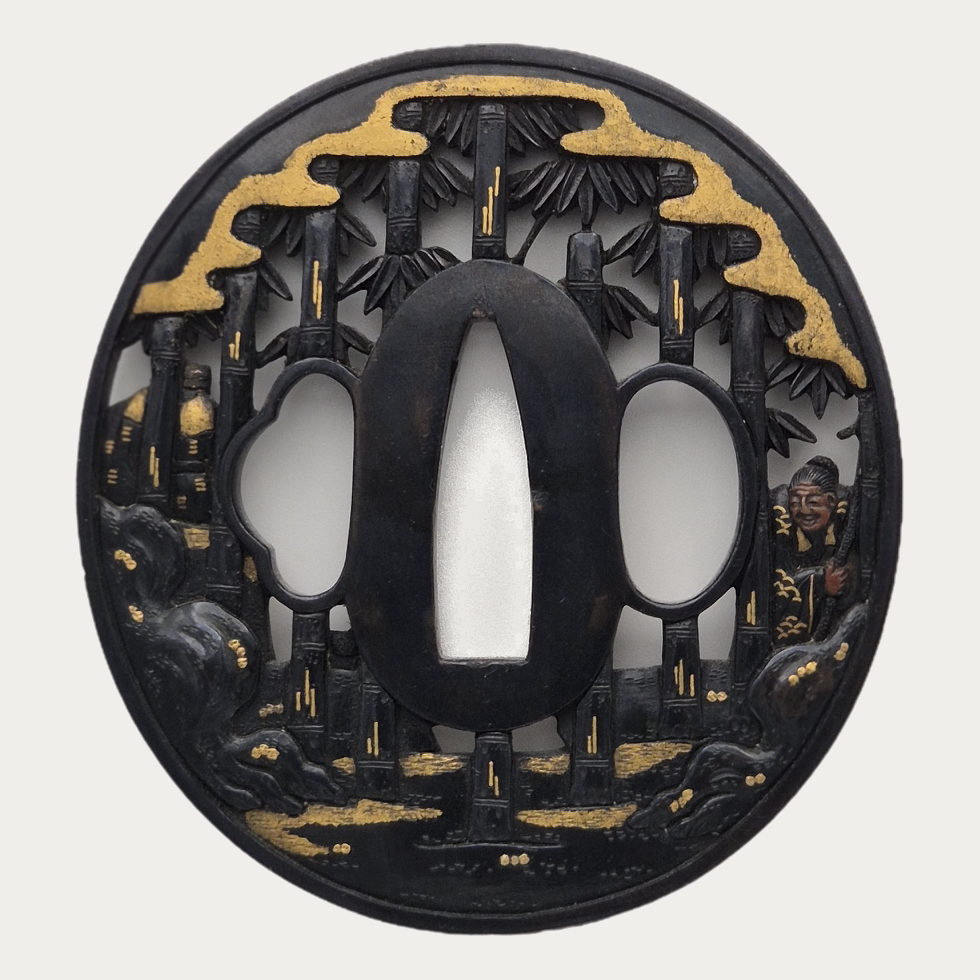
The ground material is shakudo, migaki-ji — polished to the deep, purplish-black that a high gold content produces. The technique is nikubori-sukashi — three-dimensional openwork. The bamboo grove is not depicted on the plate but carved through it: the stalks individually cut and shaped, the leaves rendered in separate relief, the negative space as deliberate as the remaining metal. Gold highlights accent the bamboo joints and leaves throughout. Above, gold clouds in nunome float through the upper register. The figures are colored in gold, silver, copper, and shakudo — each metal chosen for what it can suggest about the figure it describes.
Mogarashi Soten und Hikone-bori
The school was founded by Shuten, and the first mei was Kitagawa Uji Soten. He was born in Kyoto, later lived in Goshu, Omi province, Hikone, and was the originator of the style referred to as Hikone-bori. He is of the go Soheishi, Mogarashi. While Hikone-bori is a style of tsuba, the name Mogarashi refers to mainline school students or Kitagawa family members. The NBTHK does not give Soten school attributions, they refer to this type as Hikone or Hikone-bori. The NTHK-NPO’s 2023 shoshin designation with the attribution Omi Mogarashi Soten is therefore a precise and specific statement: work of the main Mogarashi lineage, from Hikone in Omi province, dating to the middle Edo period between 1700 and 1780.
7 Sages Soten Tsuba
Tsuba. Omi Mogarashi Soten. Shakudo migaki-ji, nikubori-sukashi, iroe zogan in kin, gin und do. Nagamarugata. Chikurin nana-kenjin no zu. Mittlere Edo-Zeit (1700–1780). Signiert: 表右江州彦根住 / 左藻柄子入道宗典. NTHK-NPO Shoshin Nr. 12250, 2023. In Japan erworben. Privatsammlung.