Der erste Mann ueber dem Fluss
Hamano Naoyuki · Tsuba · Shakudo · Spaete Edo-Zeit · NTHK Hozon
Hamano Naoyuki Tsuba
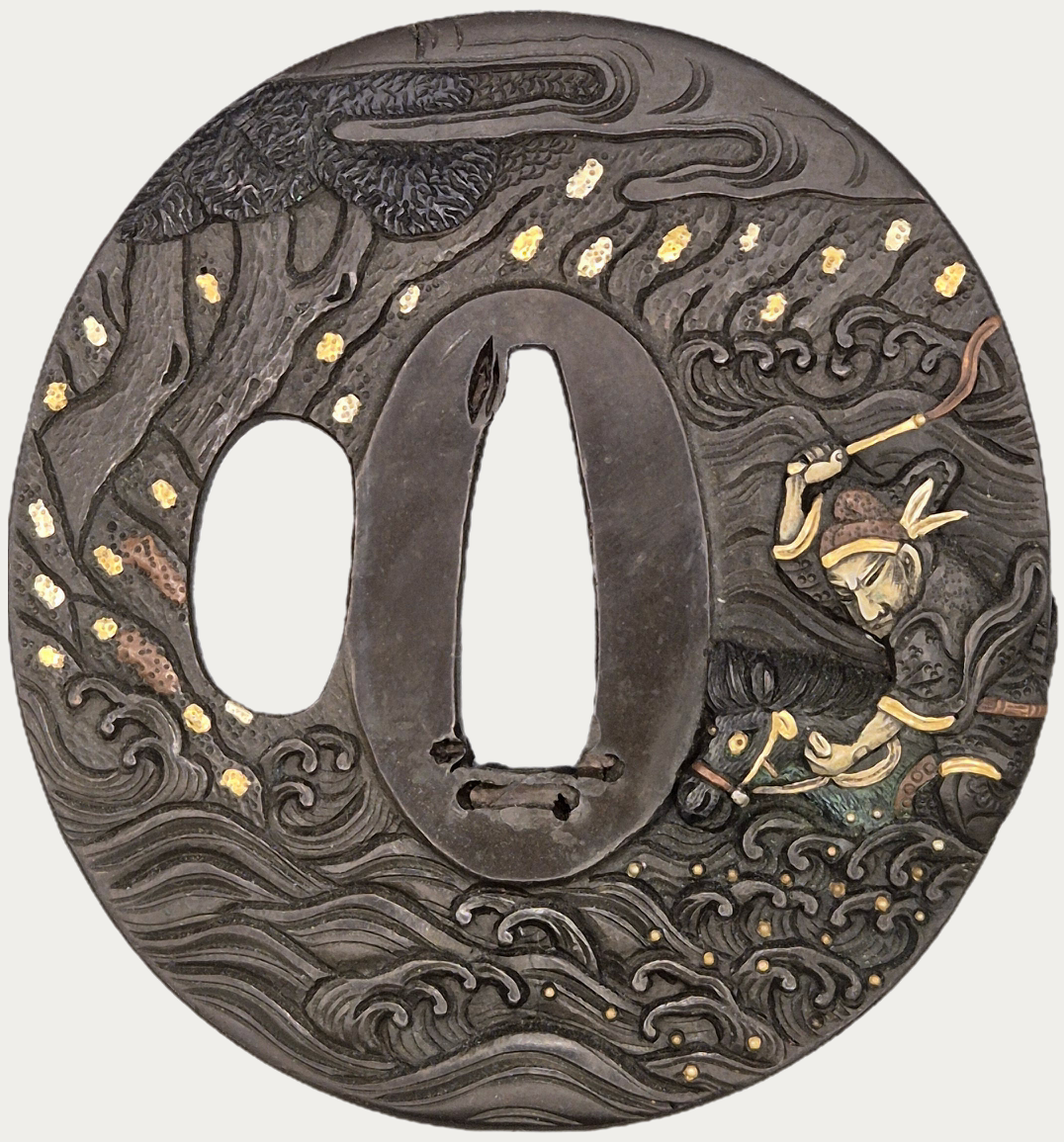
A horse at full gallop through chest-deep water. The whip raised. The far bank still distant. The rider does not look back. This is not a battle scene in any broad sense. It is a single decision, captured at the moment of its making.
Die Geschichte
The Genpei War of 1180 to 1185 produced stories that Japanese culture would return to for centuries. At the crossing of the Uji River, two Minamoto warriors raced each other to be the first to reach the enemy shore. The warrior Sasaki Takatsuna drew ahead through a ruse: he called to his rival that the girth of his saddle was loose. While the other warrior checked his straps, Takatsuna plunged his horse into the current and reached the far bank first. It was a small deception in service of enormous ambition, and it was celebrated as a mark of martial intelligence rather than dishonesty. The tsuba preserves the forward moment, before the trick, before the arrival: only the water and the decision.
Das Objekt
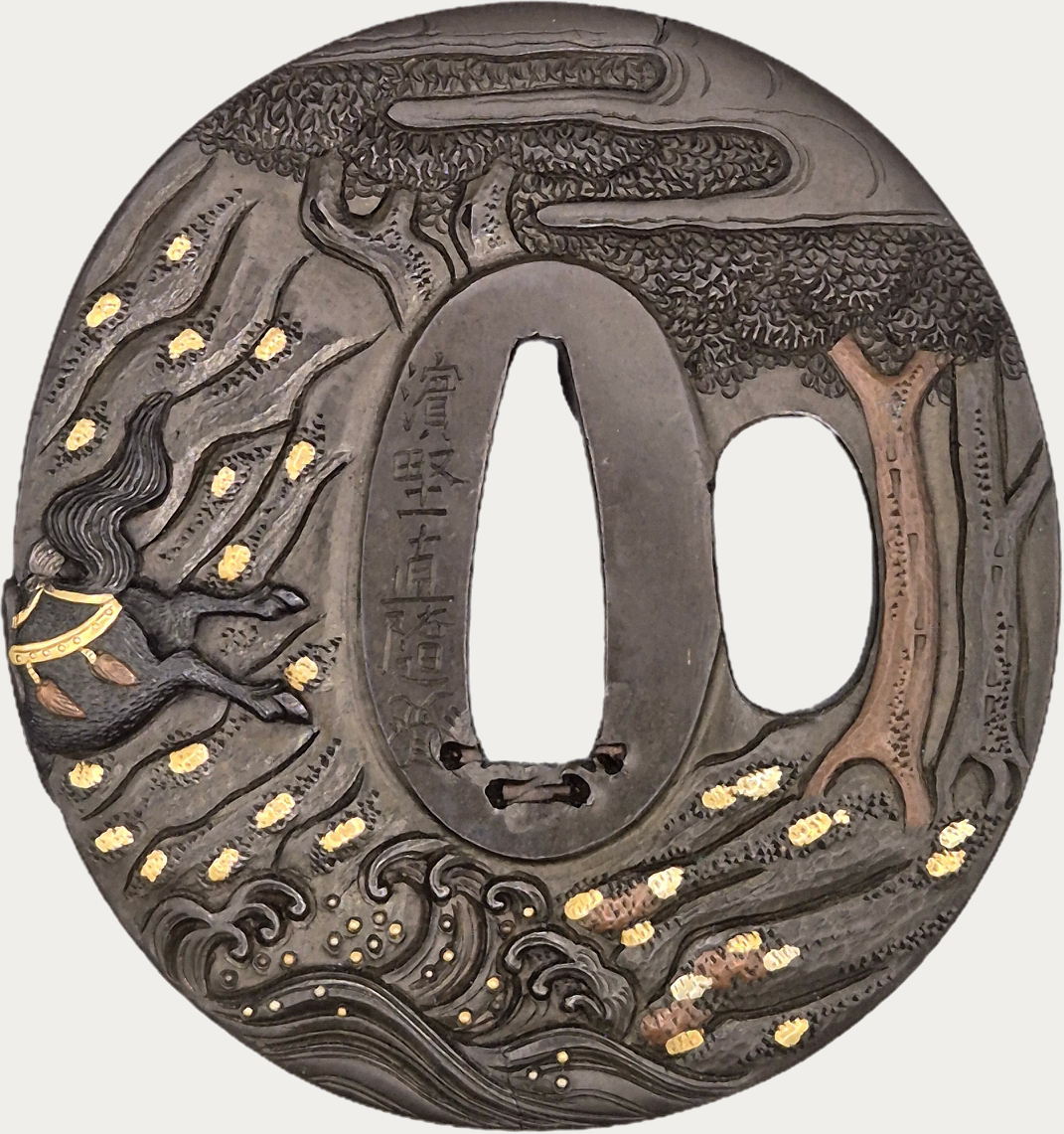
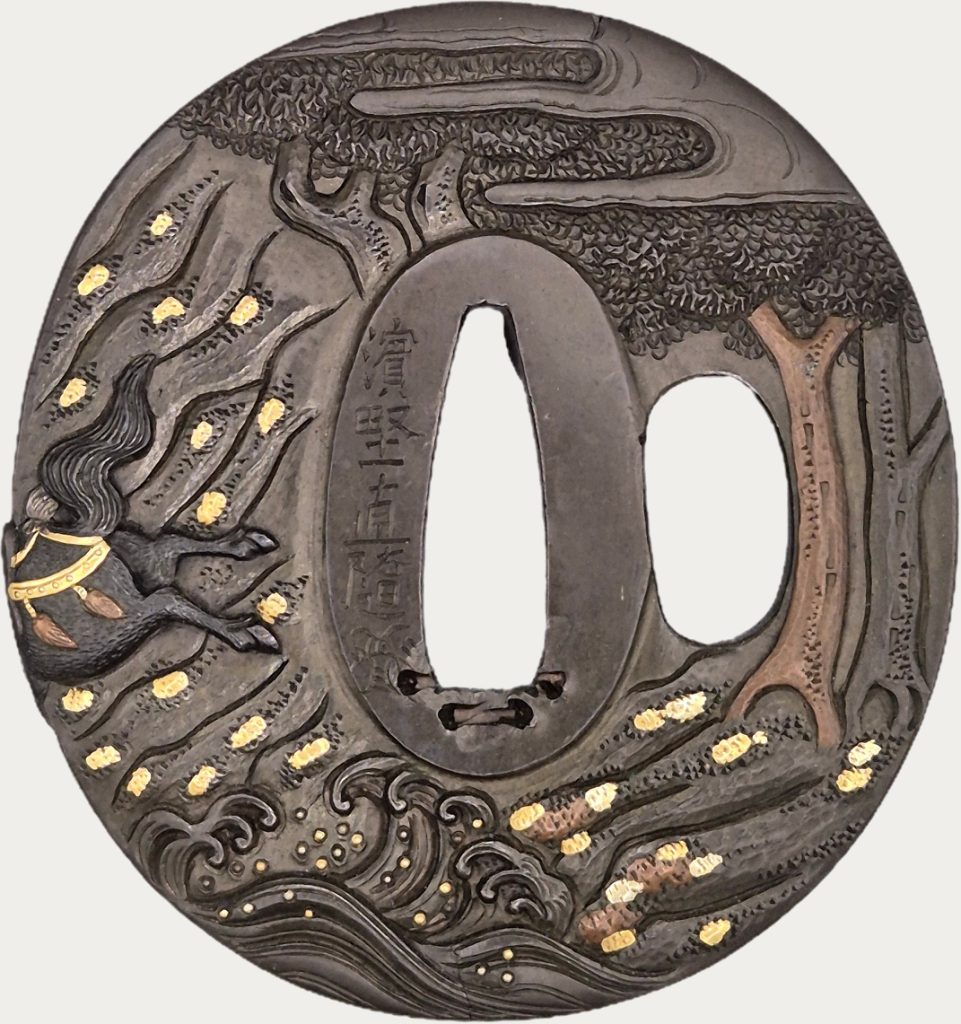
Hamano Naoyuki worked within a school founded by Hamano Shozu and celebrated for its approach to narrative. Where other schools chose restraint, the Hamano school chose movement. The ground material is shakudo, polished to its deepest register. The carving technique is takamikubori, high relief that lifts the figure free from the plate and gives the horse weight. Gold and silver inlay detail the armor, the tack, the churning water. The form is nagamaru-gata. Signed on the reverse with the artist’s name and kao. NTHK Hozon certified.
Battle of the Uji River Tsuba
Tsuba. Hamano Naoyuki. Shakudo, takamikubori, iroe und zogan. Spaete Edo-Zeit. 7.2 x 6.7 cm. Signiert. NTHK Hozon. Privatsammlung, erworben in Japan