Zwei Prinzessinnen im Palast
Den Kaga Goto Enjo · Kozuka · Shakudo · Mittlere Edo-Zeit · NTHK Hozon
Kozuka Kaga Goto
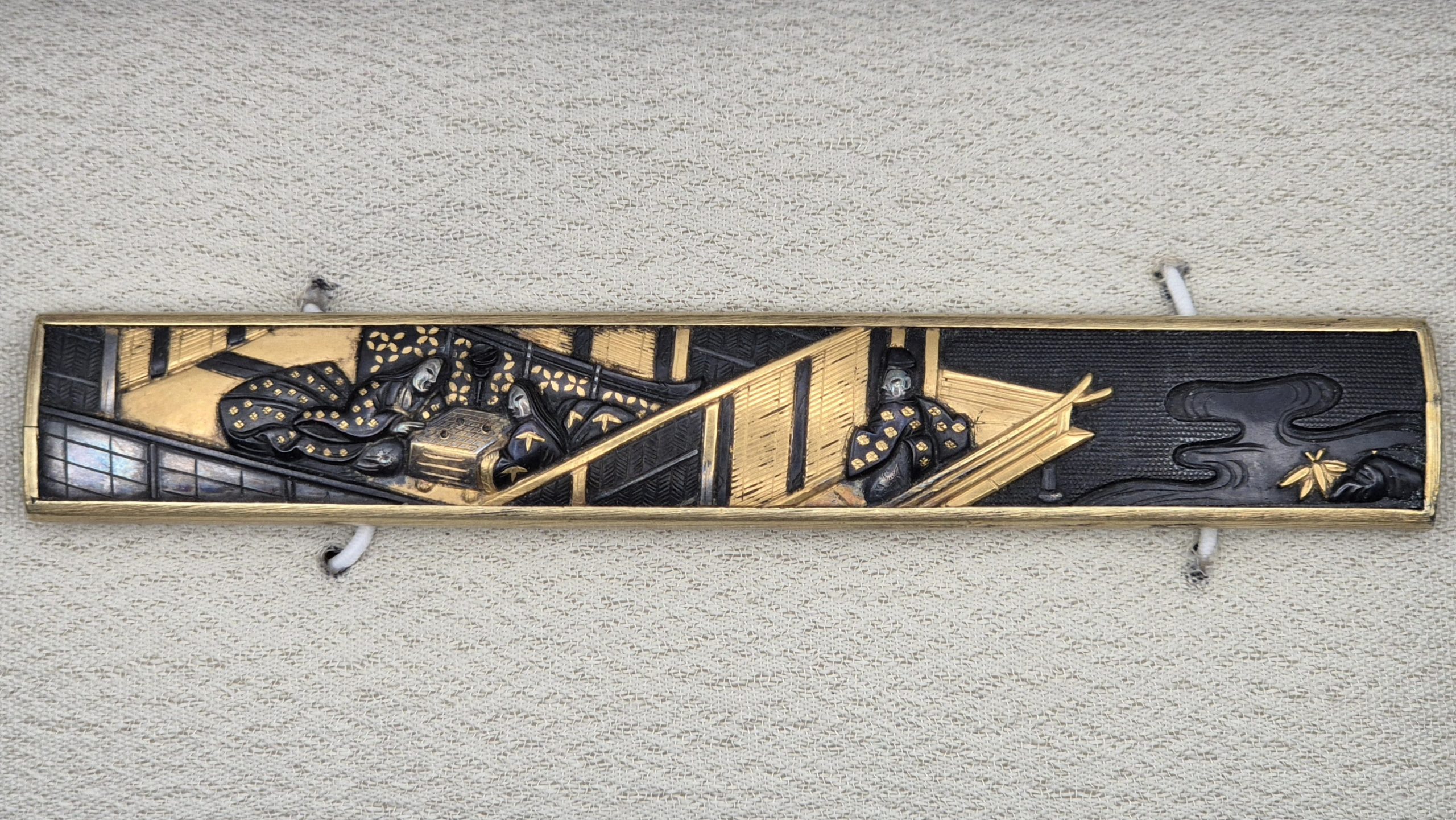
It is a scene of complete stillness. Two figures seated across from one another, a board between them, cherry blossoms falling above. The game is Go, the stakes are flowers. It is difficult to imagine a more deliberately unmartial image to place on a samurai’s weapon. That contrast is the point.
Die Szene
The source is the forty-fourth chapter of The Tale of Genji, written by Lady Murasaki Shikibu around the year 1000. In the chapter known as Bamboo River, a moment is recorded that would otherwise be entirely forgotten: two princesses raised the blinds and played Go with the cherry blossoms as stakes. Nothing else happens. That is the entire moment. And yet someone, seven centuries later, chose to preserve it on a piece of metal small enough to fit in a closed hand. This is what tosogu sometimes does: it keeps what no one thought to protect any other way.
Das Objekt
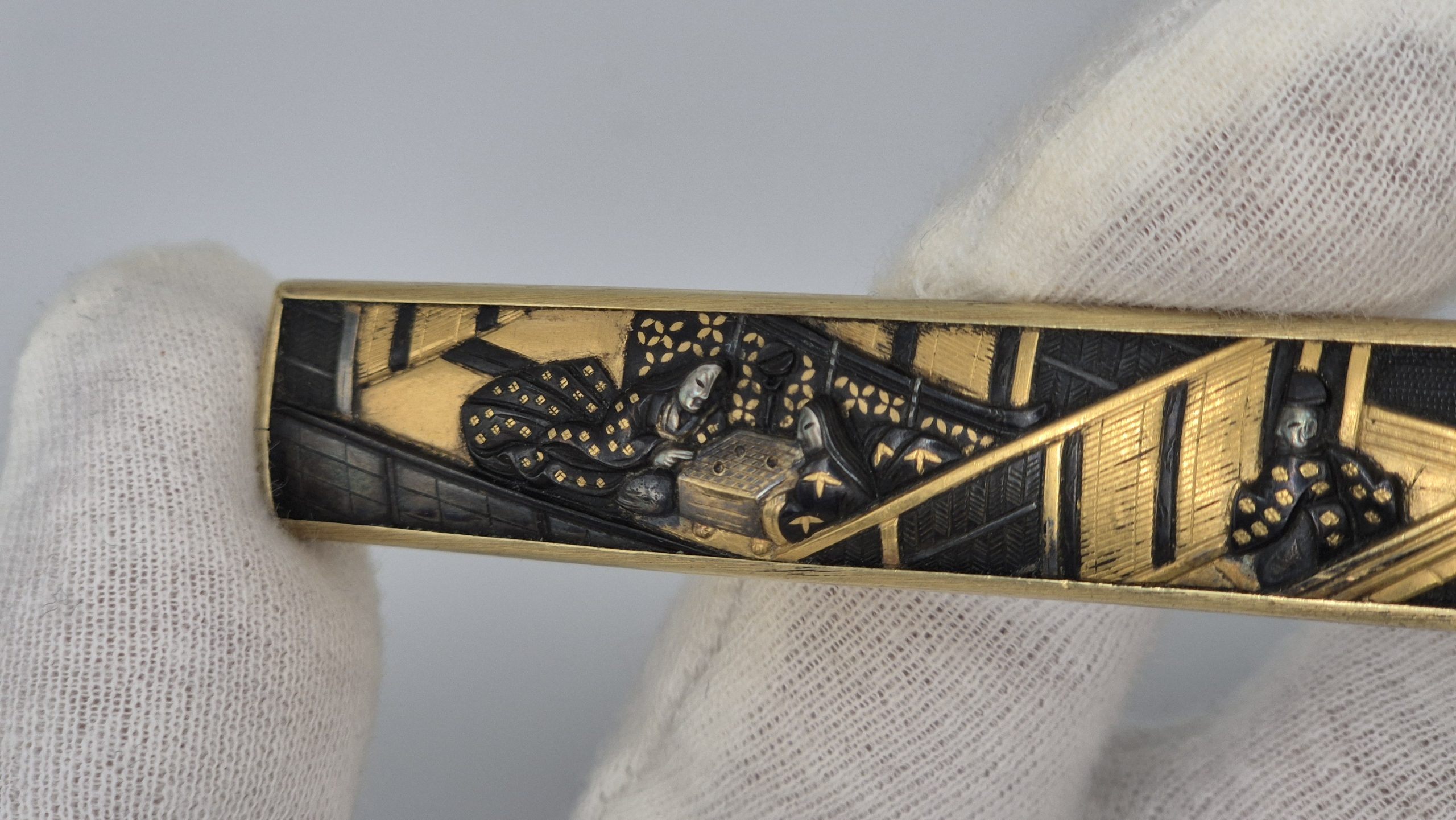
The material is shakudo, a copper-gold alloy that patinates into a deep, velvety black. Against this darkness the nanako ground works: thousands of tiny raised dots, pressed with a spherical punch, creating a texture that absorbs light rather than reflecting it. The figures rise from this ground in high relief, their robes highlighted with gold foil, the cherry blossoms caught in a permanent fall. The piece measures 9.7 cm. This is not art made to be seen. It is art made for someone who knows it is there. The attribution is to den Kaga Goto Enjo, a master from the Kaga branch of the Goto school, a lineage that dominated soft-metal fitting production for generations and served the highest ranks of samurai society. NTHK Hozon certified.
Die vier Noblen Geschmaecke
The game of Go was one of what Japanese court culture called the four noble tastes: harp, go, calligraphy, and painting. These were not hobbies but measures of a person’s interior life. For a samurai who carried this kozuka, the scene was a quiet declaration: that strength and refinement were not opposites. That cherry blossoms fall regardless. And that the wise person pays attention.
Kozuka Tale of Genji
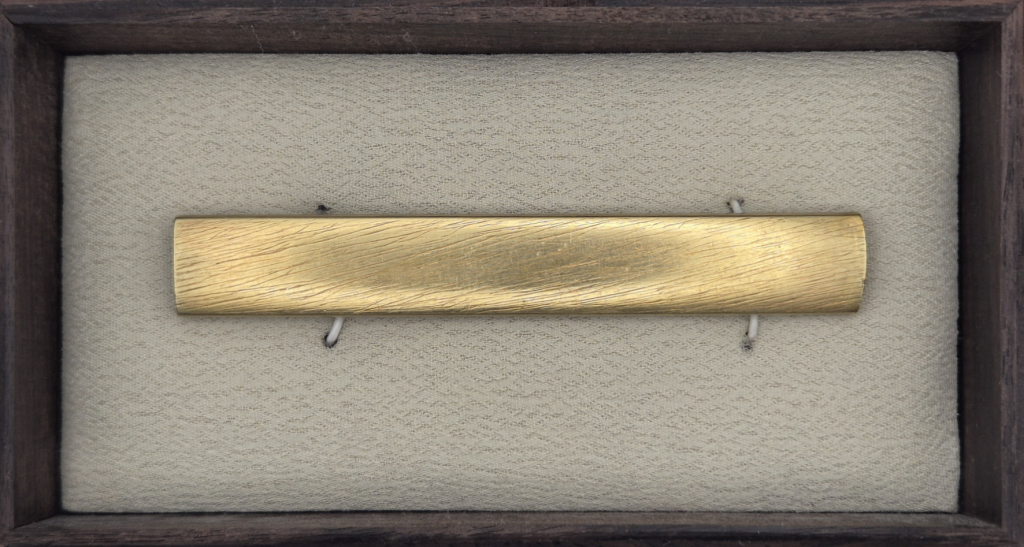
Kozuka. Den Kaga Goto Enjo. Shakudo mit Goldinlays, nanako Grund. Mittlere Edo-Zeit. NTHK Hozon. Privatsammlung, erworben in Japan.