Die Vase & der Drache
Mumei · Kozuka · Shakudo migaki-ji / Oborogin · Iroe takazogan / Brass zogan · Edo-Zeit
Kozuka with Two Sides
Turn it over. Everything changes.
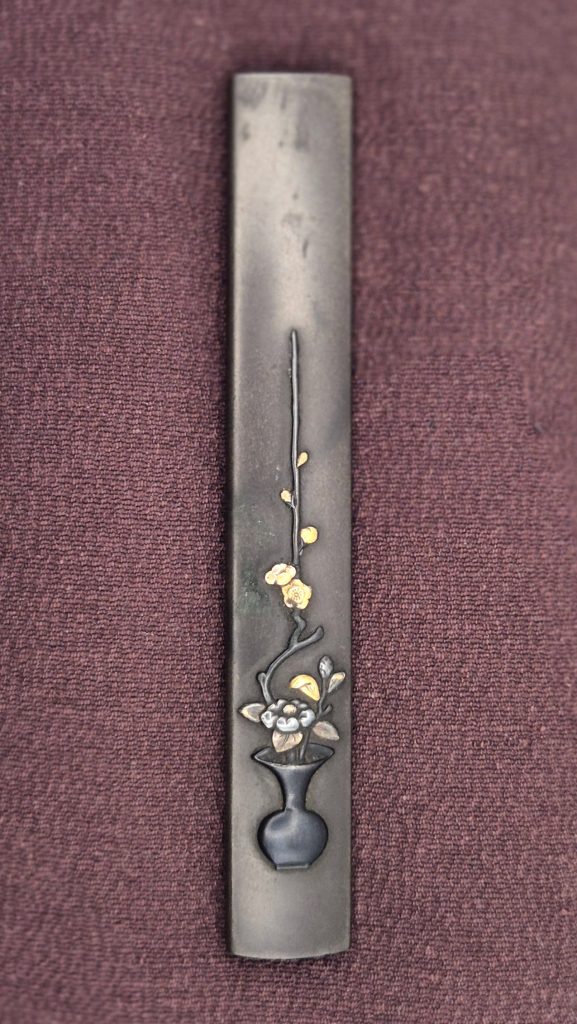
On the face: a small vase, two branches, a camellia in silver and a plum in gold. The composition is intimate, botanical, entirely concerned with the specific weight of flowers in a vessel. The shakudo ground is deep and warm, the flowers placed with the precision of someone who understood that arrangement is itself a form of meaning. It is an object of refined domestic quietude.
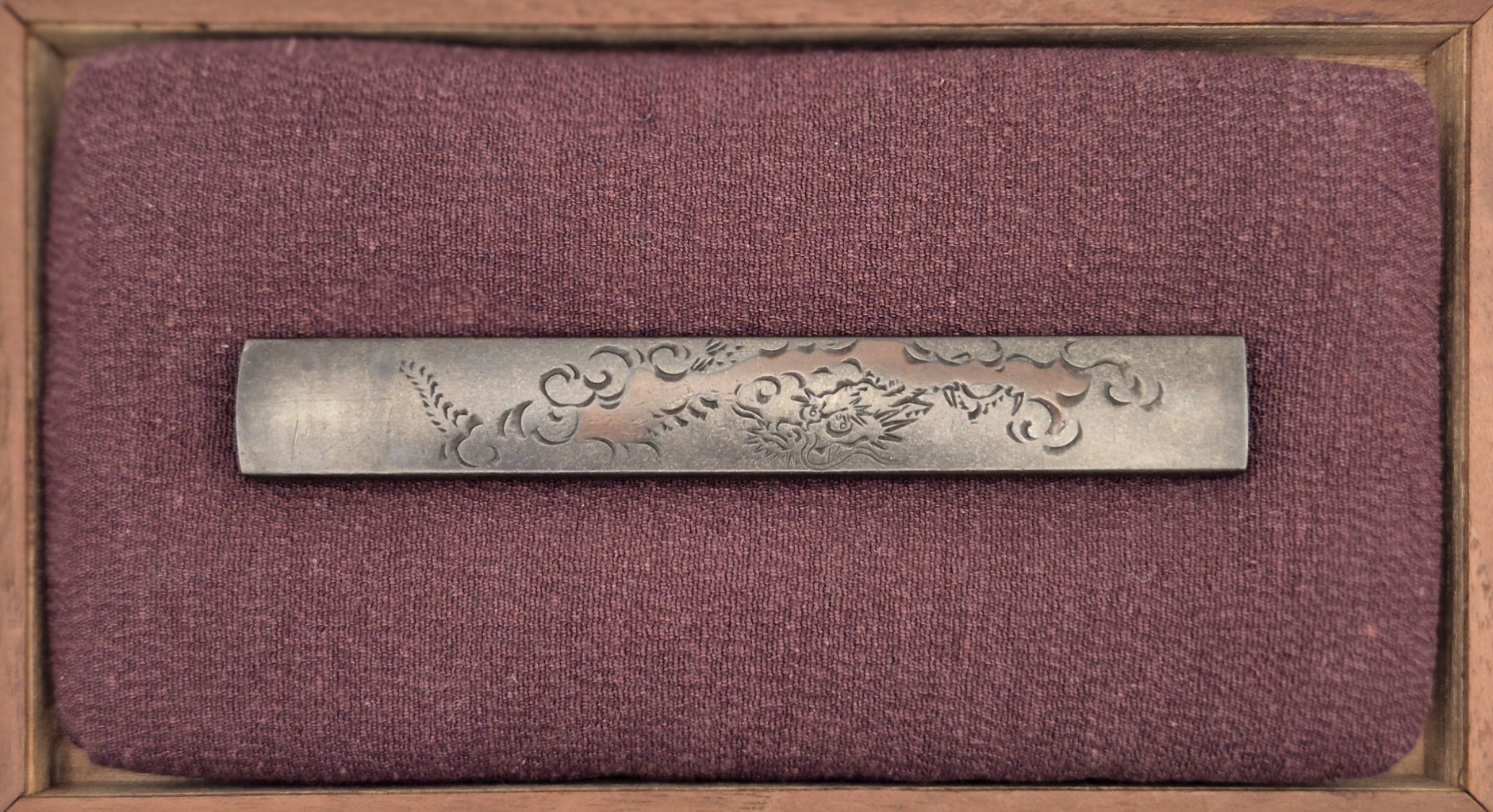
On the reverse: a dragon. Rendered in brass inlay on a cool grey ground — bold, graphic, its mane and clouds sweeping across the face in a completely different visual language from everything on the other side. Where the omote is soft, the ura is assertive. Where the omote is intimate, the ura is mythological. The brass glows against the silver-grey with the particular warmth that this metal combination produces: not the delicacy of gold on shakudo but something more direct, more emphatic.
Die Blumen
The omote carries two plants in a single vase: a camellia and a plum. The choice is not accidental. The plum, ume, blooms first, in late winter, before the snow has fully left, when the idea of spring is still more promise than reality. Its gold rendering here is exactly right: the plum blossom carries warmth into cold, which gold does by nature. The camellia, tsubaki, overlaps with the plum and extends further into spring. In silver, its petals rendered with genuine three-dimensionality, it occupies the lower register with the fullness of a flower that does not economize on itself.
Two flowers, one vase, one season in transition: the moment when winter and spring occupy the same week, sometimes the same day.
Der Drache
TThe ura presents a dragon in brass inlay on a ground that reads as oborogin or shibuichi; cooler, more silvery than the shakudo of the omote. The stylistic register is entirely different from the takazogan of the flowers: where those are applied elements standing in relief, the dragon is worked as zogan inlay, the brass set into the surface and the line quality bold and graphic rather than sculptural. The clouds sweep in the characteristic spiral forms of Japanese dragon iconography, the head turning with the open mouth and flowing mane that identifies the ryu in any medium. The brass against the grey ground produces the warmth of the dragon’s element: fire, transformation, the energy of things that do not remain still.
Zwei Sprachen auf einem Objekt
The most unusual aspect of this kozuka is the decision to place two completely different aesthetics on one object. The Japanese concept of in and yo — the interdependence of complementary opposites — offers one reading: the stillness of the flower and the movement of the dragon, the intimate and the mythological, the seasonal and the eternal. Neither face cancels the other. Together they form something that neither could be alone. The piece is mumei, unsigned. The quality of both faces argues for a maker who was comfortable in multiple techniques and saw no contradiction in deploying them on the same object.
Kozuka with Vase & Dragon
Kozuka. Mumei. Shakudo migaki-ji / Oborogin, iroe takazogan in gin und kin (omote) / Brass zogan (ura). Ume to tsubaki ni kabin no zu / Ryu no zu. Edo-Zeit. Privatsammlung, erworben in Europa. Auktionshaus in Düsseldorf.