
Der Krieger & der Gelehrte
Signiert 保政 (Yasumasa) · Kozuka · Shibuichi
Iroe takazogan · Edo-Zeit
Kozuka with Omori Hikoshichi
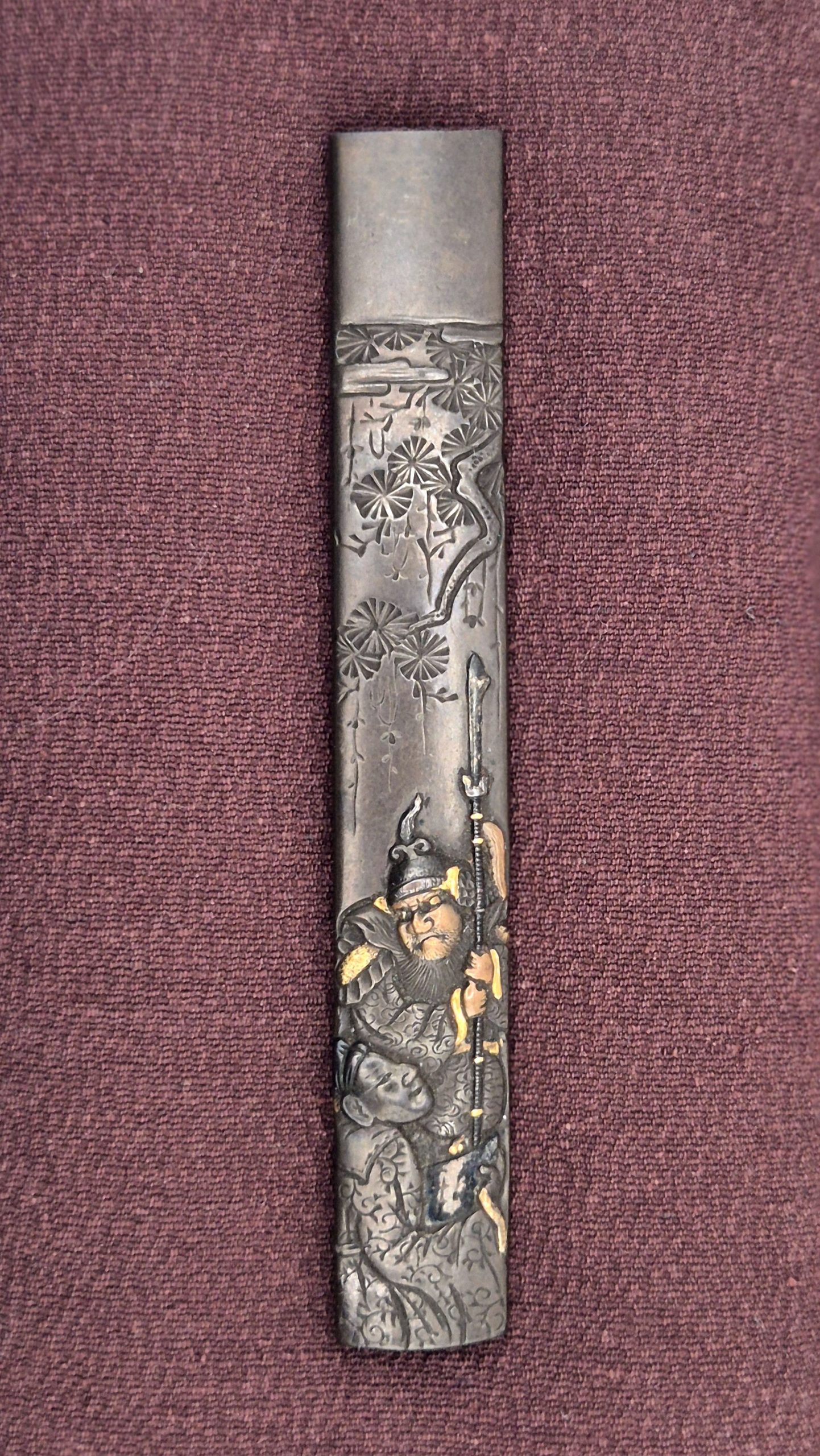
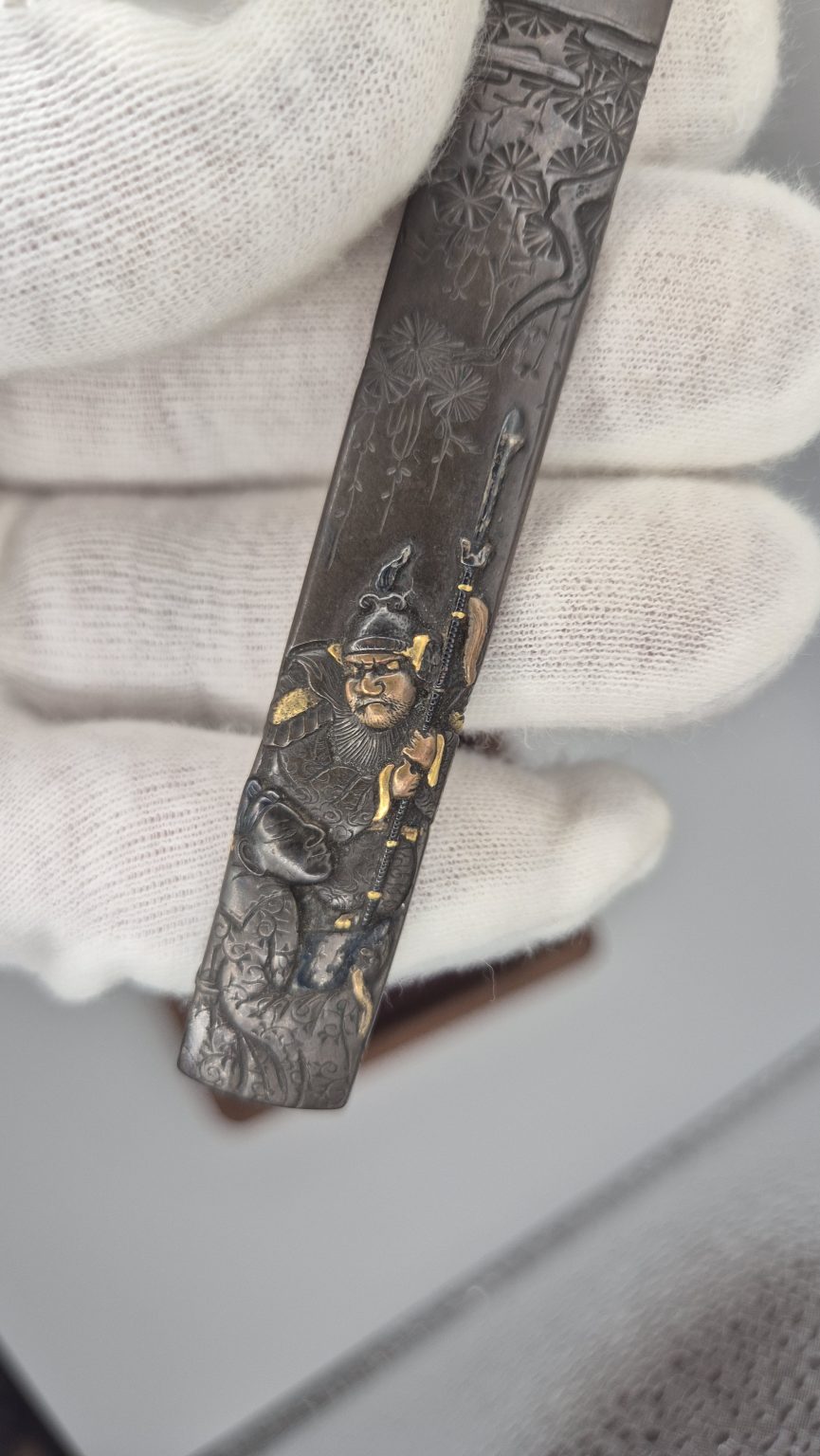
The pine comes first. In the upper third of the kozuka, branches extend in fine nikubori across the cool shibuichi ground — gnarled trunk, individual needle clusters, the classic pine of Japanese visual culture rendered with quiet precision. Below it, two figures: one above, one below, one in dark metals, one in silver, each entirely different in character from the other. They are in the same scene. They are not in the same world.
Der Krieger
The upper figure dominates. He is armored — fully, elaborately, every plate described in the dark ground material with gold accents catching on the joints, the pauldrons, the fittings. His face is large and bearded, worked with a precision that in-hand examination would confirm fully: the beard in fine parallel lines, each strand addressed individually, the expression fierce without being frantic. In his hands a ceremonial weapon with a beaded shaft — alternating dark and gold elements suggesting a ritual or divine instrument, something carried with authority rather than raised in combat. He stands with the absolute stillness of a being who has nowhere he needs to be, which is itself a form of power.
Der Gelehrte
Below the warrior, partially obscured by his robes and the swirling clouds at the lower register, a second figure — rendered in silver — kneels or prostrates in the posture of reverence. This is not a demon or an enemy. The robes are fine and flowing, their folds rendered with elegant attention, the fabric of someone whose position in life has never required armor. The head is bowed. The posture is deliberate submission before the larger presence above. This is a scholar or courtier — a civilian authority, a minister, a man whose power operates through counsel and ceremony rather than through force.

Die Begegnung
The scene of warrior and scholar in the same composition is one of the oldest themes in East Asian visual culture. The relationship between military power and civil learning was never fully resolved — it was productive precisely because of its tension. Generals who needed scholars to advise them. Scholars who needed generals to protect them. Here they occupy the same kozuka face: the warrior above, the scholar below and bowing, the pine above both of them. The pine does not adjudicate. It has been there longer than either kind of authority and will outlast both.
Das Objekt und die Signatur
The ground is shibuichi. The takazogan is genuinely three-dimensional — the warrior figure rises substantially from the surface, the scholar below in lower relief that correctly places him in the subordinate register. The reverse carries the signature 保政 — Yasumasa — with additional text. The name does not appear prominently in the Western-language scholarship on tosogu, and the possibility of gimei cannot be excluded without paper examination. What the signature cannot change is the quality of the work. A false signature, if that is what this is, was applied to an object that did not need it to make its argument.
Kozuka with Warrior & Scholar
Kozuka. Signiert 保政 (Yasumasa), moeglicherweise Gimei. Shibuichi, iroe takazogan in kin, shakudo und gin. Busho to gakusha, matsu no zu. Edo-Zeit. Privatsammlung, erworben in Europa.