
Die Ratte & der Fächer des Generals
signed Sadamasa ·
Okamoto-Schule · Tsuba · Sentoku · Spaete Edo-Zeit
Okamoto Sadamasa Tsuba
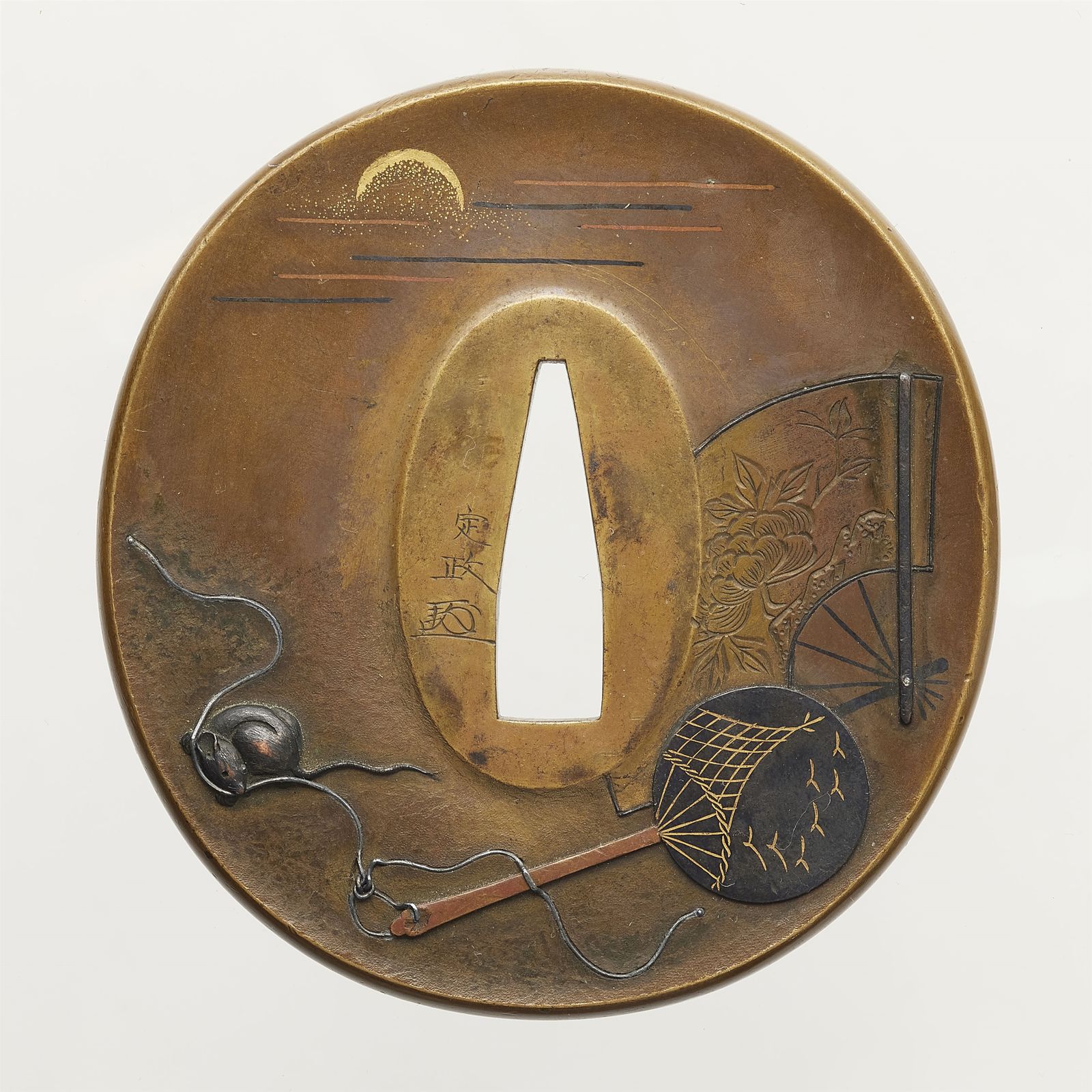
The rat is not looking at us. It is occupied. It has found the cord of the war fan and is working at it with the patient, purposeful attention that rats bring to everything: quietly, thoroughly, without any apparent awareness that this is transgressive. The fan itself stands propped nearby, its surface decorated with chrysanthemums, dignified and entirely unaware of what is happening to it. Above, the moon rises through bands of mist, illuminating the scene without comment. This is a tsuba made for someone who understood that the funniest things are rarely loud.
Der Faecher des Generals
The gunbai was a war fan, a flat rigid instrument that military commanders used to direct troops in battle. By the late Edo period, Japan had been at peace for roughly two centuries. The samurai class retained its privileges, its titles, its ceremonial objects, its elaborate protocols of rank. What it had largely lost was the context that had given those things their meaning. The gunbai still existed. The battles it once directed did not. Sadamasa placed one in this composition and then placed a rat at its cord.
Die Ratte
The rat, nezumi, in Japanese iconography is associated with Daikoku, the god of wealth and good fortune. It carries connotations of cleverness, opportunism, and the ability to find sustenance in any circumstance. It is not a villain in this tradition. It is simply very good at being a rat. Here it does not threaten. It simply gnaws, because gnawing is what it does, because no one has told it that this particular cord belongs to an emblem of military authority. The rat is innocent of irony. The maker of this tsuba was not.
Das Mondlicht
The moon above is gold, just clearing the horizon. Moonlight in Japanese poetry is the great equalizer: it falls on generals and rats alike, on chrysanthemums and fraying cords, on ceremony and the small creature quietly undoing it. The choice of sentoku for the ground material gives the scene an evening quality — this is not a bitter satire. It is an affectionate one, made by and for people who recognized their own situation and had the composure to find it gently absurd.
Das Rueckwaertige
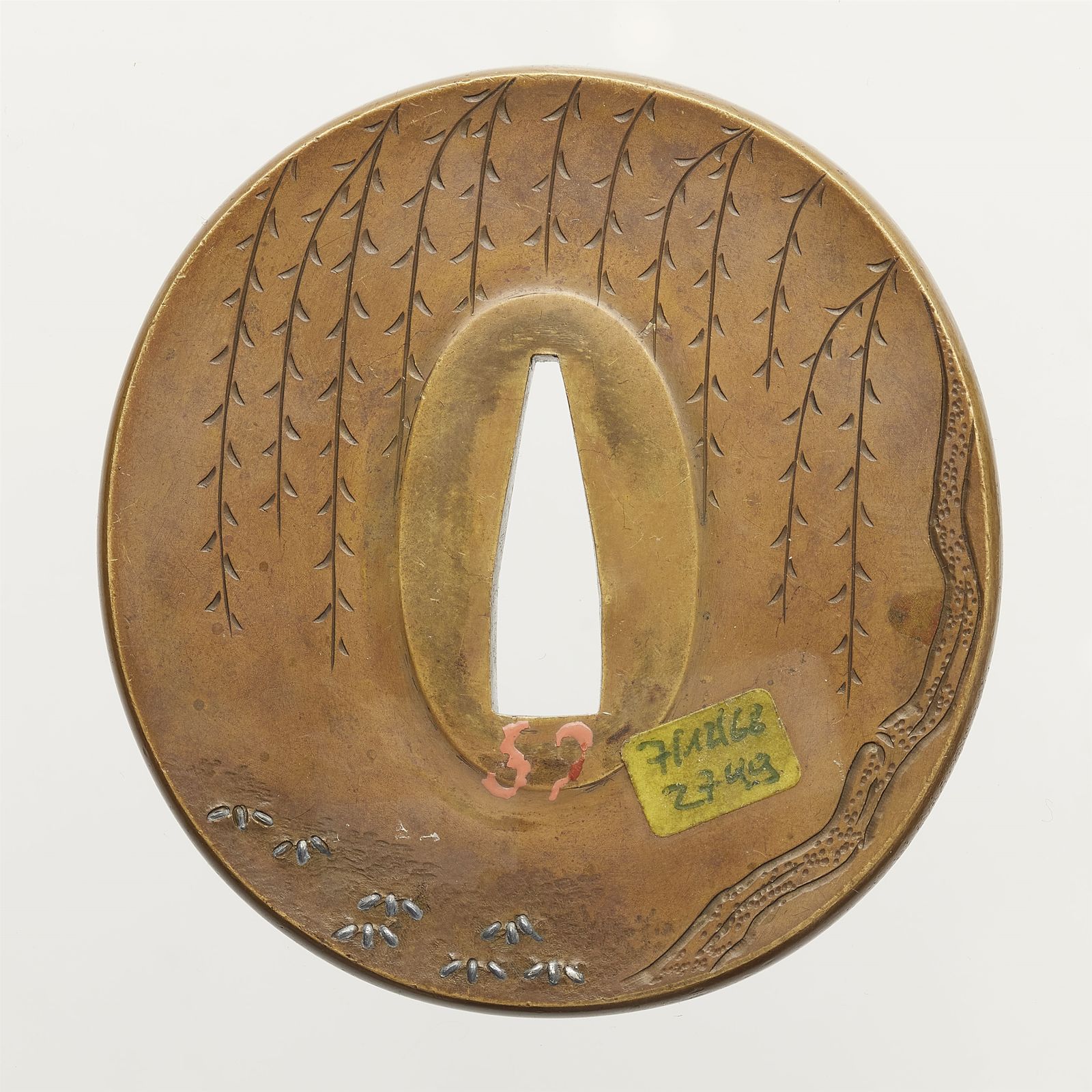
The reverse: weeping willow branches fill the plate edge to edge in fine engraving. At the bottom, small geese move low along a riverbank. There is no joke here, no wit. Only the willow and its long understanding that things fall. The maker knew that the irony on the front needed somewhere to rest.
Sadamasa Tsuba
Tsuba. Sadamasa, Okamoto-Schule. Sentoku, iroe zogan, tegane. Maru-gata. Spaete Edo-Zeit. Signiert. Privatsammlung, erworben in Europa. Auktionhaus Lempertz, Cologne. Derzeit zur NBTHK Tokubetsu-Hozon-Shinsa