A Framework Once Given
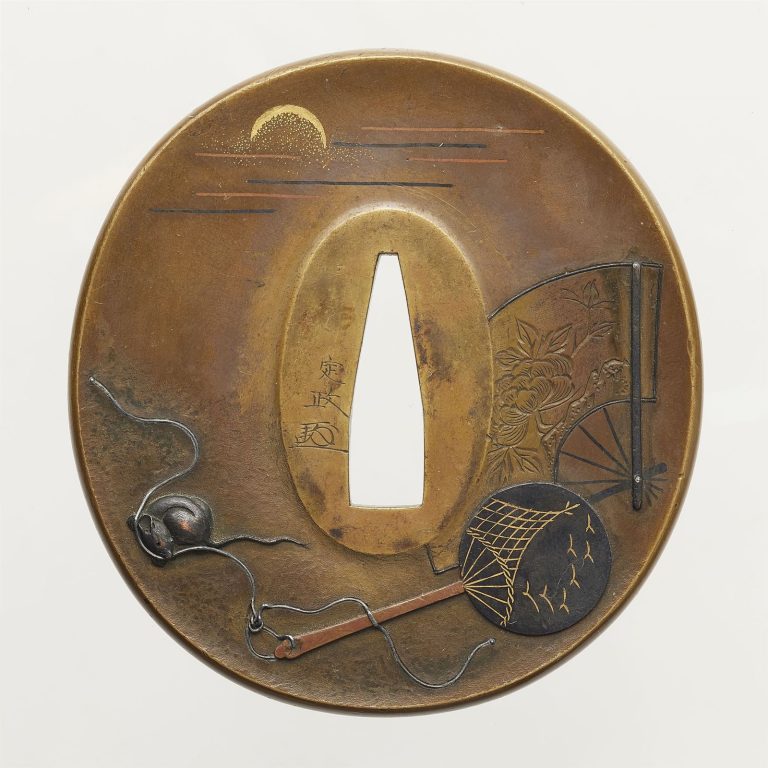
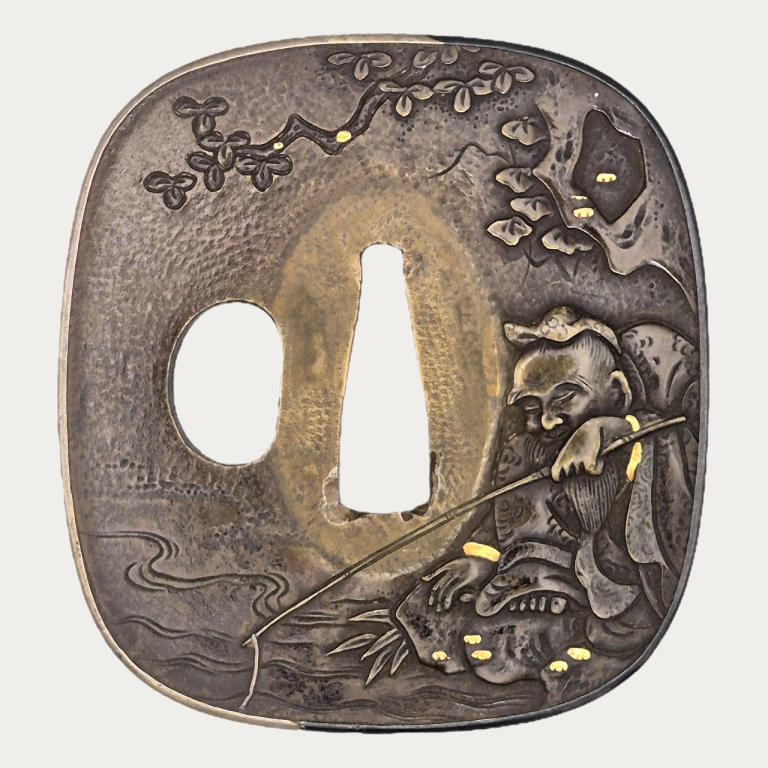
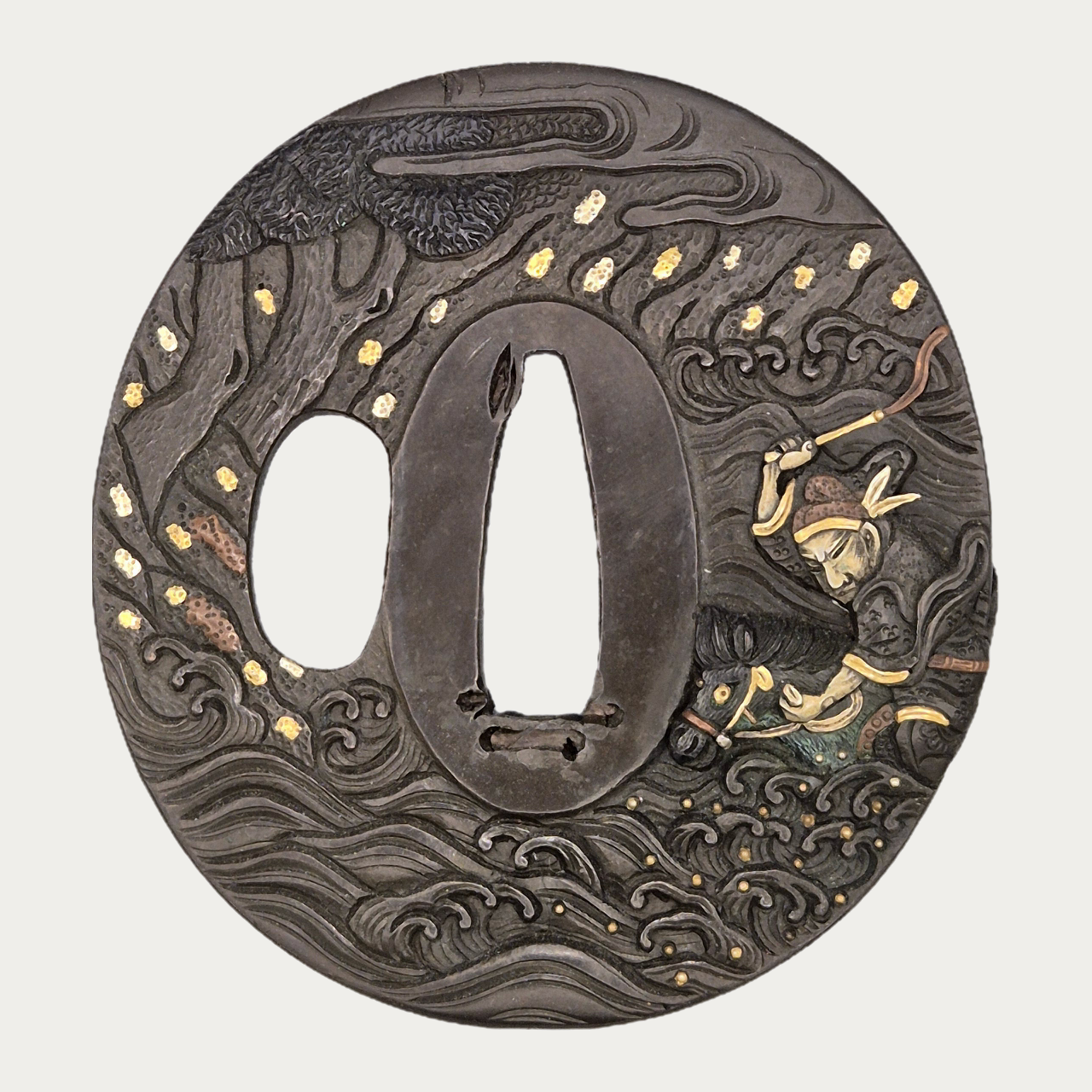
Tosogu were already appreciated as works of art in Edo-period Japan. Collectors, craftsmen, and connoisseurs engaged with them through a shared cultural framework — one that encompassed established schools, recognized masters, and a deep familiarity with symbolic reference. Within that context, meaning was largely immediate. A dragon, a pine, a seasonal motif required no explanation. It belonged to a visual language widely understood by those who encountered it.
The early European collectors were acutely aware of this distance. Their response was characteristically methodical. The Germans built typological surveys and translated primary sources. The British produced catalogues with signature indices in Japanese characters. The French developed an aesthetic instinct for what could be appreciated without full cultural access — Gallice’s turn toward austere iron, Vever’s reading of soft-metal inlay through the lens of the jeweler’s craft. Each approach was a different strategy for navigating the same fundamental gap.
The Scandinavian collectors — Krohn in Copenhagen treating the tsuba as industrial design, Halberstadt building a holding of over 1,700 pieces documented in meticulous German-language notes — represent yet another variation: scholarship pursued at the northern edge of the European network, methodical and empirical, less concerned with aesthetic position than with comprehensive documentation.
None of these collectors pretended to inhabit the Japanese cultural framework. Instead, they built tools — imperfect but serious — for approaching it from the outside.

Outside the Framework
For the contemporary European collector, this distance remains — and is in some respects greater. Tosogu are encountered as individual objects, removed not only from the sword but from the cultural environment in which their imagery was originally embedded. The shared knowledge that once made meaning immediate is no longer present, and the informal networks that partially compensated for its absence have dissolved.
As a result, perception often begins differently. What is directly visible takes precedence: material and surface, weight and formal composition, structure and technical precision. An iron tsuba with openwork may first be understood as a demonstration of craft — its silhouette, its balance, the quality of its patina — long before its motif or school affiliation becomes clear. This is not a failure of understanding. It is the natural starting point when cultural context cannot be assumed.
It is also, in certain respects, a historically familiar starting point. When Behrens turned away from the elaborate metalwork of the eighteenth century and toward early iron guards, he was responding to exactly this condition: the recognition that formal and material qualities could sustain serious attention independently of full symbolic comprehension. When Church collected botanical and geometric tsuba over figural ones, he was doing something similar — orienting his collection around what his trained eye could read most confidently.
A Different Kind of Attention
Distance from the original cultural context limits immediate symbolic access. But it also creates a particular kind of attention — one less guided by convention, more dependent on direct engagement with the object. Formal qualities, material choices, and compositional decisions come into sharper focus precisely because they cannot be bypassed in favor of received meaning.
A European perspective does not replace the original cultural context. It remains, by definition, incomplete. The symbolic depth of a given motif, the precise resonance of a school’s lineage, the significance of a signature — these require knowledge that must be actively acquired, and even then, may never be fully internalized in the way they are for someone formed within the tradition.
Yet within this incompleteness, another form of appreciation becomes possible — one that begins with the object itself and deepens through the process of learning how to see it. This, too, is a form of engagement with Tosogu. And it has a history in Europe stretching back more than a century, through the French and Scandinavian collectors who shaped the aesthetic ground, through the German scholars who built the classificatory tools, through the British cataloguers who made the field legible across languages.
The essays that follow examine these collectors individually. Together, they form a picture of what it has meant, and what it continues to mean, to encounter these objects from the outside.