On a Hamburg museum director, a Japanese curator, and the problem of seeing from outside.
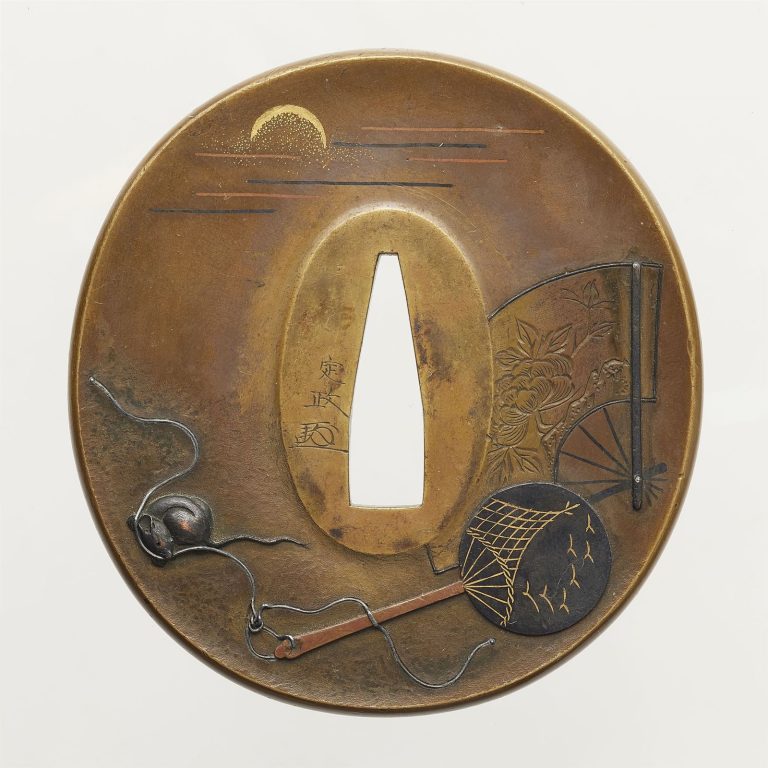
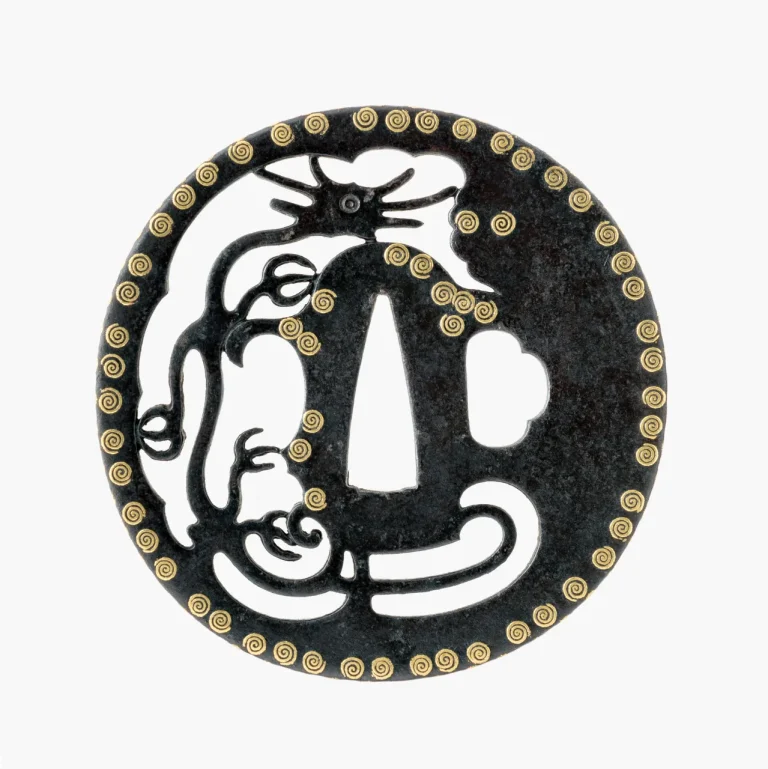
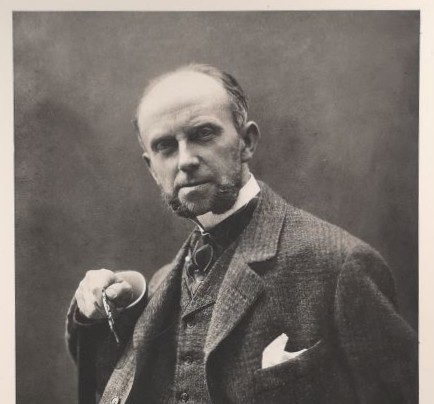
In the autumn of 1873, Justus Brinckmann spent nine weeks in Vienna during the World’s Fair. He was thirty years old, a lawyer by training turned museum director by determination, and he had come to buy. He alone acquired around 300 objects: among them tsuba, discarded by a Japan that was busy reinventing itself. The Meiji Restoration had rendered the sword obsolete as a social symbol; the fittings that had once marked rank and lineage were finding their way out of Japan and into the hands of European collectors who saw in them something that the new Japanese state no longer wanted to acknowledge: proof of an extraordinary craft tradition.
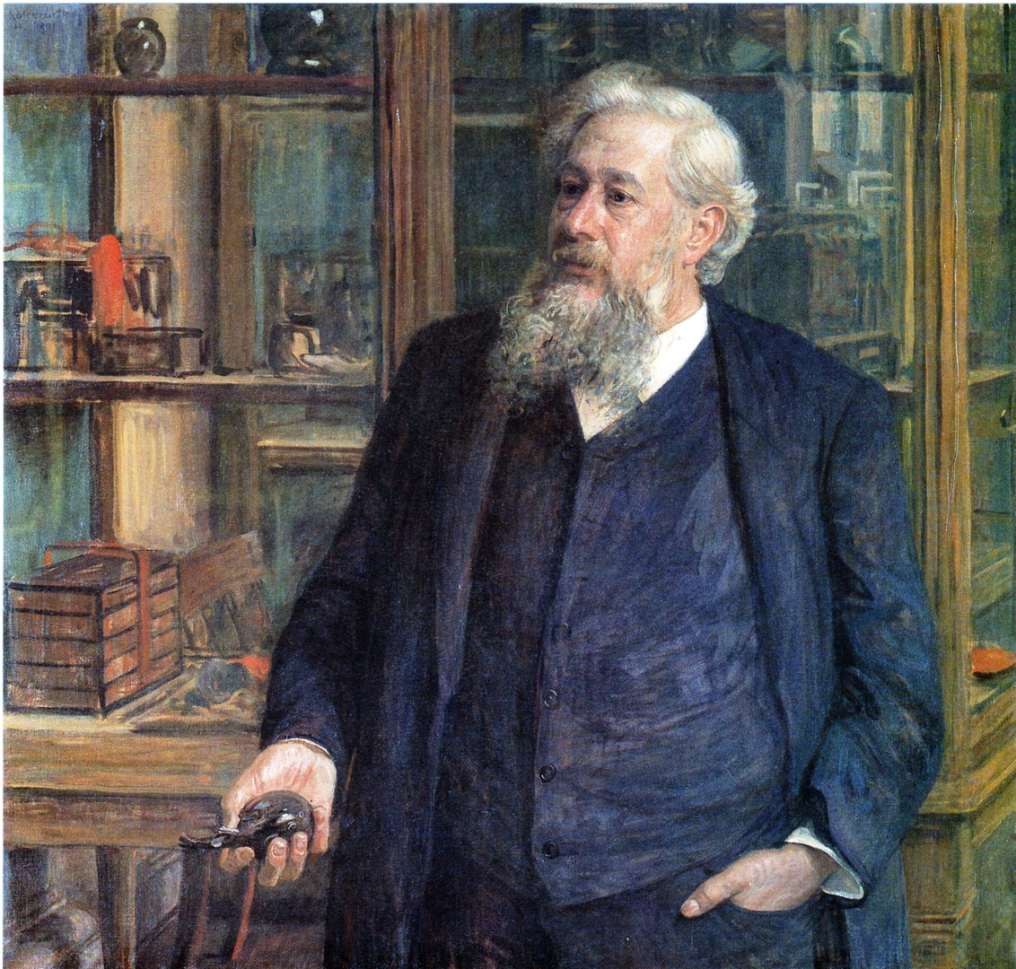
Brinckmann returned to Hamburg with objects and a conviction. He made no qualitative distinction between European and non-European objects, for whose aesthetics he had developed genuine and systematic regard. This was not a common position in 1873. In a cultural climate that placed Japanese art firmly beneath Chinese art in the hierarchy of foreign taste, Brinckmann’s insistence on the value of Tosogu as objects worthy of serious study was itself an act of intellectual commitment.
“Moin Hamburch” – Brinkmann’s Museum
In 1877, his Museum für Kunst und Gewerbe Hamburg opened. The tsuba collection grew alongside it. And then, at a certain point, Brinckmann faced a problem that every European collector of Tosogu eventually faces, in one form or another: he did not know what he was looking at.
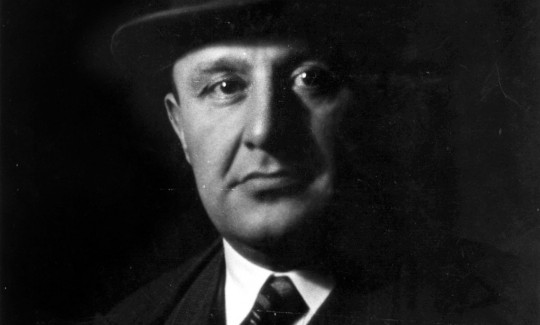
Not in the superficial sense; he could see the objects clearly, catalogue them, display them. But he could not date them with confidence. Could not assign them to schools. Could not read the tradition behind the form. For Brinckmann, it was clear that he would not be able to correctly date and classify the small treasures. Therefore, he sought help from Shinkichi Hara.
Hara was an unlikely figure. He had come to Germany to study medicine, but his career took a different turn. Thanks to his eminent expertise in Japanese cultural history, he soon became an indispensable advisor to many German museums. From 1896, he worked at the MKG as curator of everything Japanese. The arrangement was, by the standards of the time, remarkable: a Japanese expert embedded in a German institution, working to make sense of objects that had arrived in Europe through channels that said more about colonial economics than about connoisseurship.
Together, Brinckmann and Hara produced the book that defined the field in German-speaking Europe. Published in 1902, Die Meister der japanischen Schwertzierathen offered, for the first time, a systematic overview of Tosogu masters; their lineages, their dates, their names in the original script. It was the first collection in Europe that could claim a certain completeness, and in its totality gave an adequate overview of the history of this branch of Japanese art. The book remains a reference point to this day.
But the collaboration was not without friction, and the friction is precisely what makes it interesting.
In classifying the tsuba, Brinckmann and Hara took fundamentally different approaches. Brinckmann saw a Darwinian-evolutionary tendency at work, a progression from simple to complex forms. Hara found this nonsensical and argued for a classification according to schools and lines of tradition.
The disagreement is more than a methodological footnote. It is a condensed version of the central problem of the European encounter with Tosogu. Brinckmann was applying a conceptual framework that made sense within the European art-historical tradition. A tradition shaped by evolutionary thinking, by the idea that art forms develop from primitive origins toward increasing refinement. It was the framework that made sense of Gothic cathedrals, of the history of painting, of decorative arts across centuries of Western production.
Hara knew it was wrong. Not because the objects were simpler or more complex at different periods, but because the logic of their development was entirely different. Tsuba evolved through schools, through master-apprentice relationships, through the transmission of specific technical and aesthetic vocabularies across generations. A guard made by the third master of the Goto school was not more or less complex than one by the first — it was differently inflected, bearing the marks of a living tradition rather than a linear progression. To impose Darwinian development on that tradition was to misread the objects at the most fundamental level.
Hara prevailed. The book was organised around schools and lineages, not evolutionary stages. But the episode reveals something that remains unresolved for the European collector today: the frameworks we bring to these objects are never neutral. They come from somewhere. They were built for other purposes. And they will, if left unexamined, quietly distort what we think we see.
Brinckmann at least had Hara in the room. Most European collectors do not. The MKG’s East Asia collection, including its sword ornaments, continues to be displayed in Hamburg today, carrying within it the traces of that original encounter — nine weeks in Vienna, 300 objects, a collaboration across cultures, and a debate about classification that was really a debate about what it means to understand something from outside.
Sources
- Hara, Shinkichi; Brinckmann, Justus (intro.). Die Meister der japanischen Schwertzierathen. Hamburg: Gräfe & Sillem, 1902.
- Justus Brinkmann; Führer durch das Hamburger Museum für Kunst und Gewerbe, Hamburg. Verlag des Museums für Kund und Gewerbe. 1894.
- Kümmel, Otto. “Shinkichi Hara.” Translated by Helga E. Reap and Alan L. Harvie. Journal of the Japanese Sword Society of the US, vol. 8, no. 2, 1970.
- Mobile Welten (online). “Weltausstellung — Hamburg.” (mobile-welten.org)