On a German industrialist, a museum built for one, and the long journey of objects.
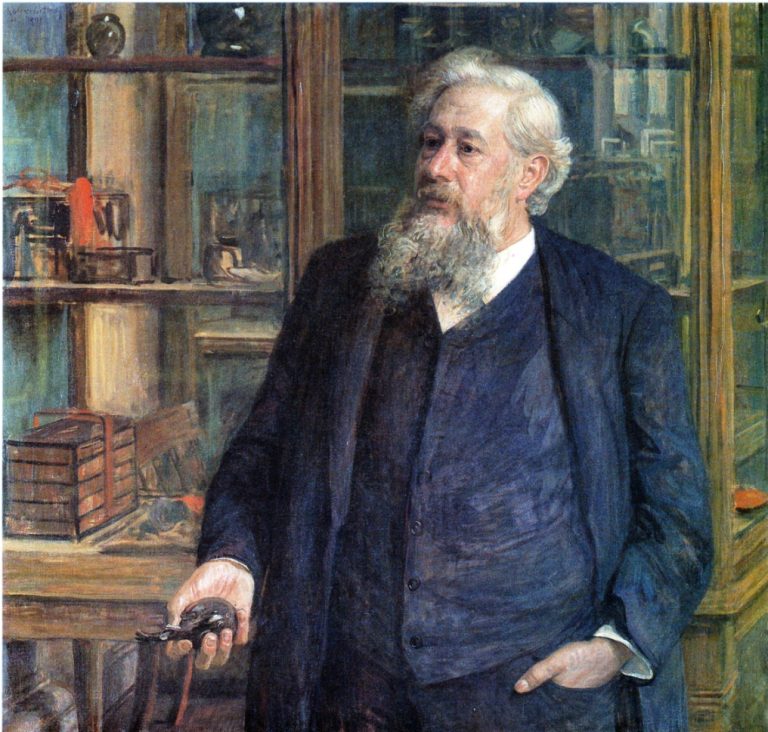
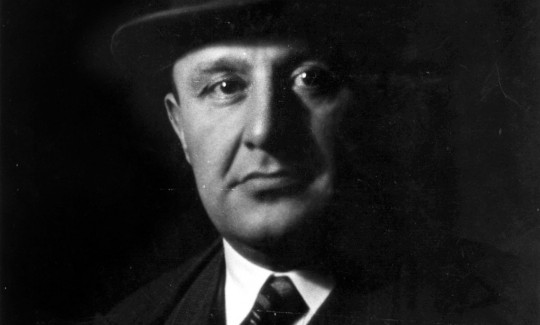
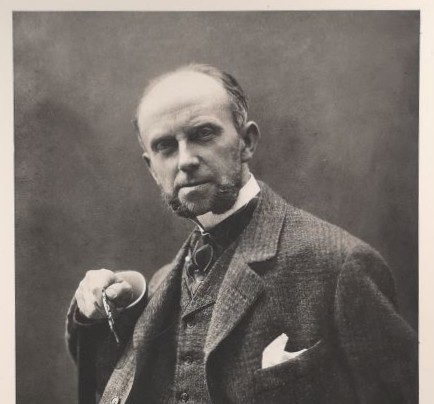
Walter Fahrenhorst was not an artist forced into collecting by illness, nor an institution director building a public holding. He was a lawyer turned industrial executive: A board member at Phoenix AG and later at Vereinigte Stahlwerke (todays ThyssenKrupp), one of the great steel conglomerates of the Weimar Republic. He played chamber music in private quartets. He understood contracts, production capacity, and market position. And somewhere in the middle of the Meiji period, he came to Japan, looked at a tsuba, and did not look away for the rest of his life.
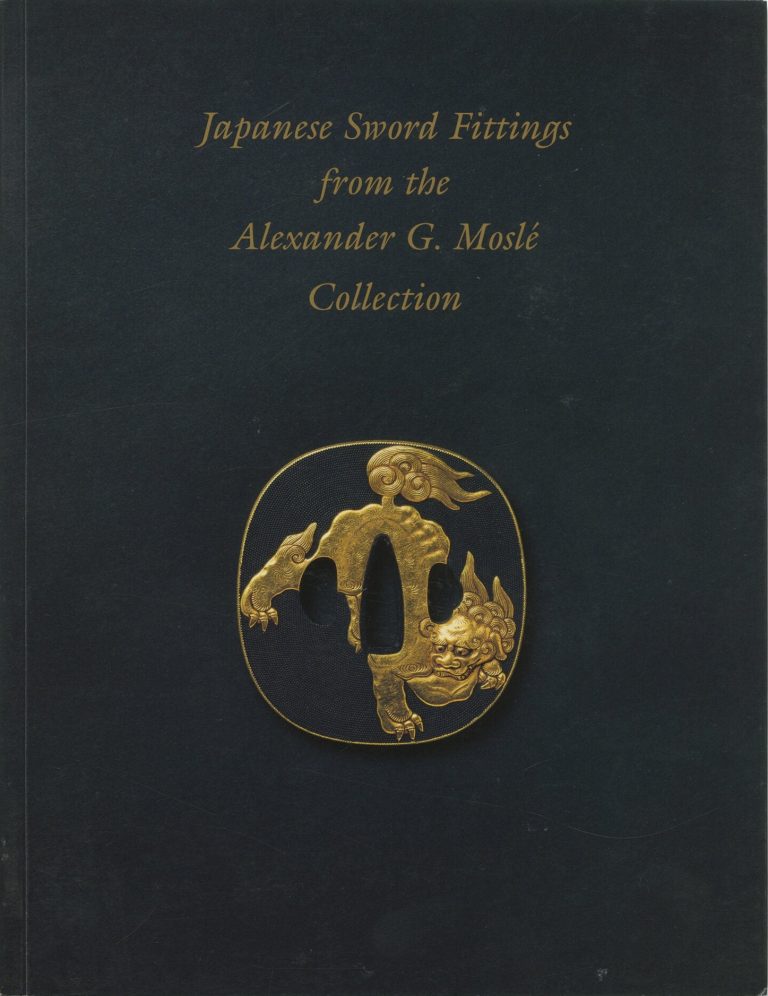
The document that records this — a 1968 catalogue produced for an exhibition at the Matsuzakaya Department Store in Ginza, when a portion of his collection was brought back to Japan by the collector Tomohiko Imani — is one of the more unusual texts in the European history of Tosogu. It opens with a foreword by Dr. Sato Kanzan, one of the foremost Japanese authorities on sword fittings, and what Sato writes is worth reading carefully. Fahrenhorst, he notes, was “not a mere collector of superficial glitter, but a connoisseur whose insight stood head and shoulders above the average.” Coming from Sato Kanzan, this is not diplomatic courtesy. It is an assessment.
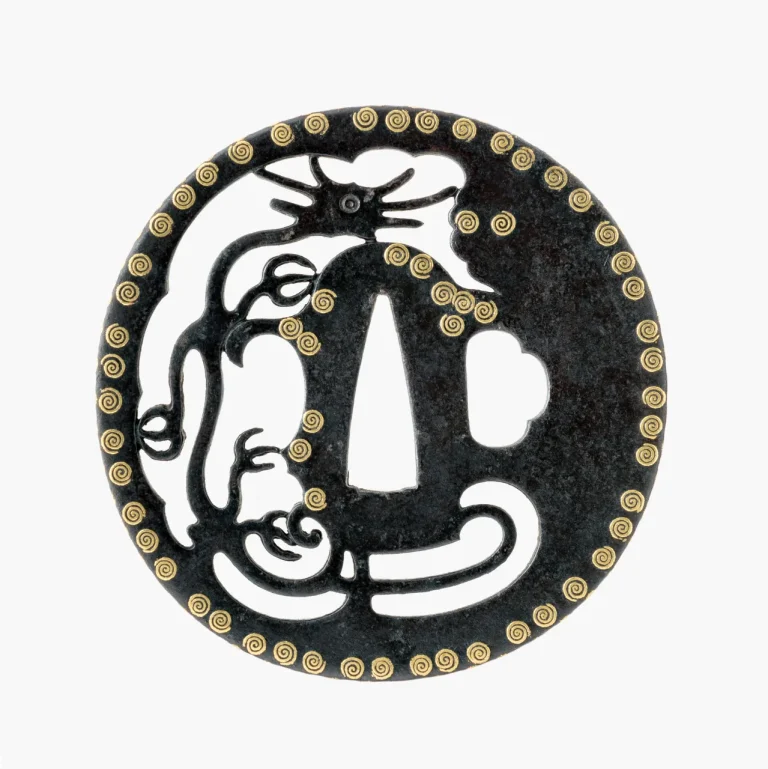
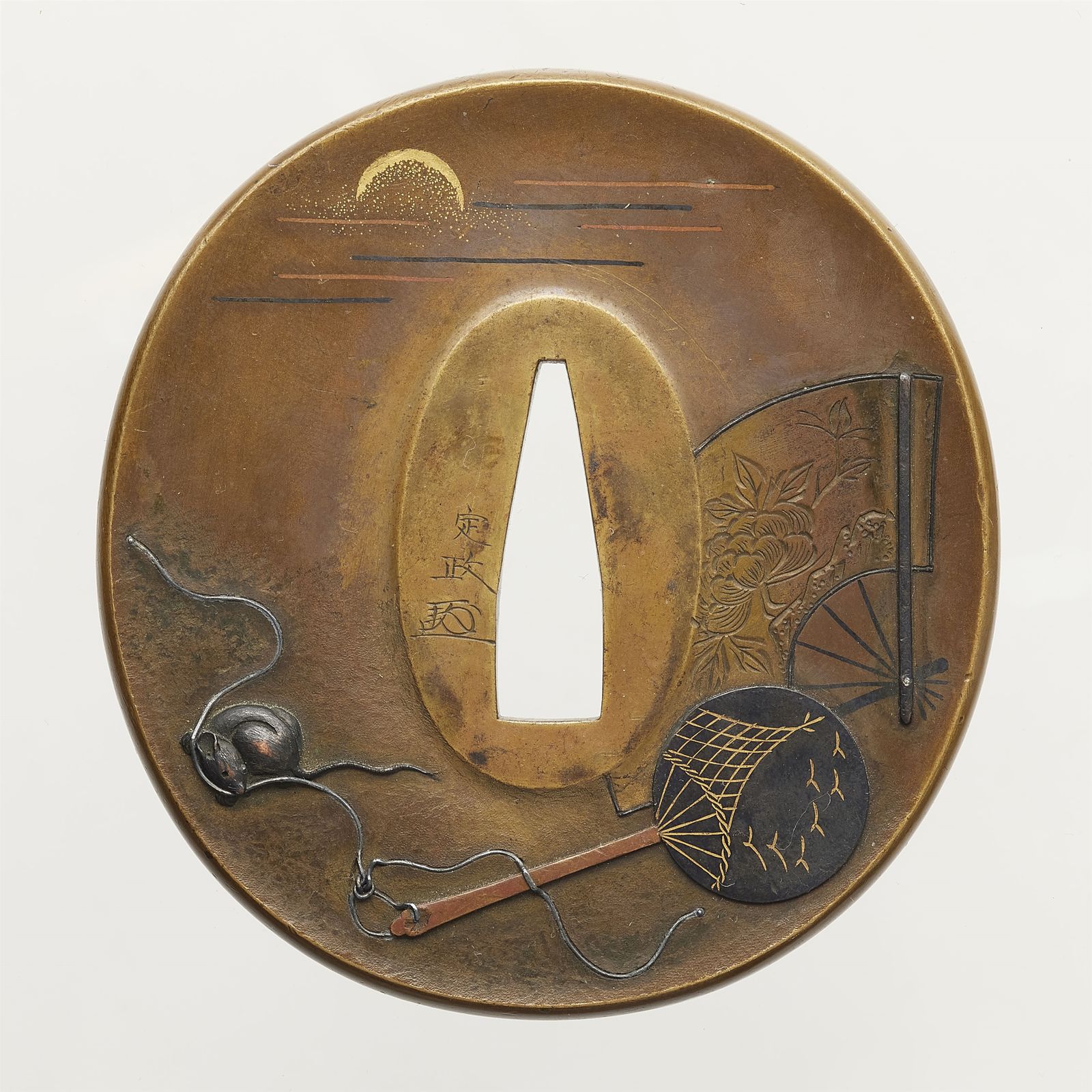
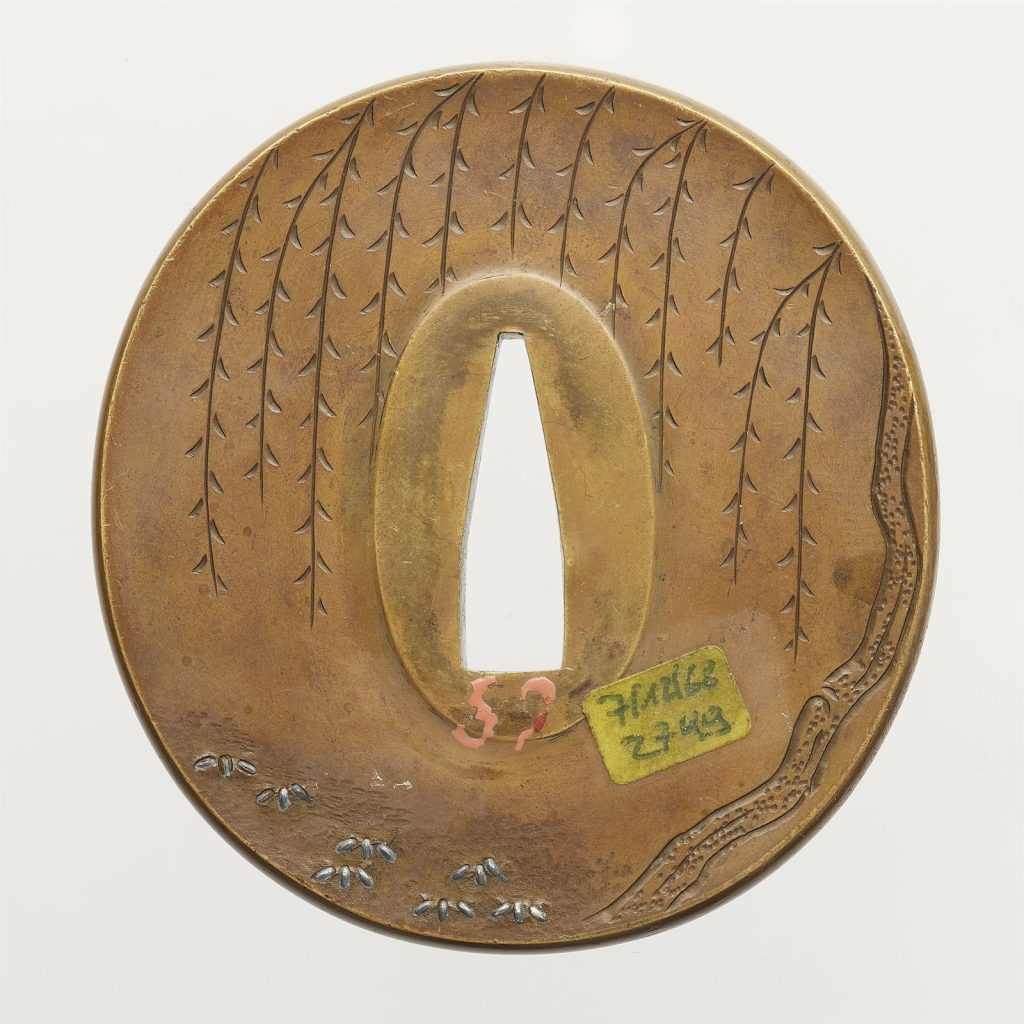
What Fahrenhorst saw in Japan was what the Meiji Restoration was in the process of discarding. The sword had been banned as a public accessory in 1876. The fittings that had carried centuries of craft knowledge — tsuba, kozuka, menuki, fuchi-kashira — were leaving the country in large quantities, entering the hands of Western collectors who ranged from the serious to the purely acquisitive. Fahrenhorst belonged clearly to the former. He recognised that within each small piece of metal, “the care, teachings, and humor of traditional Japanese craftsmen are hidden.” He moved from surface to structure: form, engraving, inlay, material. And then, crucially, to classification by schools. This was the move that separated the connoisseur from the enthusiast.
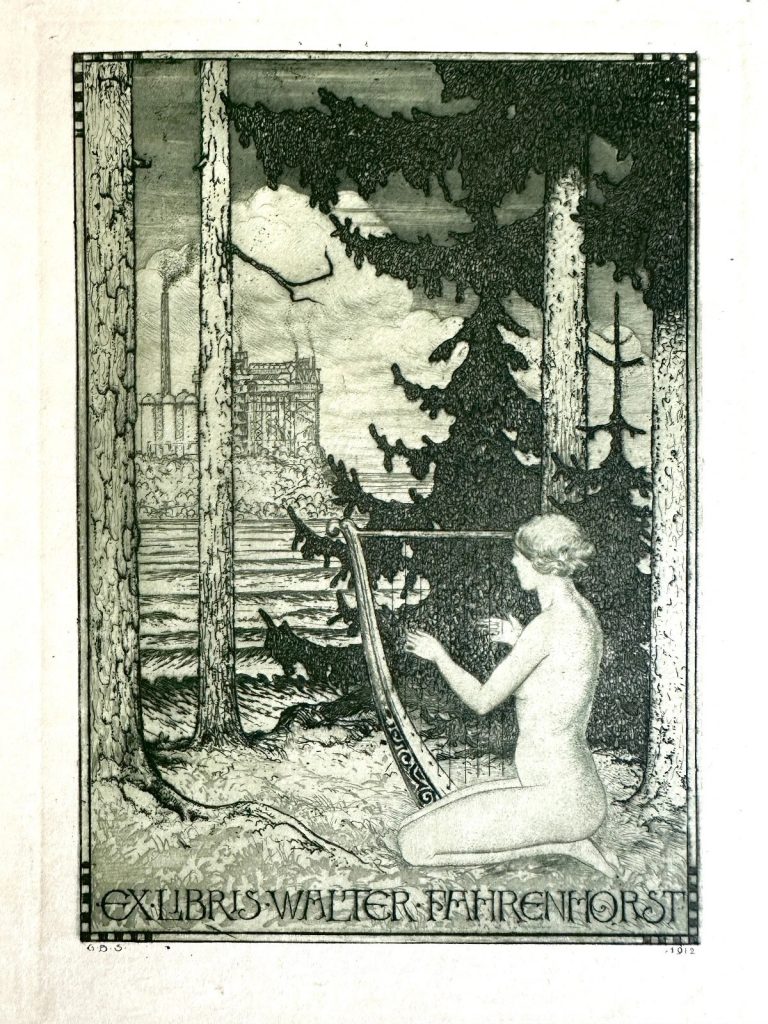
He returned to Germany, but Japan did not leave him. He travelled through Berlin and across Europe, the catalogue records, “not only for business but also driven by artistic research” — expanding the collection, refining it. In Düsseldorf he became a recognised figure; within the wider European field of East Asian collecting, he was considered among the most significant collectors on the continent. The collection grew to encompass not only sword fittings but netsuke — on which he published as early as 1894 — woodblock prints, and Chinese stone Buddhas. He maintained active correspondence with Japanese experts: in the early Showa period he kept contact with Baron Furukawa Toranosuke, and received expertise from Amiya Sōemon and Saito Eikan. This was not collecting in isolation. It was collecting embedded in networks of knowledge.
And then, in 1934, he did something that no other European collector of Tosogu appears to have done: he built a dedicated building for his collection. Museum-like in scale and conception, it stood in Berlin: A private institution created entirely for the objects he had spent forty years assembling. He died four years later, on April 8, 1938, at the age of 67. The date, the catalogue notes quietly, was Buddha’s birthday. He was surrounded by his artworks.
What followed is the familiar European story of the twentieth century, compressed into a few sentences. The collection survived the Second World War: Evacuated several times, suffering partial losses. Years later, a large portion was sold under unspecified circumstances. What remained was what Imani brought back to Japan in 1968, carefully selected from what was left of what had once been whole.
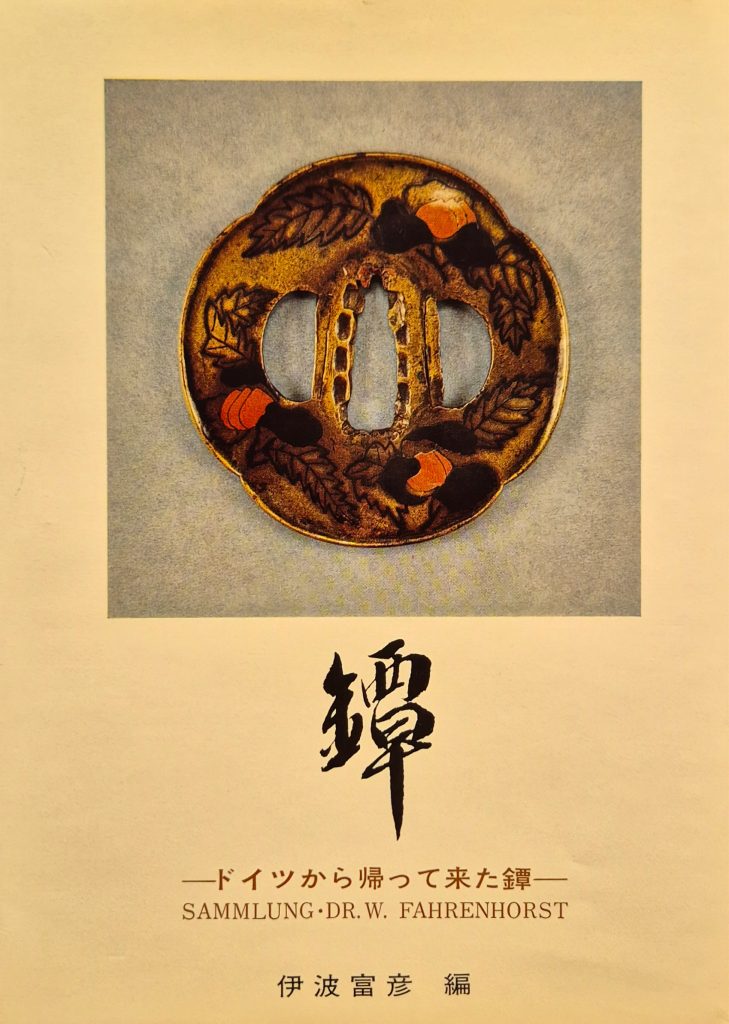
The return of the collection to Japan — even partially, even decades late — closes a loop that most European collections of this period never manage to close. The objects had left Japan in the late nineteenth century, passed through one man’s hands with extraordinary care, been documented, studied, and housed in a purpose-built museum, then scattered by history. In 1968, some of them came back. Dr. Sato Kanzan examined them one by one. He recognised what was there.
Professor Ando Kosei, writing the second foreword to the exhibition catalogue, frames the return in the language of cultural exchange: “Art knows no borders.” It is a generous reading of what was, in its origins, an unequal transaction — the departure of objects from a country undergoing forced modernisation, their entry into the private holdings of a wealthy European. But Ando’s generosity also points to something real. Fahrenhorst did not treat what he acquired as trophies or curiosities. He treated the objects as the serious works of art they were, at a moment when the country that produced them was uncertain whether to agree.
That is perhaps the most precise definition of what the best European collectors of Tosogu have offered the field: not access, not resources, not even scholarship in the formal sense — but recognition, extended at the right moment, when it was neither obvious nor required.
Sources
- Inami Tomihiko. “Doitsu Kara Kaette Kita Tsuba” – Tsuba that came home from Germany. Sammlung Dr. W. Fahrenhorst, 1969 Tokyo
- Exhibition Catalogue. Fahrenhorst Collection. Matsuzakaya Department Store, Ginza, Tokyo, 1968.
- Sato Kanzan. The Japanese Sword. Kodansha International, 1983.
- Weber, V. F. Ko-Ji Ho-Ten: Dictionnaire à l’usage des amateurs et collectionneurs d’objets d’art japonais et chinois. Paris, 1923.