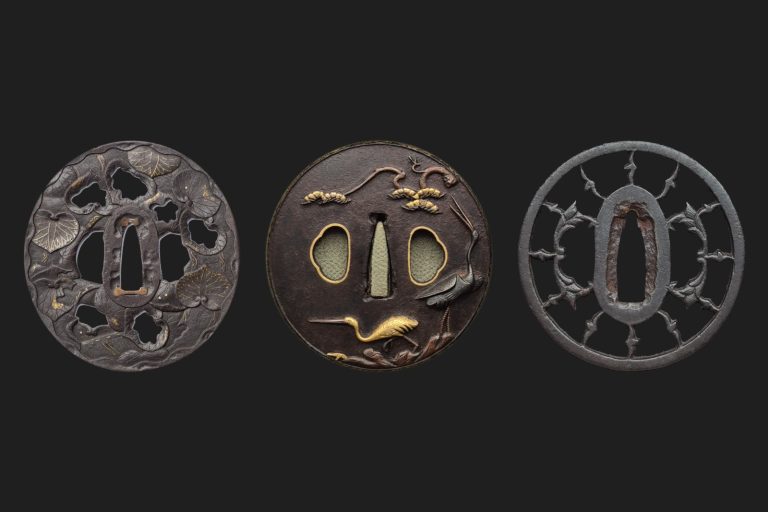
The name gives the first clue. Shoami ends in ami, a suffix that belongs to the doboshu, the companions of the Ashikaga shoguns in Kyoto. These were men of taste rather than of rank. Noami, for example, served the shoguns Yoshinori and Yoshimasa as adviser on art, and was a painter, master of the tea ceremony, poet and appraiser who arranged the shogun’s collection of Chinese paintings and utensils. Markus Sesko reads the suffix as a sign that the Shoami first belonged to this circle.
The suffix is a clue, not a record. The records come later. Sesko cites two.
A matter of property, 1540
One of the earliest entries that Sesko cites is in the diary of Odate Hisauji, an official of the shogunate who lived from 1454 to 1546 and wrote under the priest name Joko. In the ninth year of Tenbun, 1540, he notes an incident concerning the property of a silversmith, Sho’a Uemonsaburo. He adds that Sho’a and his predecessors had long been in the service of the shogun.
The diary does not say what the incident was. For the history of the school, Sesko points out, it says two other things. The Shoami held the office of silversmith, gin-saiku or shirogane-shi. And they worked officially for the shogunate.
A meal at the palace, 1571
The second entry is in the diary of the court noble Yamashina Tokitsugu, who lived from 1507 to 1579. On the twenty-ninth day of the fifth month of 1571 he records a soup of bamboo shoots, served early in the day at the residence of the emperor Ogimachi. Among those present he lists the host, Odate, and the silversmith Shoami.
The name is written here with other characters, 生阿み, and read the same way. Sesko takes the entry as evidence that a representative of the school could sit at a table with court nobles and an emperor, and that the Odate family stood close to the Shoami over some time.
Beside the Goto
From the entry of 1540 Sesko draws a date. The Shoami worked officially for the shogunate at the latest in the time of Joshin, the third master of the Goto family, who lived from 1508 to 1562. Employed by the same house, they may have held a similar rank. The name Shoami, he concludes, then carried more weight than it does today.
The difference lay elsewhere. The Goto belonged to the warrior class, the Shoami did not. From the Muromachi period into the early Edo period the Goto worked only for the highest warriors, the circle around the shogun. The Shoami worked for warriors of the middle ranks and for townspeople as well.
That difference runs through everything that follows. It may help to explain why the Goto name stayed with one family and its branches, while the Shoami name spread wide and thin.
Two beginnings
A. J. Koop, cataloguing the Church collection in Oxford around 1929, tells a different story. He places the founding of the school in the seventeenth century, at Nishijin in Kyoto, with Masanori, a pupil of the Umetada.
The two accounts need not exclude each other. Sesko’s documents show a family of silversmiths in the sixteenth century. Koop’s founder may stand for the start of a line of guard makers in the Edo period, under a name that was already old. That is a reading, not a finding, and both accounts are given here as they stand.
What neither account supplies is a genealogy. Koop said so in 1929, and Sesko says so in his own words.
A note on silver
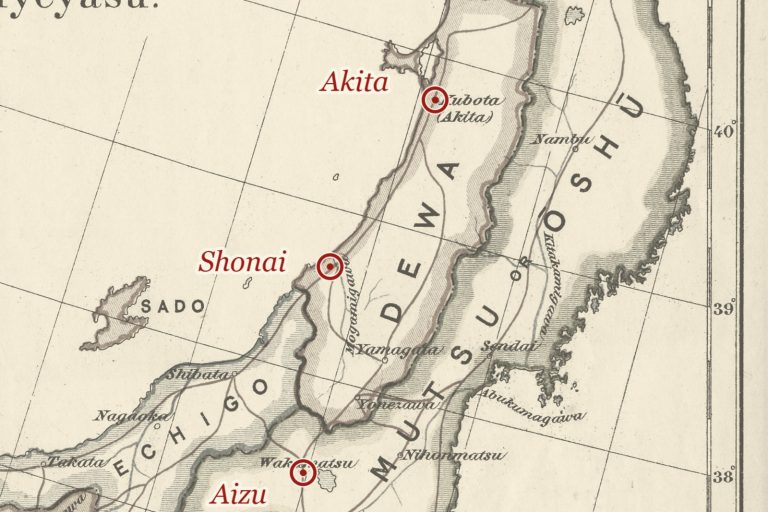
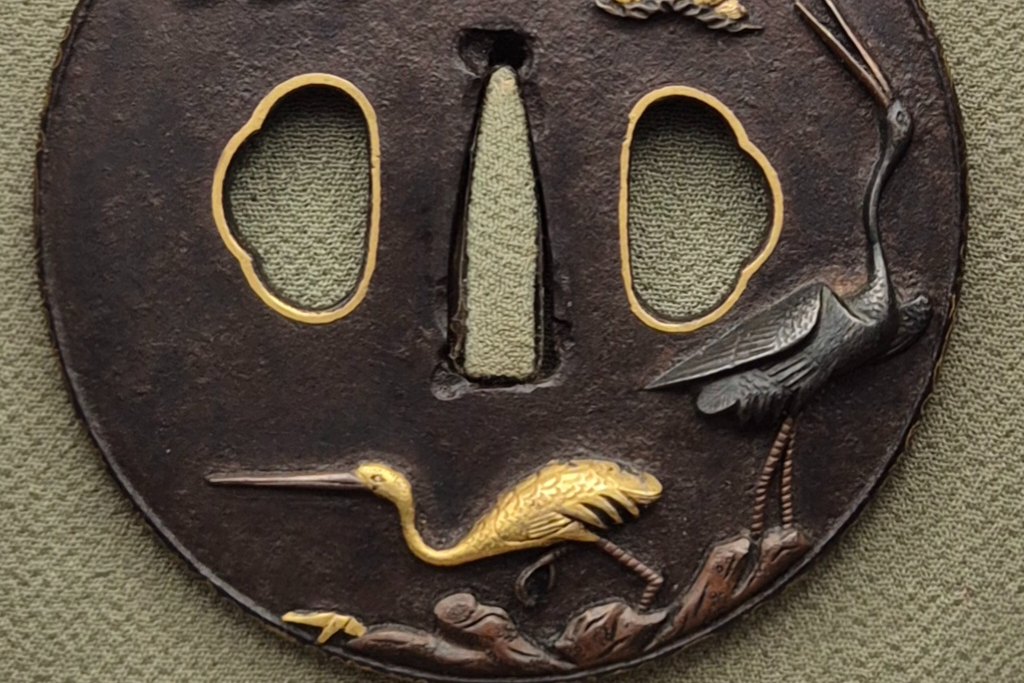
The guards in this collection are iron. Yet the trade of the first Shoami was in precious metals. The guard from Aizu has its rim inlaid with gold and its two side openings lined with gold. Koop, too, observed that the earlier Shoami work tends to be in the softer metals, with inlay of gold, silver or shakudo in low relief, often with a decorated border. Iron came later. The school seems to have followed its customers into it.
The Shoami: all parts
The three guards and their papers, side by side: The Shoami: Three Papers, One Name
Sources
- Markus Sesko, The Japanese Tōsō-Kinkō Schools, Kyoto volume, ch. 1.3 “The origins of the Shōami school”, pp. 38–39; ch. 1.4 “The differences between Shōami and Gotō”, p. 40; ch. 1.7, p. 49 (Noami).
- A. J. Koop, The A. H. Church Collection of Japanese Sword-Guards (Tsuba), chapter “Shōami school”, Ashmolean Museum, Eastern Art Online.
- Collection page: Aizu Shoami tsuba with pine and cranes.