A Scholarly Lineage
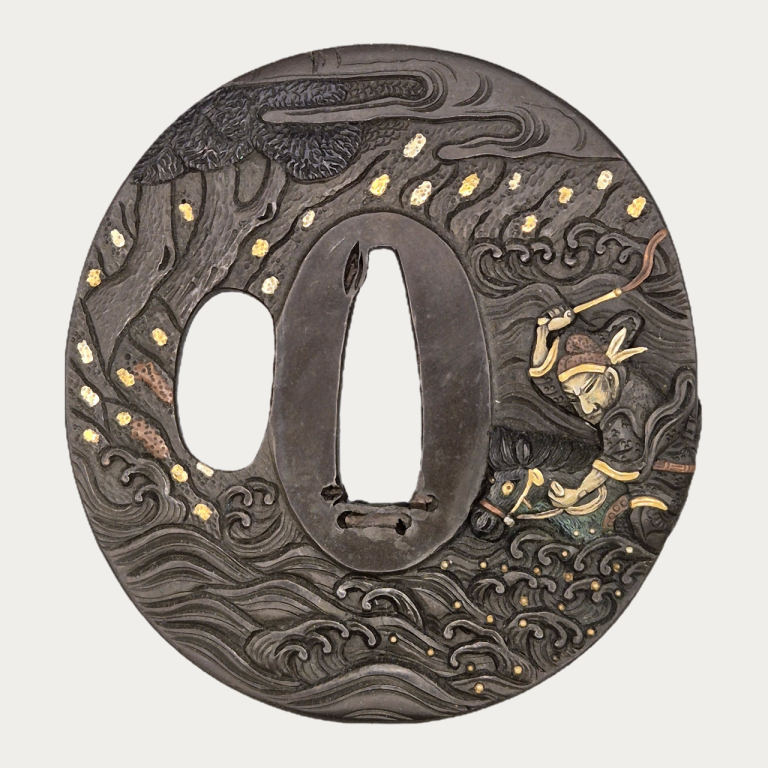
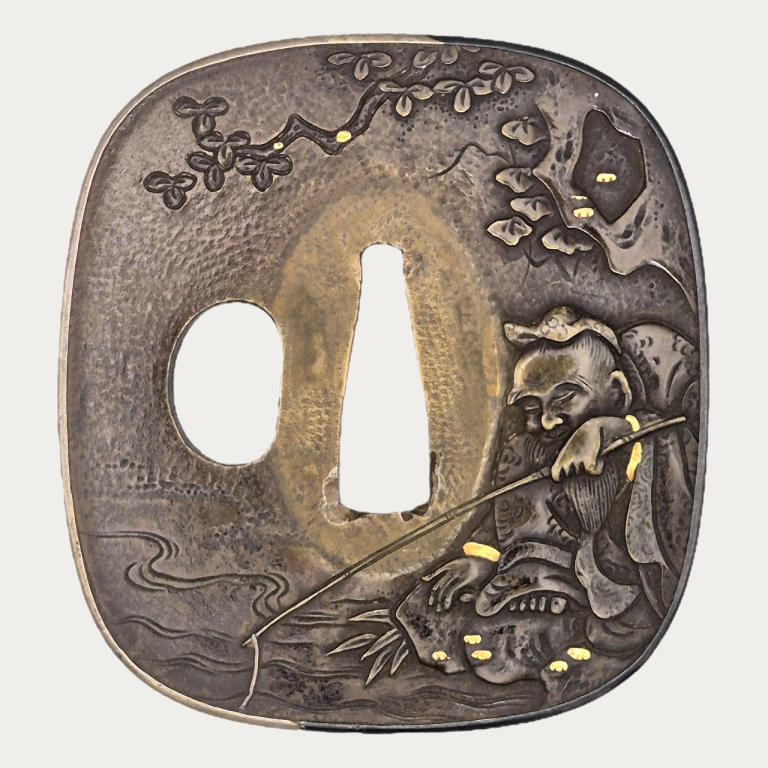
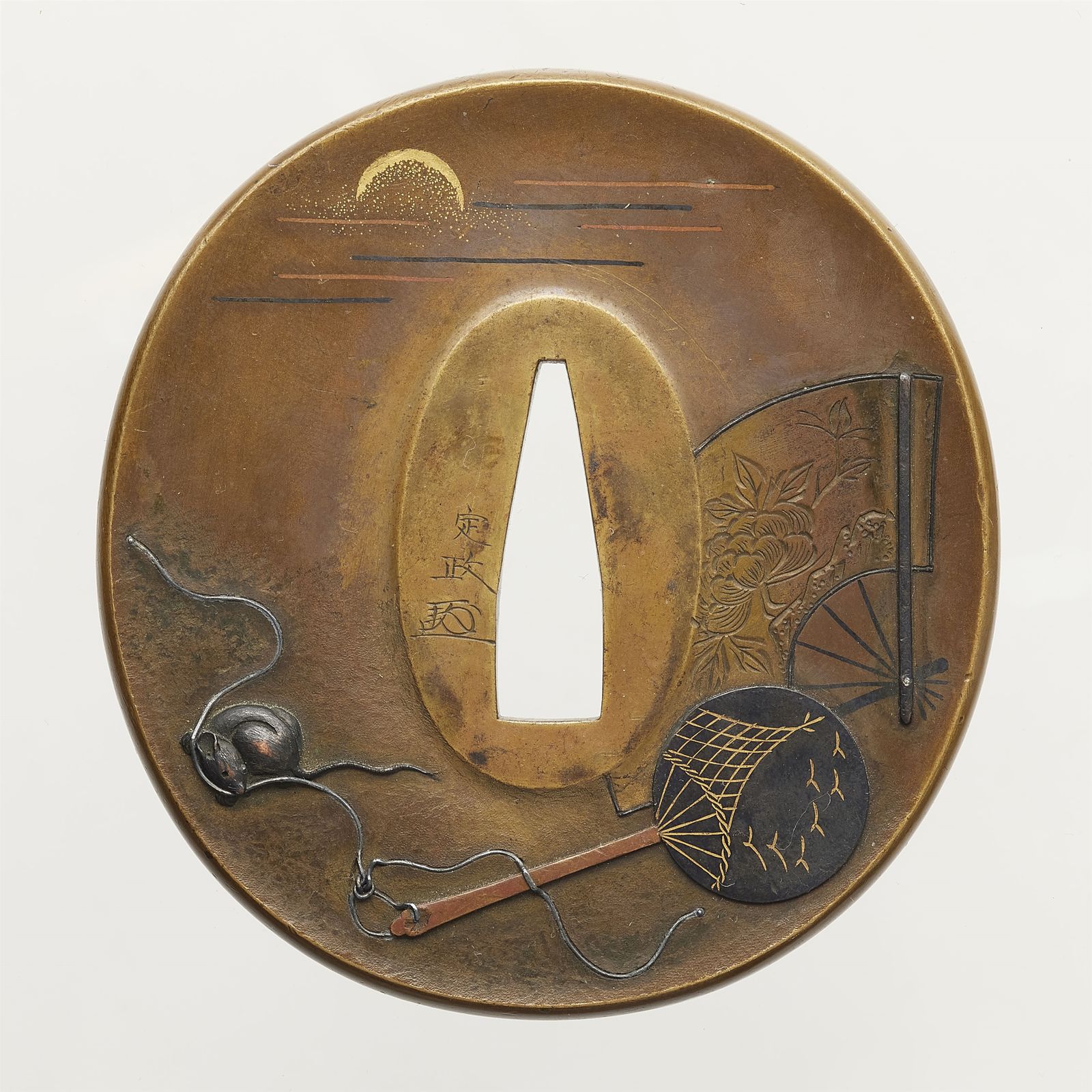
The systematic engagement with Japanese sword fittings (Tosogu) in Europe transcends mere exoticism. Between the 1880s and the 1930s, a distinct European perspective emerged, characterized by metallurgical analysis, philological rigor, and an appreciation for the Tsuba as a masterpiece of applied art. This evolution was driven by a network of collectors and scholars whose legacies (documented largely in the scholarly language of the time, German) still define the field today.
The Parisian Ignition: 1878 and the Birth of “Japonisme”
The systematic appreciation of the Japanese sword in Europe did not begin in the armories of collectors, but in the pavilions of the 1878 Paris World Exhibition. This event served as the “Big Bang” for Japanese art in the West. It was here that the French elite, jewelers, critics, and artists, first encountered Tosogu not as ethnographic curiosities, but as high-level sculpture in miniature.
From this explosion of interest, Paris emerged as the aesthetic heart of the movement, defined by a specific “French Taste” that prioritized the poetic and the archaic over the purely decorative.
The Vever Collection: The Jeweler’s Perspective
Henri Vever (1854–1942), a preeminent Parisian jeweler, was among the first to apply a professional artistic eye to Tsuba. He was a member of “Les Amis de l’Art Japonais” and amassed one of the finest collections of Persian and Indian miniature paintings in the world. For Vever, the sword guard was the ultimate expression of metalwork. His collection was characterized by an exquisite selection of “soft metal” (irogane) pieces, where he marveled at the painterly use of gold, silver, and alloys. Vever’s influence ensured that Tosogu were viewed through the lens of fine jewelry and sculpture, setting a standard of quality that would eventually reach across the channel to London and East to Düsseldorf & Berlin.
The Gallice Collection: The refined metalwork connoisseur
While Vever admired the jeweler’s craft, Henri Gallice (1853–1930) pioneered a more austere path that would profoundly impact collectors like Walter Lionel Behrens. Gallice turned away from the “bijouterie” (showy jewelry-like pieces) of the late Edo period. Instead, he championed the “primitive” power of the early iron Tsuba.
Gallice sought the “soul” of the samurai in the hammered surfaces of Miochin and Saotome guards. His preference for rich, dark patinas and simple, symbolic forms created a new “purist” aesthetic. This “Gallice Style” taught European collectors to value the subtle strength of iron, a philosophy that became a central pillar of the European connoisseurship. Like Vever, he was a client of the Japanese Art dealer Tadamasa Hayashi.
The Intellectual Engine: The German “Wissenschaft”
While the 1878 Paris World Exhibition provided the aesthetic “ignition,” it was in Germany that the study of Tosogu became a formal discipline. German was the lingua franca of early Japonology; the systematic, school-oriented approach (Ryūha) was pioneered here.
- The Oeder Benchmark: The collection of Georg Oeder (Düsseldorf) provided one of the most massive typological surveys of the era. His work helped Europeans distinguish between the austere iron work of the Shoami schools and the refined soft-metal alloys (irogane) of the Goto masters.
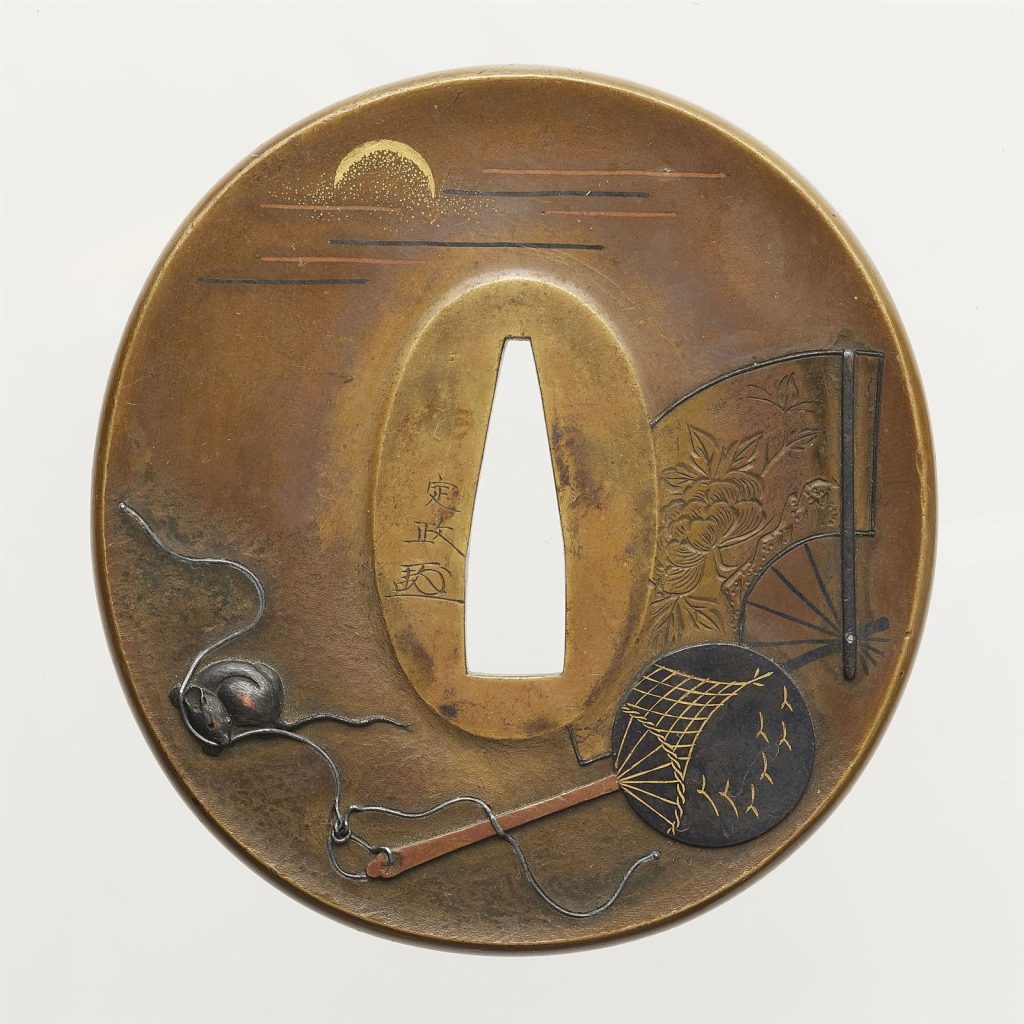
- Walter Fahrenhorst brought a professional metallurgist’s eye to the field. He cultivated a close relationship to Japanese Scholars and Dealers. His collection was so high in Quality and survived both World Wars (other than the Oeder Collection, unfortunatly) that great parts of it returned “home” to Japan in 1968.
This is a Tsuba from the Fahrenhorst Collection (No. 59)
The Scandinavian Connection: Hugo Halberstadt
The influence of German scholarship extended deep into Scandinavia. Pietro Krohn, director of the Designmuseum Danmark, began the movement by treating Tsuba as high-level industrial design. This was perfected by Hugo Halberstadt.
Crucially, although active in Copenhagen, Halberstadt operated within the German academic sphere; his extensive research and meticulous handwritten notes were composed entirely in German. His collection of over 1,700 pieces, donated to the Designmuseum Danmark in Copenhagen, remains a cornerstone of research. Providing the empirical data that allows modern experts to validate the collection’s international standing.
The British Encyclopedists: Behrens & Joly
In Great Britain, the movement took on an encyclopedic scale. Walter Lionel Behrens (Manchester) sought to document every known technique and school. He was moving away from the “pretty objects” of the 19th century toward the archaic, “primitive” iron guards favored by the French purists like Henri Gallice and Henri Vever.
The bridge between these collections was the scholar Henri L. Joly. By cataloging the massive holdings of Behrens (1913) and J.C. Hawkshaw (1910), Joly created the English-language “Bibles” of the field, though his work remained deeply indebted to the earlier German Handbücher and taxonomies.
Aesthetic Purism: The Swiss Contribution
As the pre-war era progressed, Alfred Baur in Geneva represented the pinnacle of “perfection of form.” Unlike the encyclopedic collectors, Baur’s acquisitions were characterized by an uncompromising demand for “mint” quality and provenance. His collection bridged the gap between the technical German approach and the aesthetic French “Japonisme,” viewing the Tsuba as a standalone work of fine art.
A Distinct European Methodology
What unites these pioneers, from Oeder in Düsseldorf to Behrens in London, is a shared methodology:
- Classification: Categorizing pieces by school (Ryūha) and maker (Mei).
- Material Science: A deep fascination with shakudo, shibuichi, and the patination processes unique to Japan.
- Philology: The use of German and English catalogs as primary tools for deciphering signatures and myths.
Continuity & Legacy
These early collections are the architectural framework of modern connoisseurship. By the time the Second World War disrupted these networks, the “European perspective” had successfully elevated the Tsuba from a functional guard to a globally recognized medium of artistic expression. Today’s researchers continue to stand on the shoulders of these pioneers, utilizing their catalogs as the ultimate authorities on authenticity and provenance.