Zwei und zwei
Four Doves, Ishiguro Masayoshi
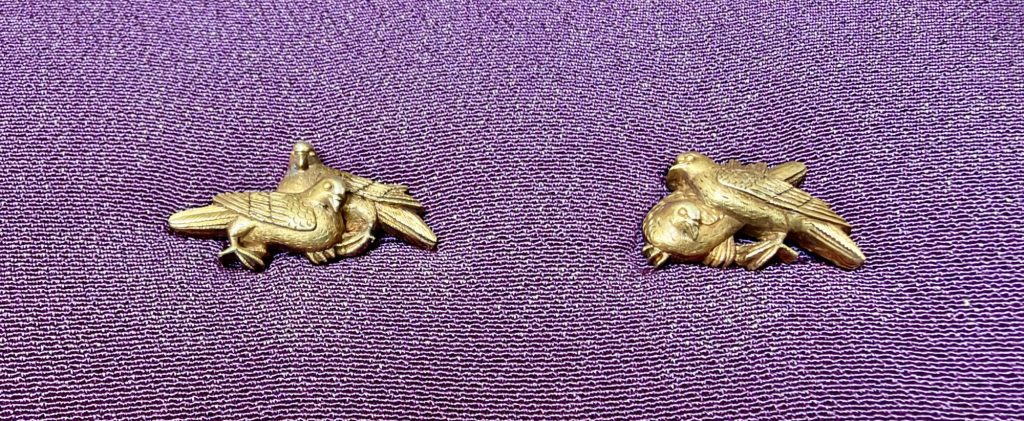
Two menuki by Ishiguro Masayoshi, carved in the round from solid gold, with two doves on each. On both pieces one bird rests low while the other stands over it, wings half open. The feathers are cut one by one. The paper calls the subject shiwa hato, four doves. The signature is divided between the pair, each half on a small raised plate, a tanzaku: Ishiguro on one piece, Masayoshi on the other. The pieces are too small to carry the whole name, so each takes half of it.
The Ishiguro school goes back to Ishiguro Masatsune, who lived from 1760 to 1828. The Sannenzaka Yasaka Museum in Kyoto credits the school with birds and flowers in high relief and color, and with particular strength in birds of prey. Masayoshi was Masatsune’s pupil. The Baltimore Museum of Art records that he later served the Shimazu lords at their residence in Edo. The Metropolitan Museum of Art counts him among the most renowned artists of the school.
The Walters Art Museum, describing a guard with a temple guardian, notes that the dove is a symbol of Hachiman, the Shinto deity. Here there is no shrine and no guardian. There are four birds, close together, small enough to sit beneath the binding of a grip.
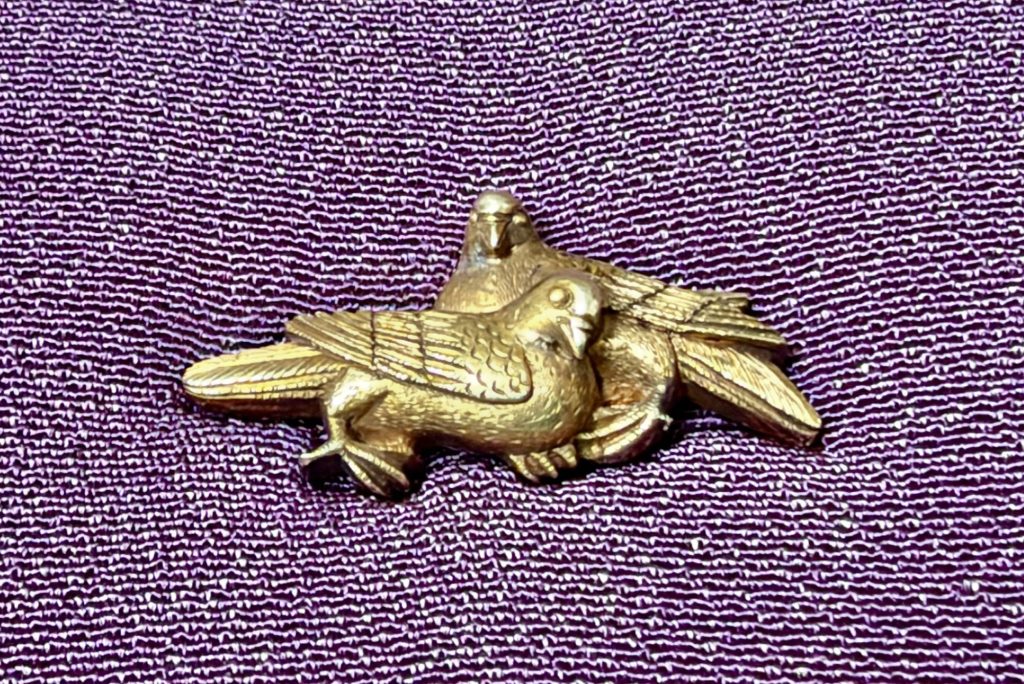
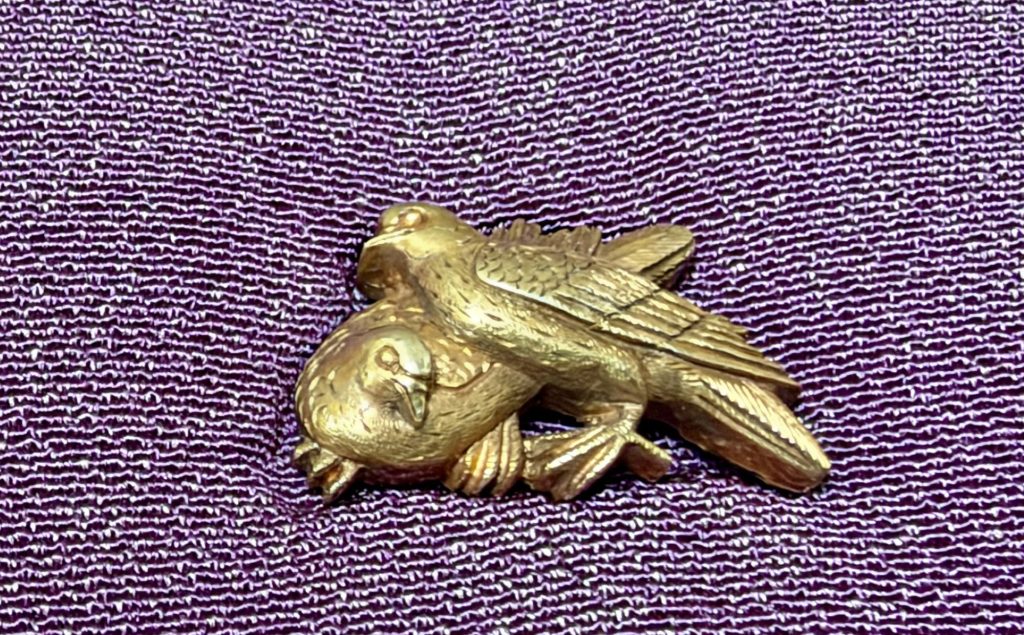
Menuki. Signiert Ishiguro und Masayoshi (tanzaku-mei). Kin-muku, katachi-bori. Shiwa hato-zu. Späte Edo-Zeit. NTHK Kanteisho. Privatsammlung, erworben in Japan.
In the collection
- Type
- Tosogu › Menuki
- School
- Ishiguro
- Period
- Edo-Zeit › Späte Edo-Zeit
- Material
- Kin
- Motif
- Tiere und Vögel