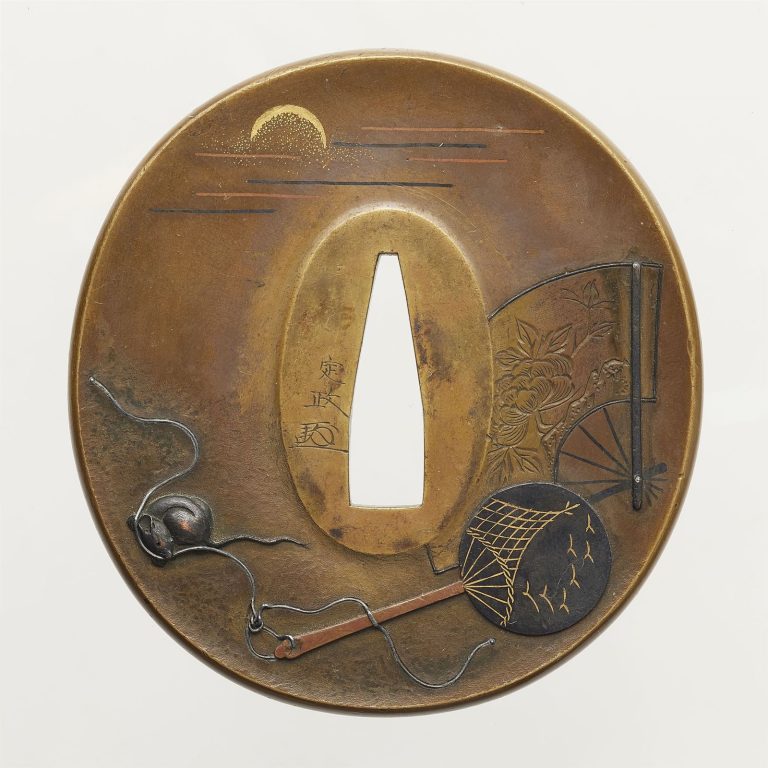
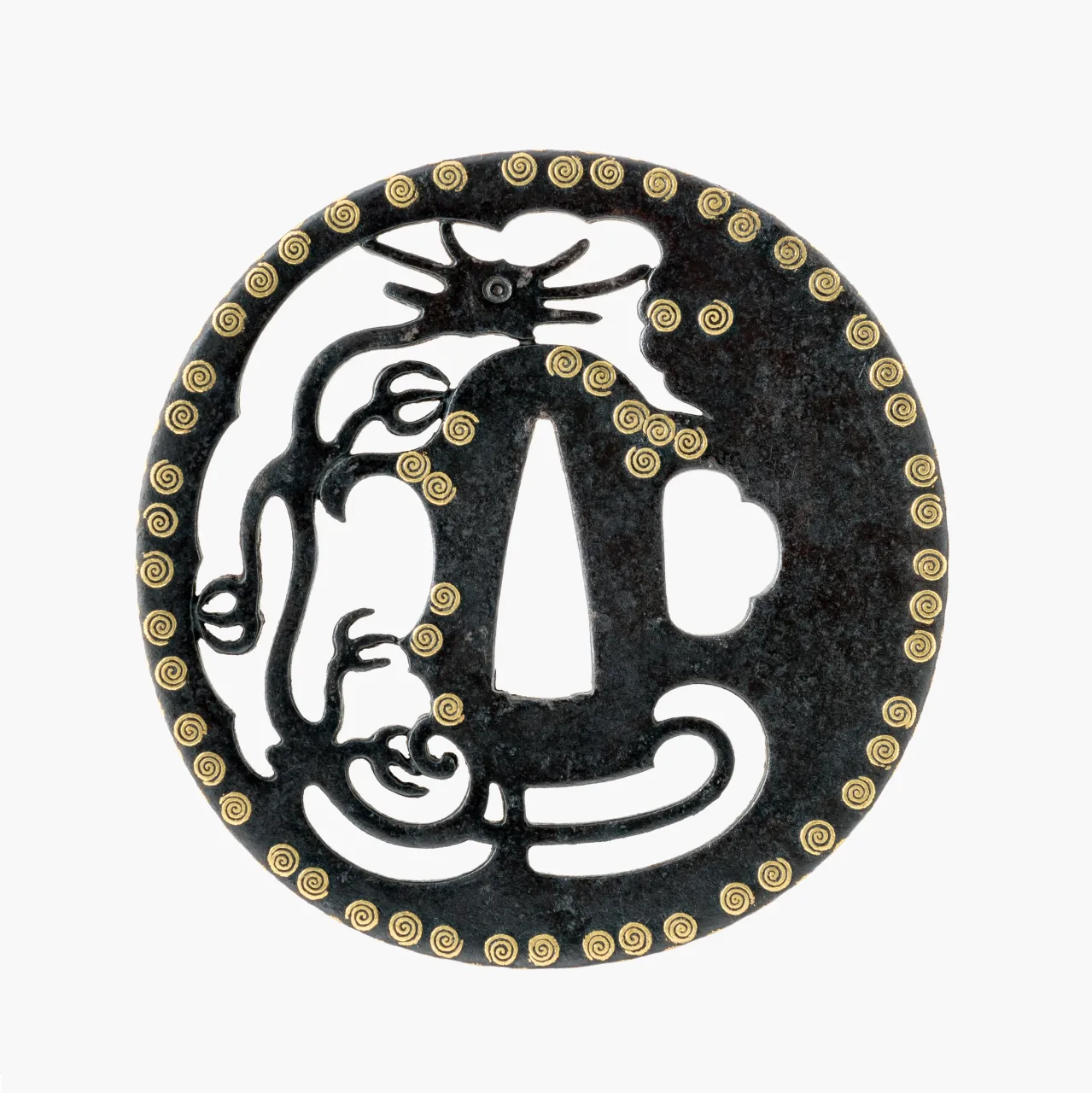
On a Berlin businessman, 1,200 objects, and the question of what collecting is for.
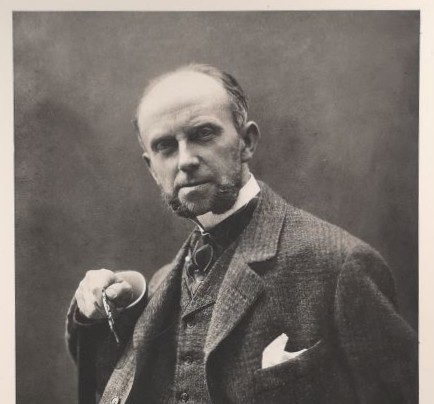
Gustav Jacoby was born in 1856 and died in 1921. He was one of the great German collectors of Japanese art in the early twentieth century, deeply committed to enhancing public awareness and knowledge of Japanese art and crafts. His personal holdings of sword decorations and lacquerware in particular exceeded many museum collections of his time.
He was not a painter who had lost his vocation, like Oeder. Not an institution director with a mandate, like Brinckmann. Not an industrialist with a purpose-built gallery, like Fahrenhorst. Jacoby was a Berlin businessman who started collecting seriously at the age of 43 and, within five years, had assembled a holding that the Kunstgewerbemuseum Berlin considered significant enough to exhibit in its own premises. The speed alone is remarkable. The depth behind the speed is what makes him worth examining.
Jacoby started collecting Japanese art seriously in 1899, and as early as 1903 was able to publish a series of sword guards from his collection in a catalogue. The first public exhibition of Jacoby’s private collection in Berlin in 1904, titled “Small Works of Japanese Art”, featured almost 1,200 objects. Four years from the first serious purchase to a 1,200-object exhibition: this was not accumulation driven by casual enthusiasm. It was purposeful acquisition, guided by a clear sense of what a collection should do and what it should contain.
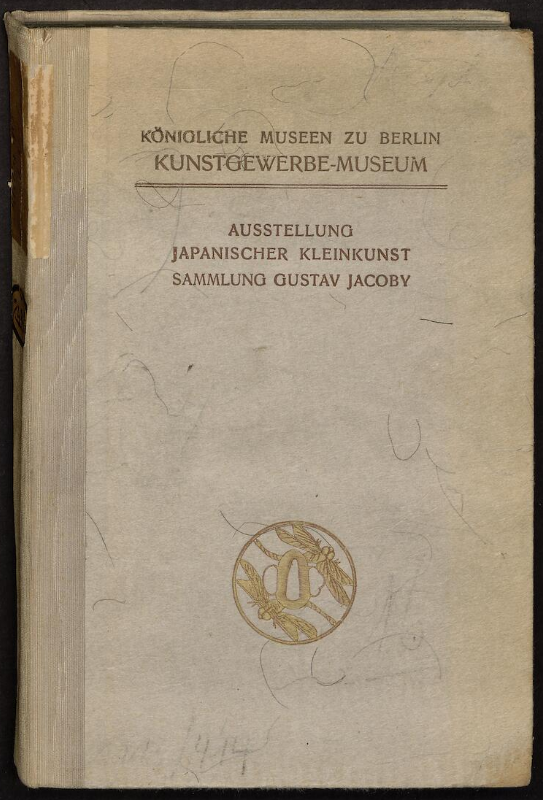
The 1904 Berlin exhibition, and its expanded catalogue published the following year — Ausstellung japanischer Kleinkunst: Sammlung Gustav Jacoby, with a preface by none other than Justus Brinckmann — marks Jacoby’s entry into the German-language literature of the field. Brinckmann, by 1905, was the most authoritative German voice on Tosogu. His willingness to introduce Jacoby’s collection to the public was an endorsement of substance — a signal that what Jacoby had assembled was not simply large, but serious.
The two men represented different models of engagement with the same material. Brinckmann was the institutionalist: acquiring for public benefit, theorising about classification, building a collection that belonged to Hamburg. Jacoby was the private collector who nonetheless oriented his collection toward public understanding — exhibiting it, publishing it, making it accessible. He had no museum behind him. He created his own occasions for showing what he had found.
Where Jacoby is most distinctly himself, and most interesting to the contemporary reader, is in his scholarly work on Higo. In 1905 he translated and adapted the Higo Kinkoroku of S. Nagaya — a Japanese-language reference work on the sword mountings of Higo province — producing Die Schwertzieraten der Provinz Higo, with 67 illustrations and an appendix listing the signatures of the Higo masters. This was not catalogue work in the Joly sense — not the documentation of objects already assembled. It was translation scholarship: the effort to make a Japanese primary source available in German, to give the German-speaking collector access to a body of knowledge that had previously existed only in a language almost none of them could read.
Higo is one of the most technically demanding areas of Tosogu collecting. The province produced several of the most important schools — Hayashi, Nishigoki, Shimizu, Hirata — whose work is characterised by a kind of refined austerity that resists easy appreciation. The iron is exceptional; the designs are precise and often spare; the school affiliations matter enormously for attribution. To translate the primary Japanese reference on this tradition into German in 1905, when almost no European collector had the tools to approach it, was a contribution of genuine scholarly value.
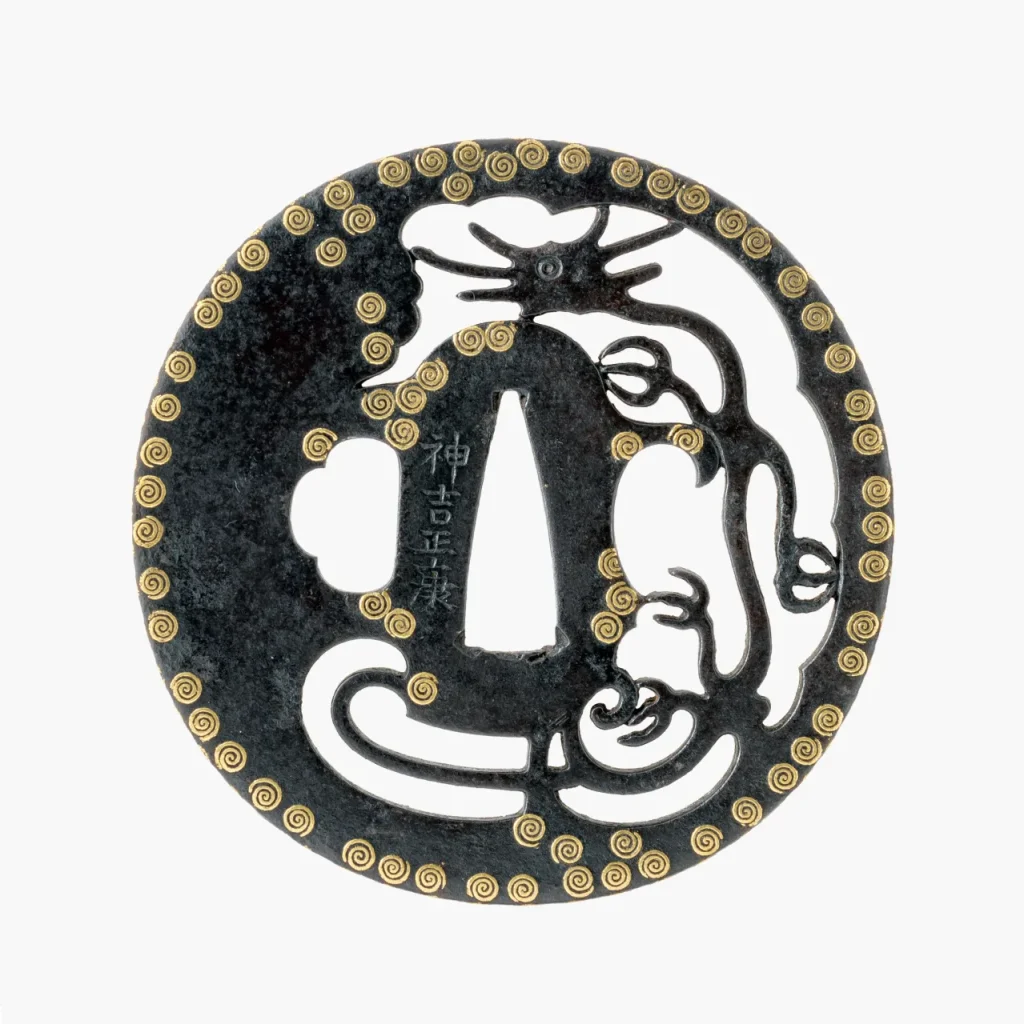
Today in the Collection of Museum für Kunst & Gewerbe Hamburg
The Higo Kinkoroku itself was a Japanese-bound volume, and Jacoby’s copy survives with his own annotations alongside two notebooks containing his German translation — all preserved in a grey cloth case by the Berlin binder C. Angermann. The image of those notebooks — a Berlin collector working through a Japanese text, page by page, filling notebook after notebook with his own translation — is a precise emblem of what distinguished Jacoby from the majority of his contemporaries. He was not content to look at the objects. He wanted to understand the written tradition behind them.
What Jacoby represents in the German-speaking history of Tosogu is the collector who refused to remain on the surface. Brinckmann theorised without going to Japan. Oeder went to Japan and collected without theorising. Fahrenhorst collected with connoisseurial depth. Jacoby did something different: he treated the collection as an occasion for scholarship, and the scholarship as inseparable from the collecting. The 1904 exhibition, the catalogues, the Higo translation — these were not separate activities. They were expressions of a single conviction: that objects without knowledge are incomplete, and that knowledge without objects has nothing to test itself against.
He died in 1921, the same year Joly died in London. The two men had been working in parallel, in different languages, on the same field — Joly cataloguing the British collections that were the public face of Edwardian Tosogu scholarship, Jacoby translating the Japanese sources that most British collectors could not access. Neither of them lived to see the field develop into the more international discipline it would become in the latter half of the twentieth century. Both left behind work that was ahead of its moment — precise, serious, oriented toward use rather than display.
Jacoby was deeply committed to enhancing public awareness and knowledge of Japanese art and crafts. In a field where most serious collectors kept their holdings private and their knowledge largely to themselves, this commitment was unusual. It is also, for the contemporary European collector thinking about what a platform for Tosogu might be for, the most directly relevant dimension of his legacy. Jacoby understood, before the question was widely asked, that a collection without an audience is only half a collection.
Sources
- Jacoby, Gustav; Brinckmann, Justus (preface). Ausstellung japanischer Kleinkunst: Sammlung Gustav Jacoby. Berlin: Kunstgewerbemuseum, 1905.
- Nagaya, S. / Jacoby, Gustav (trans. & adaptor). Die Schwertzieraten der Provinz Higo.
- Hara, Shinkichi; Brinckmann, Justus. Die Meister der japanischen Schwertzierathen. Hamburg, 1902. — Establishes the scholarly context within which Jacoby’s work operated.
- Otto Kümmel; “Die Schenkung des Herrn Gustav Jacoby an die Abteilung Für Ostasiatische Kunst”, Berliner Museen42. Jahrg., H. 3./4. (Dec., 1920 – Jan., 1921), pp. 29-42 (14 pages), Published by Berlin State Museums, Prussian Cultural Heritage