
Drei Papiere, ein Name
The Shoami: Three Papers, One Name
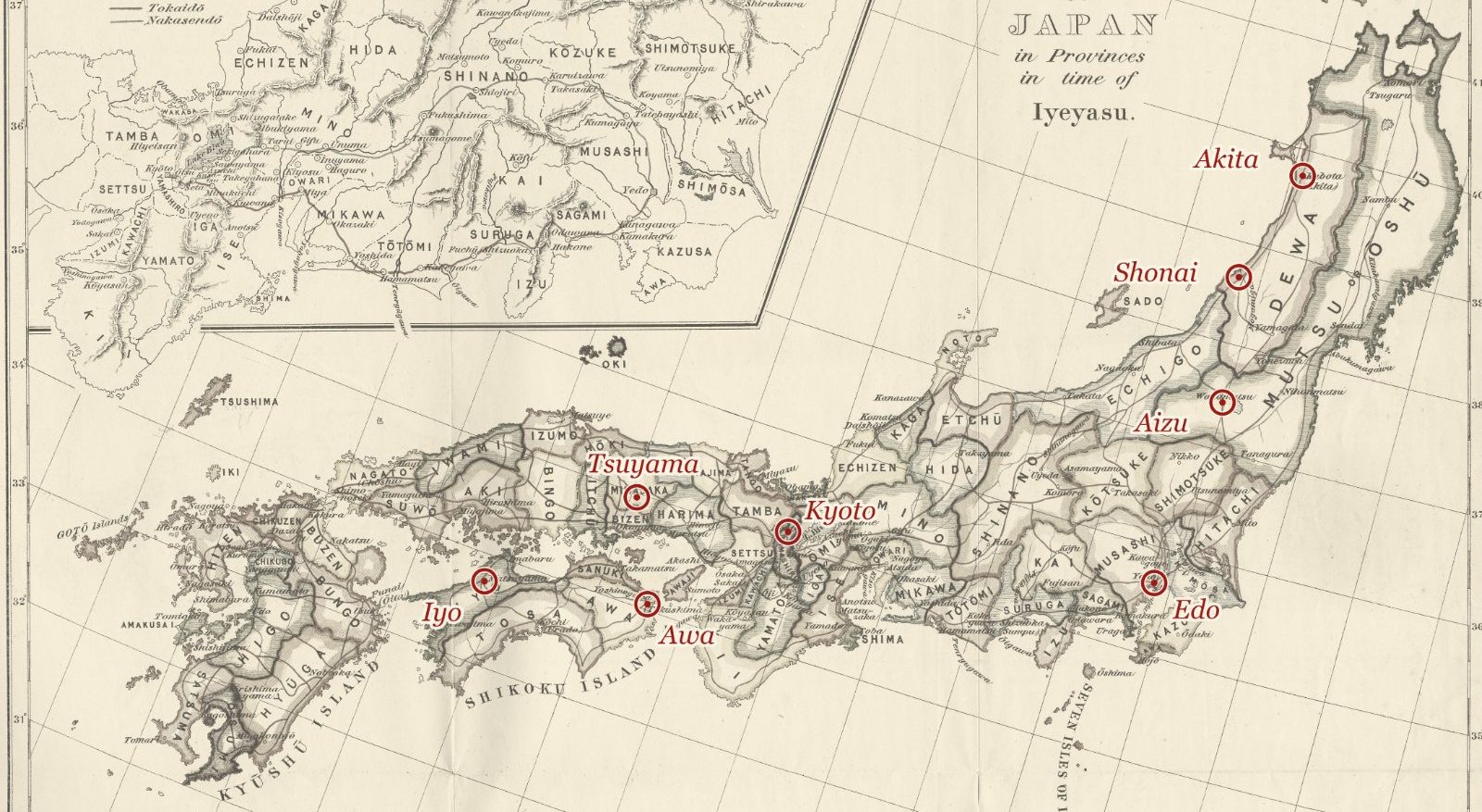
Three iron tsuba in this collection carry papers of the NBTHK, and each paper says Shoami. Two add a place: Akita and Aizu, both in the north of Honshu. The third names the school and nothing more. Read side by side, the three papers show how far the name reaches and where it stops.
Der Name
The Shoami are a school of many places, and their beginnings are thin on paper. Markus Sesko, in The Japanese Tōsō-Kinkō Schools, notes that no documents on their origins or early genealogies survive, and finds them in the sixteenth century as silversmiths in the service of the Ashikaga shoguns. A. J. Koop, cataloguing the Church collection for the Ashmolean Museum around 1929, places the founding of the school in the seventeenth century, with Masanori at Nishijin in Kyoto. In the eighteenth and nineteenth centuries Shoami families settled in castle towns across Japan, from Aizu and Akita to Iyo.
Drei Tsuba, drei Papiere
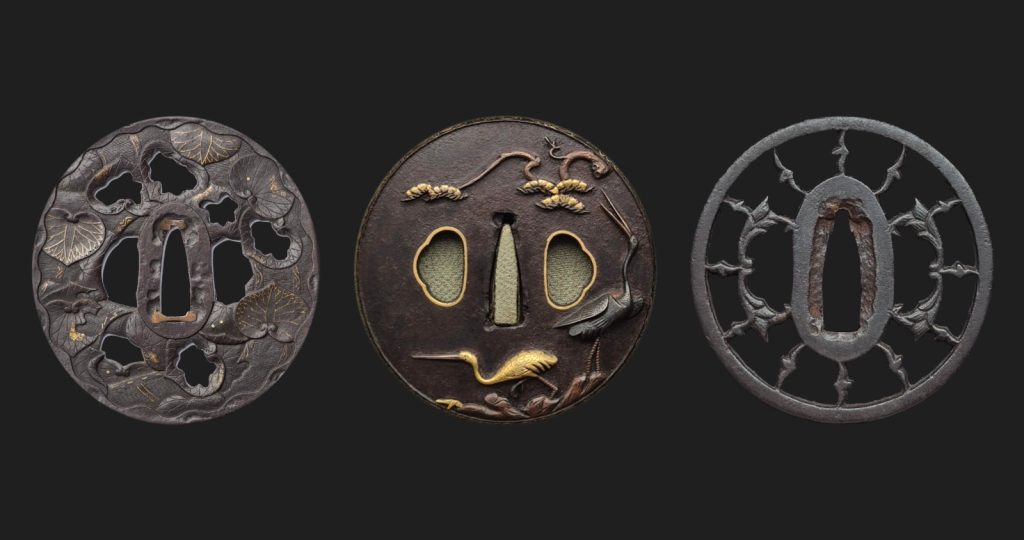
- Aoi leaves and rafts, iron with gold, NBTHK Tokubetsu Hozon: Akita Shoami. First published here as Ito school work; the shinsa placed it in Akita.
- A pine and a pair of cranes, iron with gold and shakudo, NBTHK Hozon: Aizu Shoami.
- Ginger buds and wild geese cut through the iron, NBTHK Hozon: Shoami, with no branch. The guard belongs to the mounting of a katana in this collection and has no page yet.
Koop sorted the Shoami guards of the Church collection by place and left about half of them unclassified. The papers in this collection follow the same order: two name the branch, one stops at the school.
Die Reihe
- One Name, Many Workshops
- Silversmiths to the Shogun
- Cut Through the Iron
- A School of Many Places
- Three Papers
Was offen ist
The guard without a branch still needs its own page. Sesko’s volumes on the provincial schools, and the Japanese literature on the branches, have not yet been read for this study. A fourth Shoami paper, from a branch not yet represented here, would change the picture.

