Der Zweig im Rahmen
A Plum Branch in Openwork, Higo
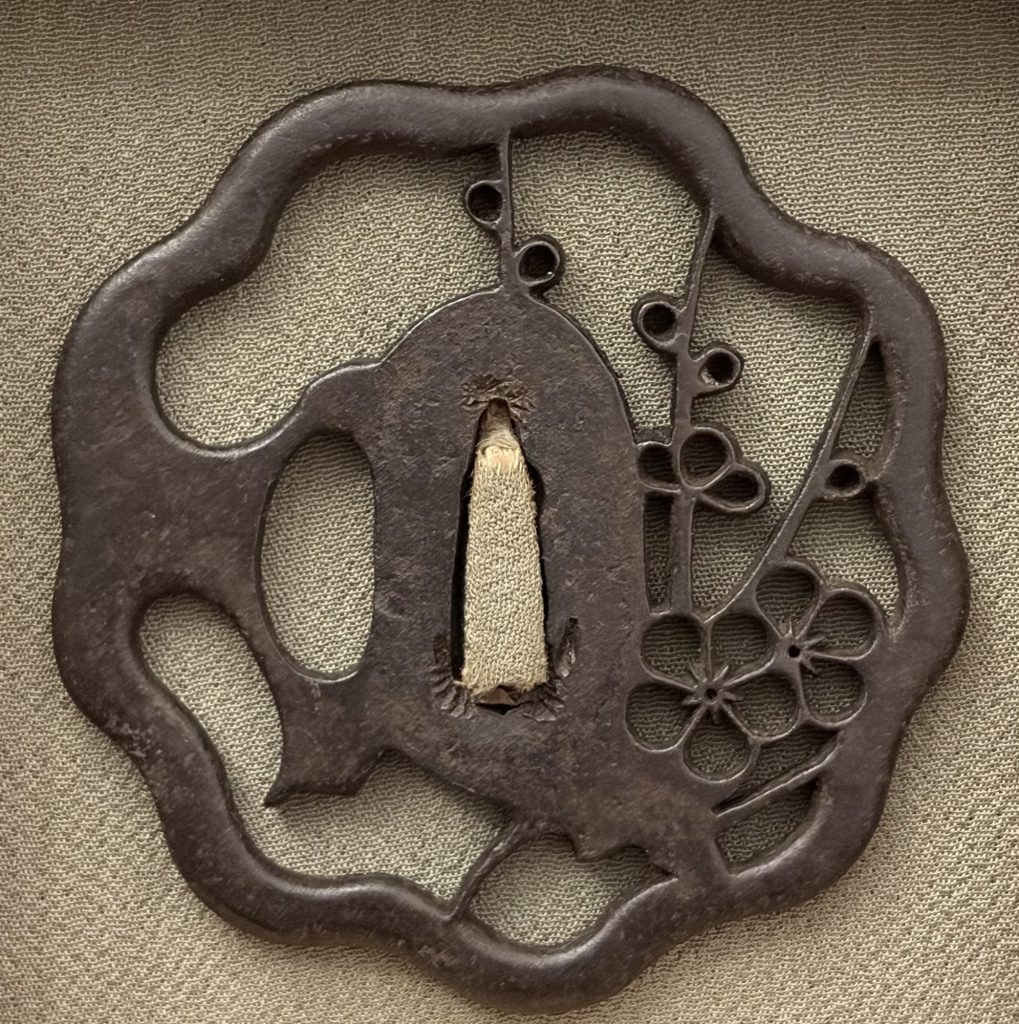
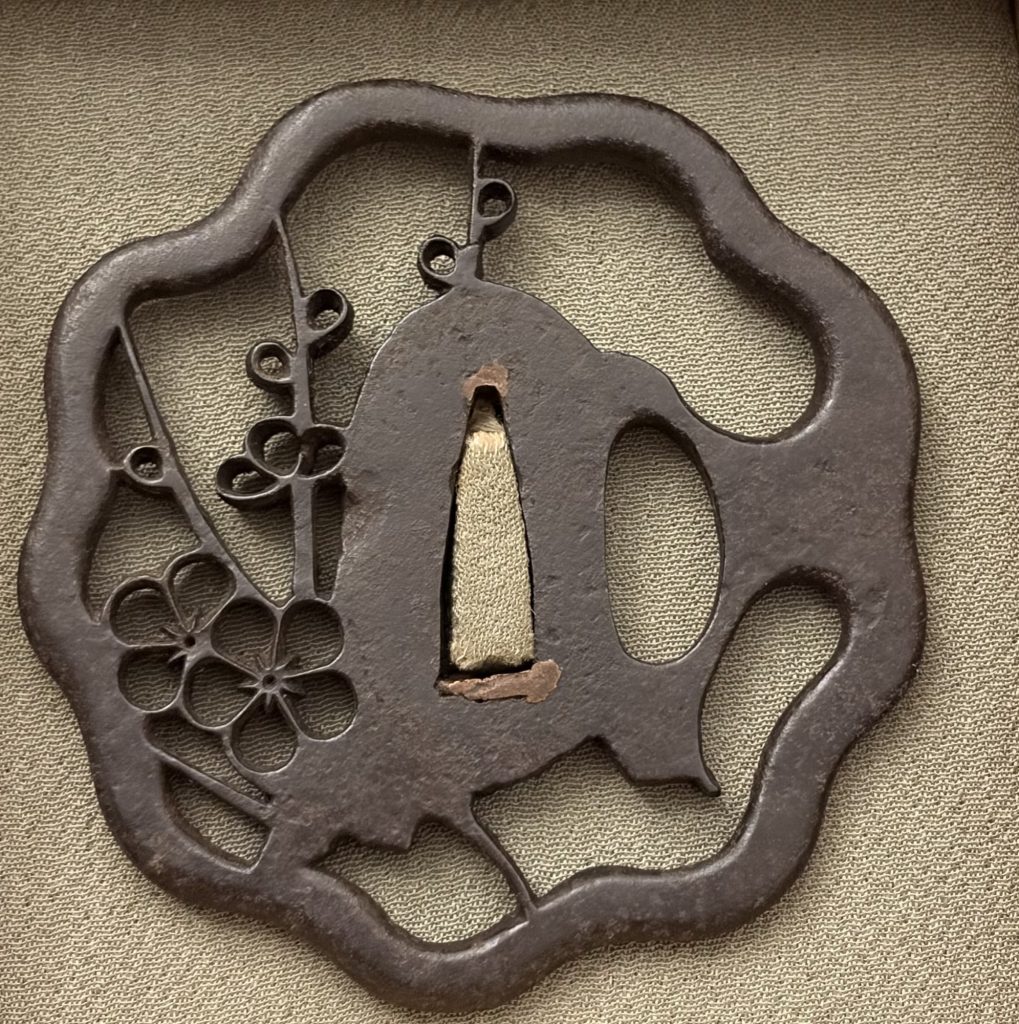
An iron guard cut down to its frame and a single branch. The rim runs in soft lobes, like the edge of a flower. Inside it a plum branch rises on the right, with open blossoms near the bottom and buds on the twigs above. On the left the plate is left almost whole, around the opening for the blade and the single hitsu-ana.
Das Objekt
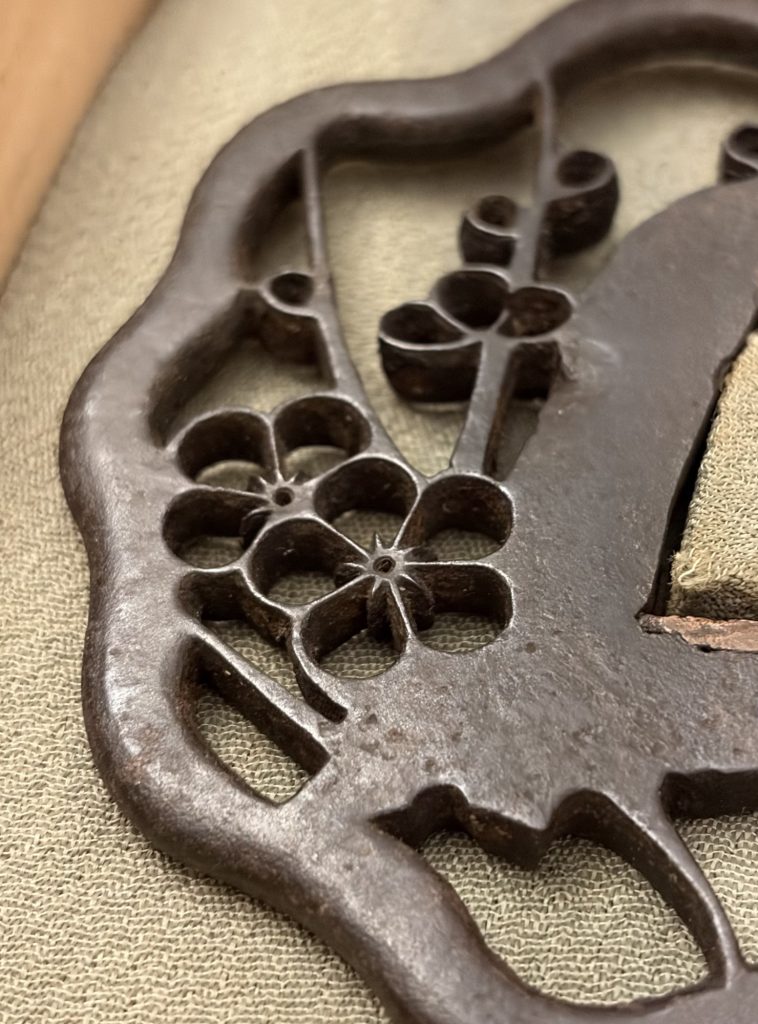
The guard is iron and unsigned. The rim is thick and rounded. The design is sukashi, openwork: what remains of the iron is the picture. Two blossoms are fully open, five petals each, their centres marked with a small punched star. The buds sit on the upper twigs as small rings. Both faces carry the same design, one the mirror of the other.
Higo
The Museum of Fine Arts, Boston keeps two unsigned iron guards with a flowering plum in openwork. One is dated to the late seventeenth or early eighteenth century, the other to the late eighteenth. Both are given to the Nishigaki branch of the Higo school. The collection reads this guard as work in the Higo manner: iron left dark and quiet, a subject reduced to a few lines. The reading is its own, and the guard has no paper.
The Higo Plum Tsuba
Tsuba. Mumei. Higo-Stil (eigene Zuschreibung). Tetsu, sukashi, gelappter Rand. Ume-sukashi, ein blühender Pflaumenzweig. Edo-Zeit. Privatsammlung, erworben in Polen.
In the collection
- Type
- Tosogu › Tsuba
- School
- Higo
- Period
- Edo-Zeit
- Material
- Tetsu
- Motif
- Pflanzen und Jahreszeiten