The Way of the Samurai
For a long time, I imagined a samurai as a warrior: Armor. Bow. Naginata. Battle.
But when I began to read more about Japan during the time of Tokugawa Ieyasu, my view changed. From 1603 onwards, an era of peace began: The Edo period. Over 250 years of relative stability. The warrior suddenly stopped fighting.
- He managed
- He was studying
- He wrote poems
- He practiced calligraphy
- But he continued to carry his sword
And here begins the story that truly touched me: If the sword was no longer needed daily in war, what remained? Its symbol. The sword was the soul of the samurai.
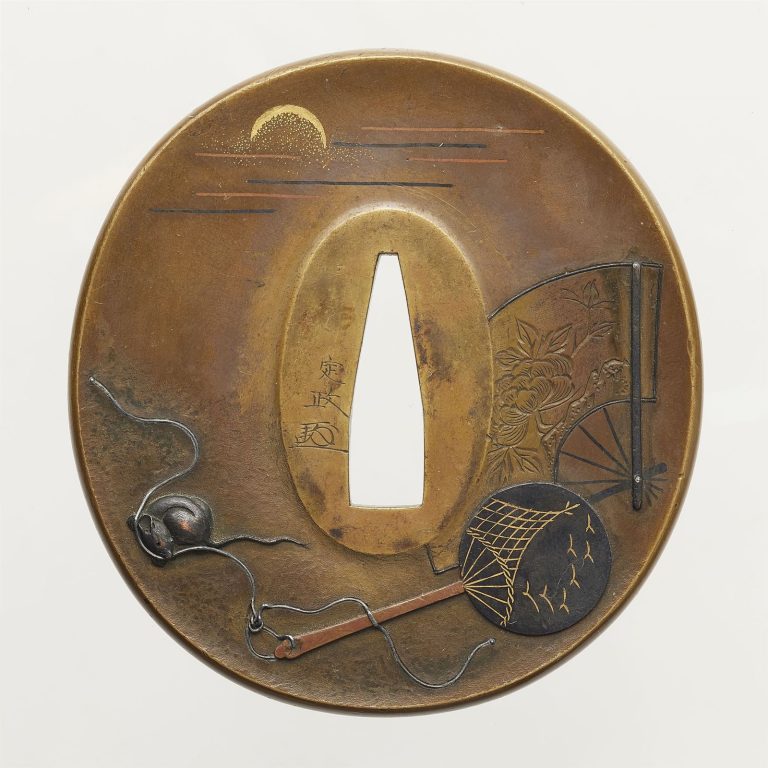
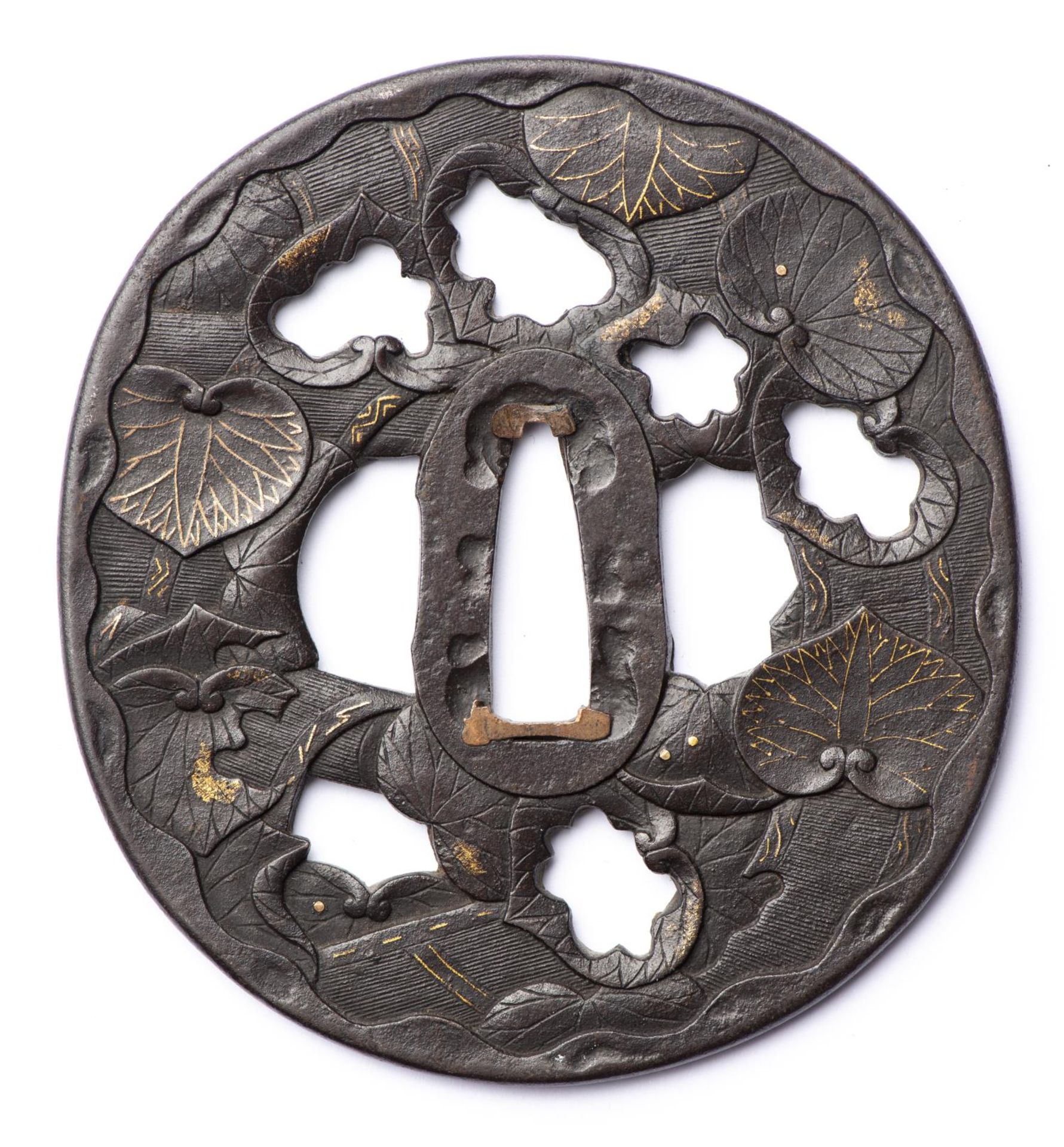
But the Tosogu – Tsuba, Menuki, Kozuka – were his signature. They were visible. Personal. Close to the body. A samurai could use this to show what shaped him:
- a scene from a classic play
- a Taoist sage
- a dragonfly: Symbol of courage
- Bamboo in the wind: Steadfastness without rigidity
I had thought these pieces were “decorations”. But they are more like declarations in metal.
Art in Peace
What particularly surprised me was: The long period of peace created space for perfection. Workshops specialized. Families worked on the same technique for generations.
The famous Goto school developed a style of controlled elegance: Gold on dark shakudo, austere, aristocratic.

The Nara school, on the other hand, told stories: Figures in motion, landscapes with depth, almost like small sculptures.
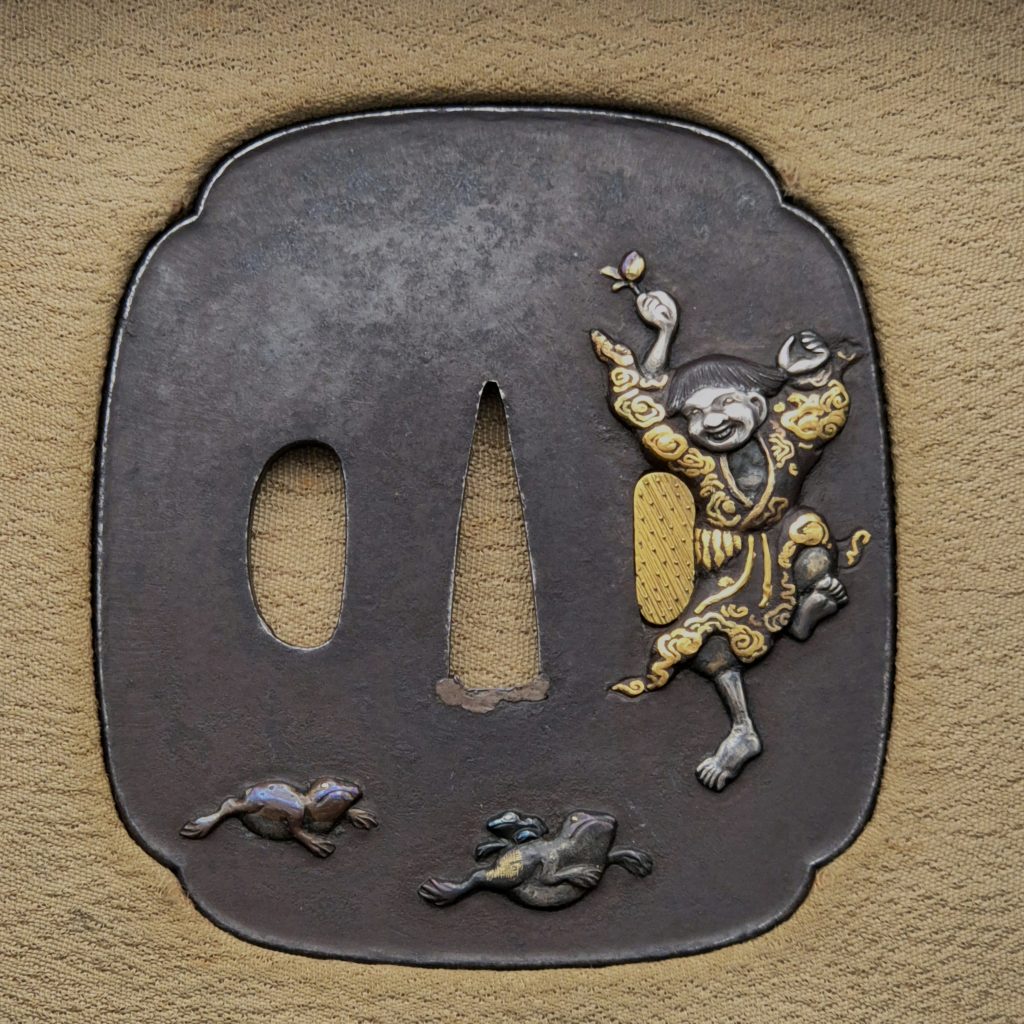
And later, individual masters emerged who depicted nature so finely that one believes an insect could move. All this: On surfaces barely larger than a matchbox. I began to understand:
This is not a sub-form of Japanese art.
This is concentrated high culture.
Between power and aesthetics
In Europe, weapons were status symbols due to their size, material, and splendor. In Japan, the expression was in the details: A samurai didn’t need to shout who he was. He showed it in nuances:
- The patina of iron that is 200 years old
- A gold accent that is only visible in the right light
- A motive that only the educated person recognizes
It is art that demands respect, not attention. And perhaps that is exactly why it affects me so deeply. Because in a world that is loud, something quiet was created here. Something disciplined. Something that doesn’t seek to impress, but rather to endure.
I came to Tosogu out of curiosity. Now I’m beginning to understand: These objects are not just historical artifacts. They are frozen decisions. A person’s decisions in a time of peace, about what he wanted to keep close to his soul.
And that changes everything.