Der Kranich von vorn
A Crane in Openwork, Higo
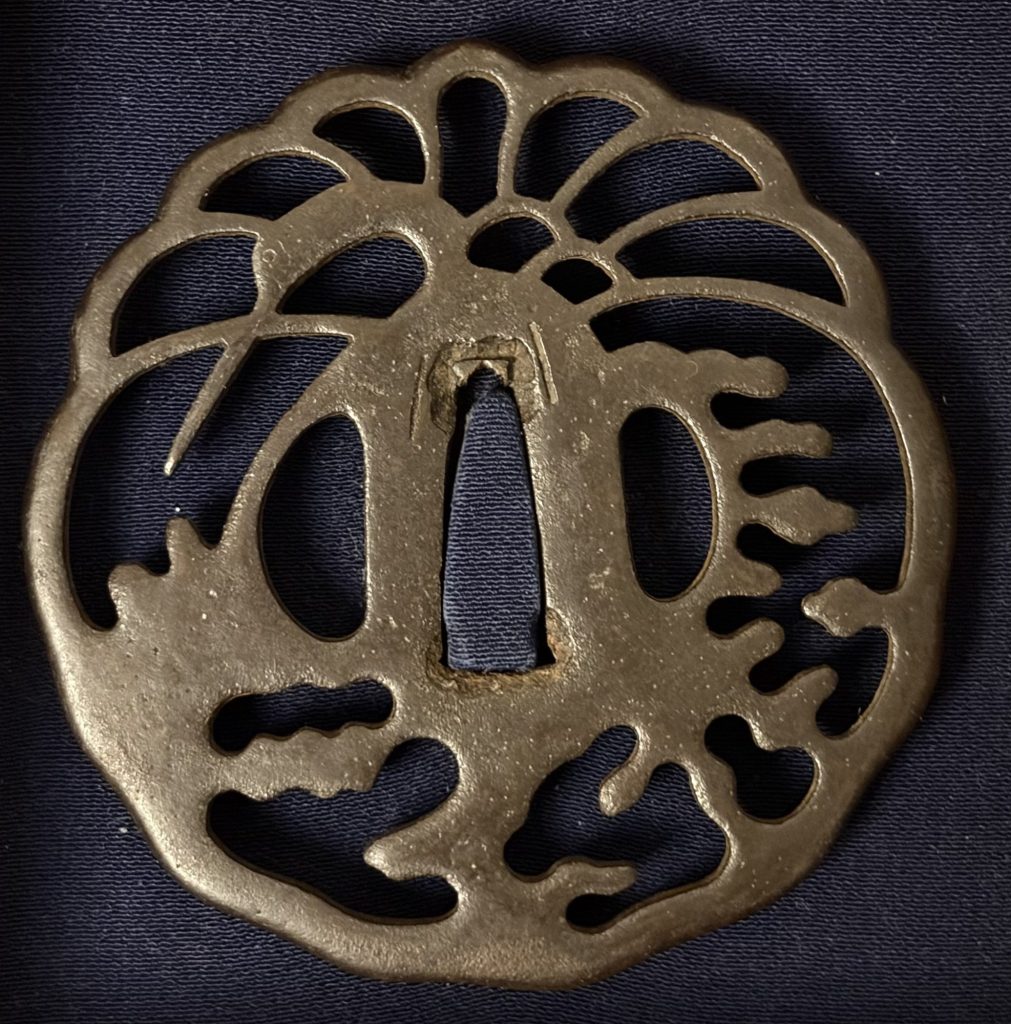
A crane tsuba of iron, round, its rim softly lobed. The upper half opens into a fan of curved ribs that rise from the seppa-dai and spread to the edge, like wings held up and open. Below and to the right the iron breaks into short curling forms, close to waves or clouds. Seen whole, the guard shows a crane facing the viewer, its wings raised above its body.
The surface is dark brown and finely grained, the edges of the openings slightly softened. Both faces carry the same design, one the mirror of the other.
The guard is unsigned and has no paper. The Museum of Fine Arts, Boston keeps an iron guard of the eighteenth century with a crane in openwork, by the Hayashi school. A. J. Koop, cataloguing the A. H. Church collection for the Ashmolean Museum, finds in Higo work “marked originality, not to say eccentricity of design.” The collection attributes this guard to Higo as its own reading.
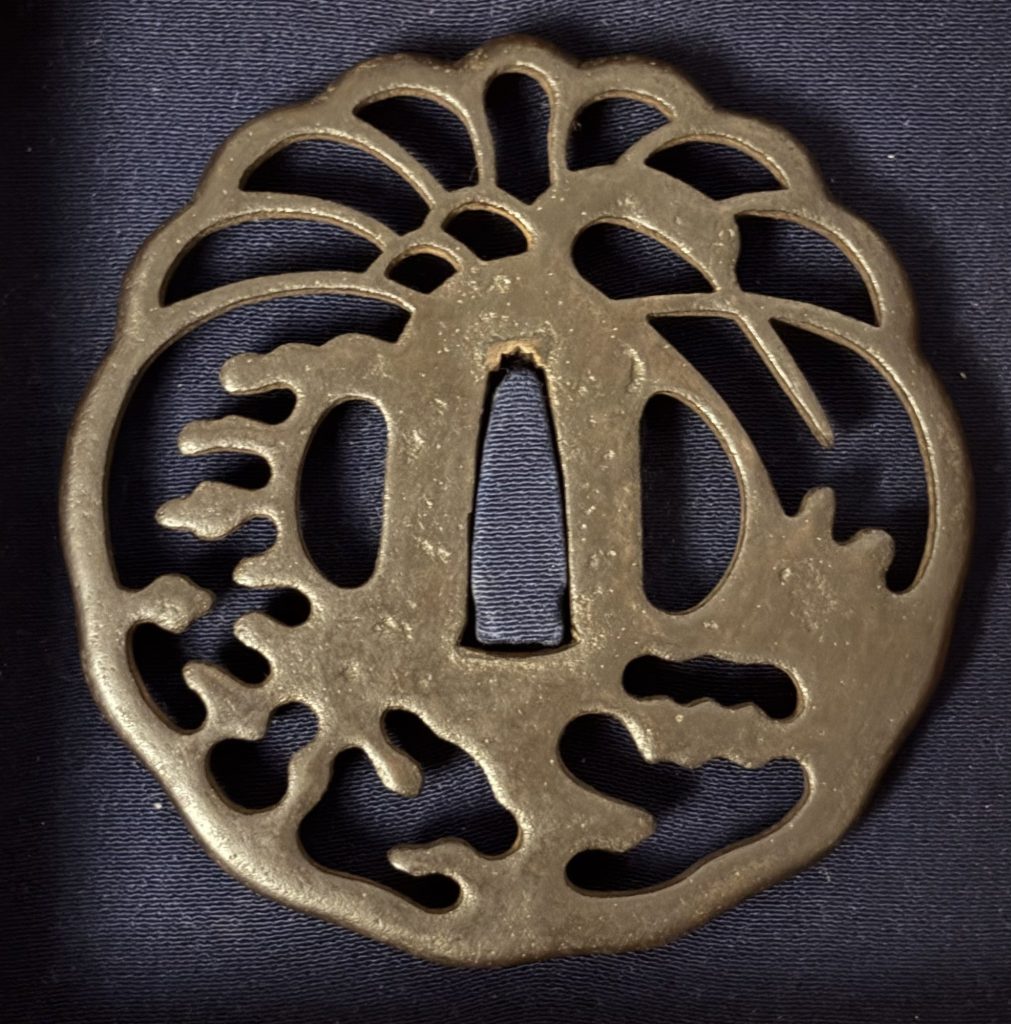
Tsuba. Mumei. Higo (eigene Zuschreibung). Tetsu, sukashi. Maru-gata mit gelapptem Rand. Tsuru-sukashi. Edo-Zeit. Privatsammlung, erworben in Europa.
In the collection
- Type
- Tosogu › Tsuba
- School
- Higo
- Period
- Edo-Zeit
- Material
- Tetsu
- Motif
- Tiere und Vögel