Kirschblüten am Knauf
A Tanto by Kanetaka in a Higo Mounting
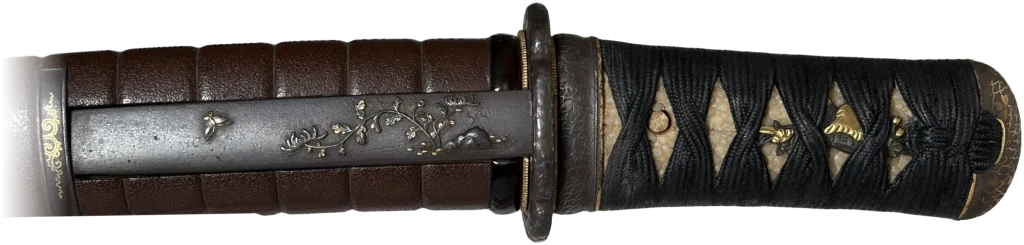
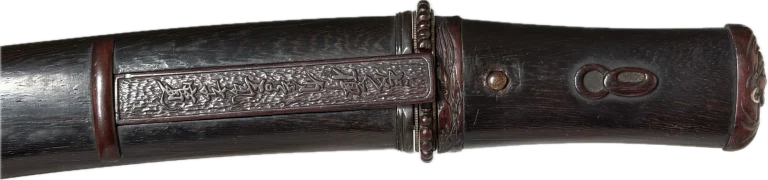
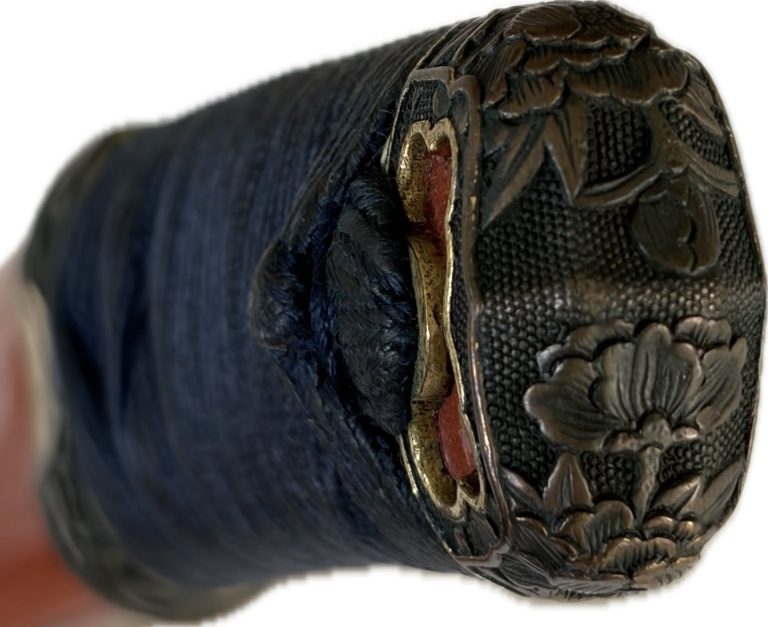
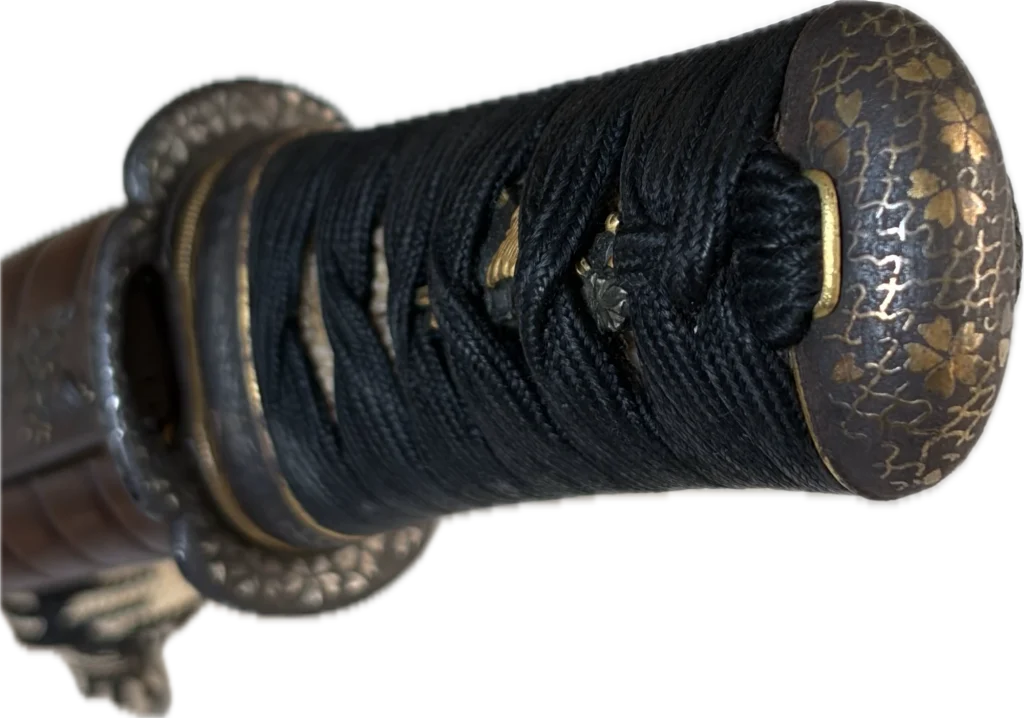
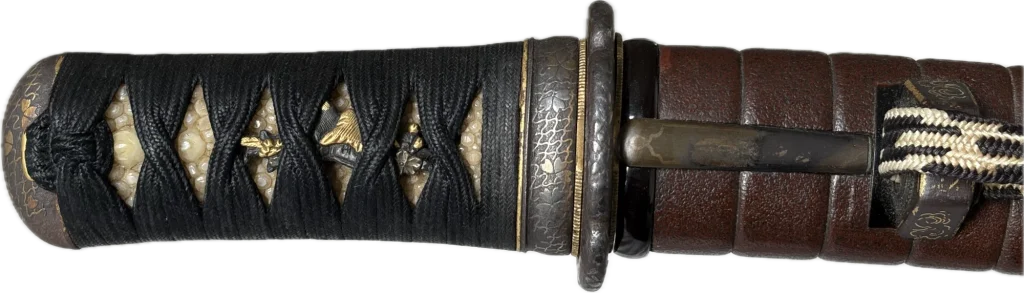
A tanto in a brown saya lacquered in raised bands, its hilt wrapped in black silk over white rayskin. An iron kozuka rides in the saya, and the kashira at the end of the hilt is scattered with cherry blossoms in gold. The tang is signed 金高, Kanetaka, a name of the swordsmiths of Seki in Mino. This page begins with the mounting, because the mounting is where most of the story lies.
Die Angel
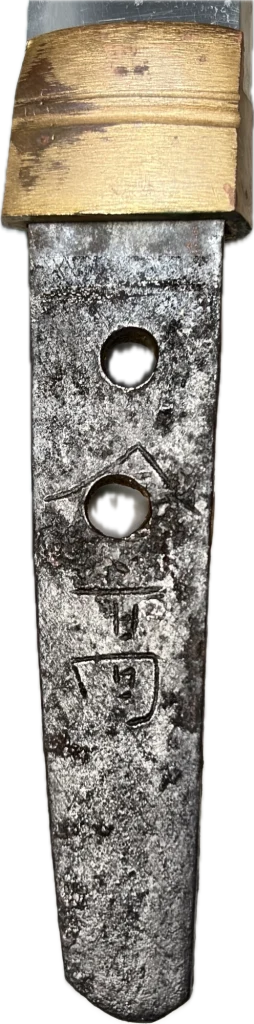
The tang has two peg holes. Below the lower one the signature is cut in two characters, 金高, Kanetaka. The kane of this name is written 金, metal, and not 兼, the character that opens so many other Mino names. The signature is short and carries no title. Kanetaka smiths of the Shinto period signed at greater length and added a title. The short signature and the style of the blade point to the Koto period. The collection places the tanto among the early Kanetaka smiths of the Eiroku era, around 1558 to 1570, in the last decades of the Muromachi period. The reading is its own.
Die Sanami
The Kanetaka smiths belonged to the Sanami, 三阿弥, one of the seven lines of the Seki smiths, the Seki kaji shichi ryu. The Gifu Prefectural Museum traces the Sanami to the Naoe Shizu, the line of Kaneuji, and names Kanenori as its head. The heads of the seven lines governed the smiths of Seki together, from the Kasuga shrine that the smiths shared. In the Eiroku years Seki was at the height of its trade, and the wars of the period wanted blades in great number.
Die Montierung
The mounting is an Edo-period koshirae in the Higo manner: a saya in raised, ribbed lacquer, a small tsuba, a hilt wrapped close and dark. The tsuba is iron, small and rounded, and made en suite with the other fittings. Gold menuki in the form of cherry blossoms sit beneath the wrap. The kashira is iron, inlaid in gold with cherry blossoms over a ground of fine wandering lines.
The kozuka is iron as well. A flowering vine runs along it in gold and silver, with a single butterfly above. The kozuka is unsigned. A nearly identical kozuka, also of iron, carries an NBTHK Hozon paper to the Hamano school, and the collection attributes this one to Hamano on that evidence. The attribution is its own.
A blade of the sixteenth century in a mounting of a later age is no mismatch. A Mino blade in a mounting from Higo shows how far a sword could travel in its life.
The Kanetaka Tanto
Tanto. Signiert Kanetaka (金高), Seki, Mino, Sanami-Linie. Späte Muromachi-Zeit, Eiroku-Ära (um 1558 bis 1570, eigene Bestimmung). Ubu-Nakago mit zwei Mekugi-ana. Koshirae im Higo-Stil, Edo-Zeit: gerippte braune Lack-Saya, schwarze Tsuka-Ito über weißem Same, kleine Tsuba, Eisen-Kashira mit Kirschblüten in Gold-Nunome, Eisen-Kozuka mit Ranke in Gold und Silber (Hamano, eigene Bestimmung). Ohne Papier. Privatsammlung, erworben in Europa, zuvor in einer europäischen Sammlung.
In the collection
- Type
- Nihonto › Tanto
- Period
- Muromachi
- Blade period
- Koto
- Tradition
- Mino