Was das Datum verspricht
A Tanto Signed Kagemitsu

A tanto in an aikuchi mounting, its hilt covered in pale rayskin left bare. The tang is signed with one of the great names of Bizen, Kagemitsu of Osafune, and dated in the second year of Gentoku, 1330. The blade has not been to shinsa. This page shows what the tang carries and leaves the judgement open.
Die Angel
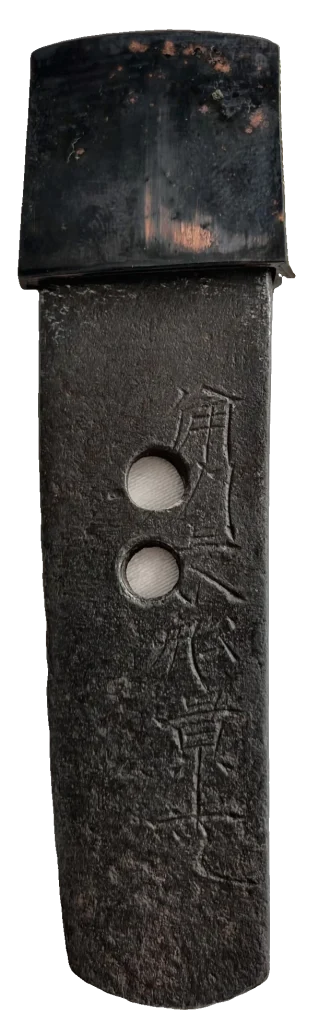
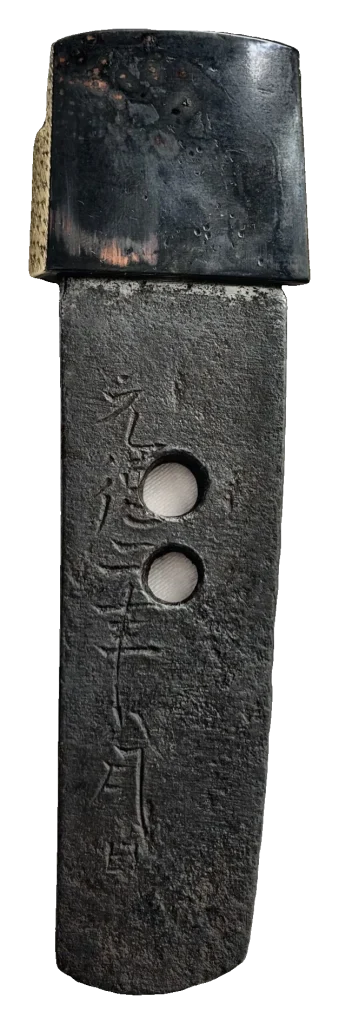
The tang is ubu and has two peg holes. On the omote the signature runs beside them. It reads 備州長船住景光, Bishu Osafune ju Kagemitsu, Kagemitsu living at Osafune in Bizen. On the ura stands the date, 元徳二年八月日, a day in the eighth month of the second year of Gentoku, 1330. Both photographs of the tang are shown with raised contrast.
Die Klinge
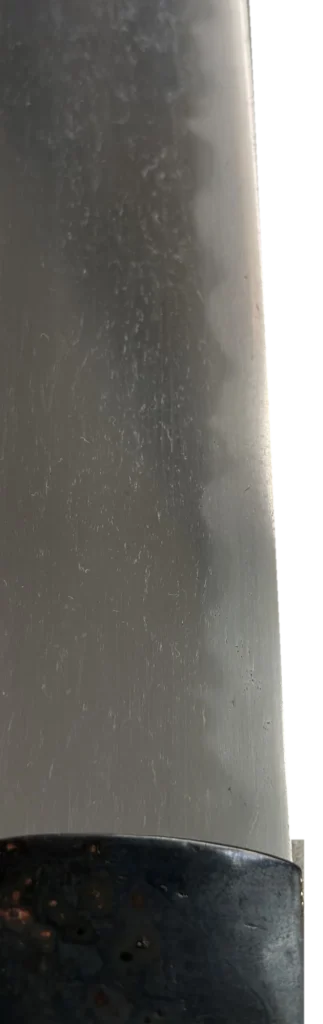
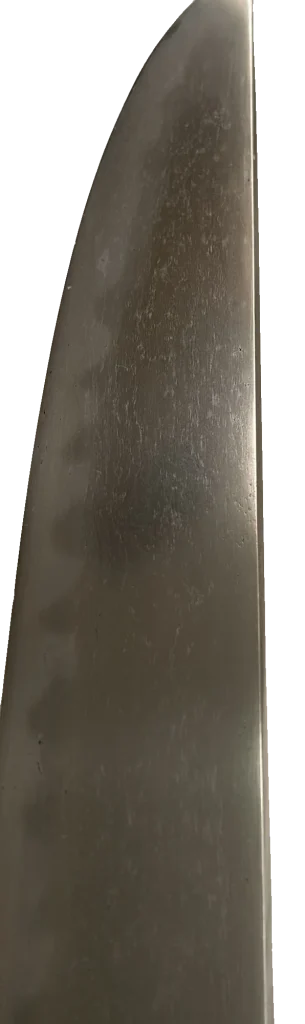
The blade is hira-zukuri, flat on both faces. The ground is ko-itame with mokume, opening in places into a larger grain. The hamon is choji mixed with gunome.
Kagemitsu
Kagemitsu worked at Osafune in Bizen in the late Kamakura period. Dated works by him are held in Japanese collections. A naginata in the Tokyo National Museum is signed in the same form, Bishu Osafune ju Kagemitsu, and dated 1322 (Cultural Heritage Online). The tanto known as Kenshin Kagemitsu, dated 1323, takes its name from Uesugi Kenshin, who is said to have carried it (Saitama Prefectural Museum of History and Folklore).
Was offen ist
Signed and dated Kagemitsu blades are among the names most often copied. A signature of this kind is a claim, and the place to test it is the NBTHK. Until then the attribution rests on the tang alone, and this page says so.
Die Montierung
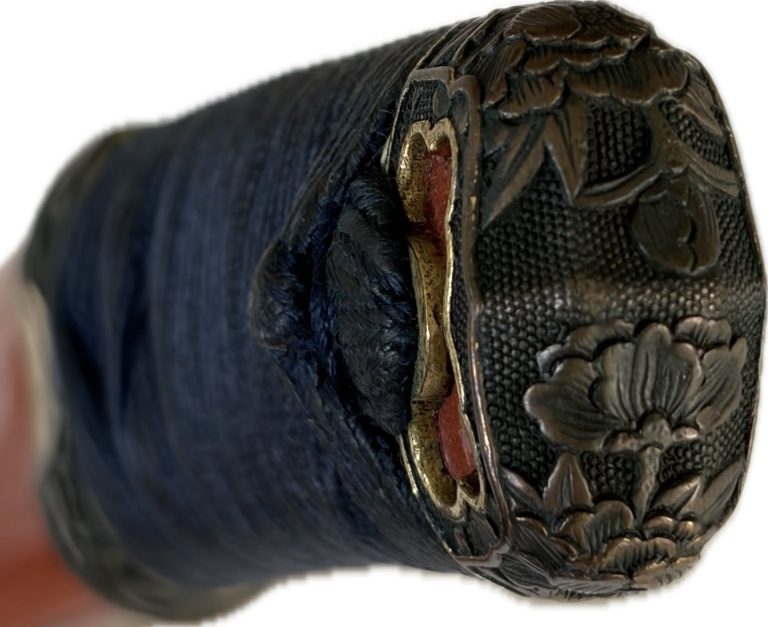
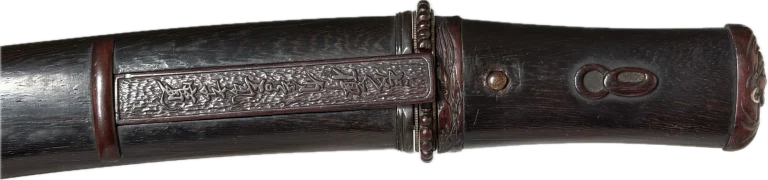
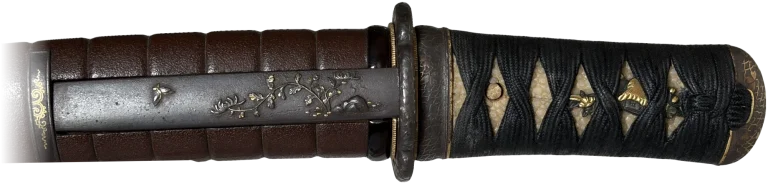
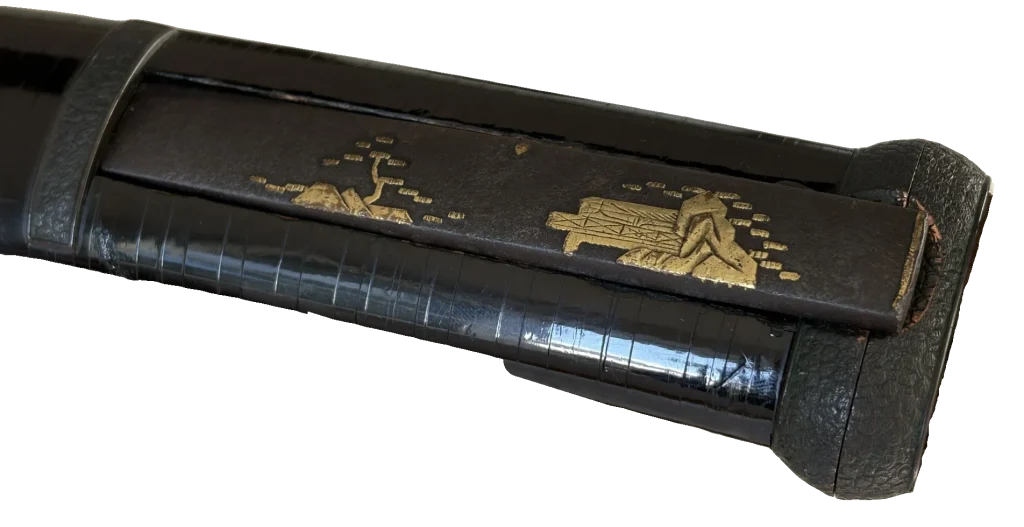
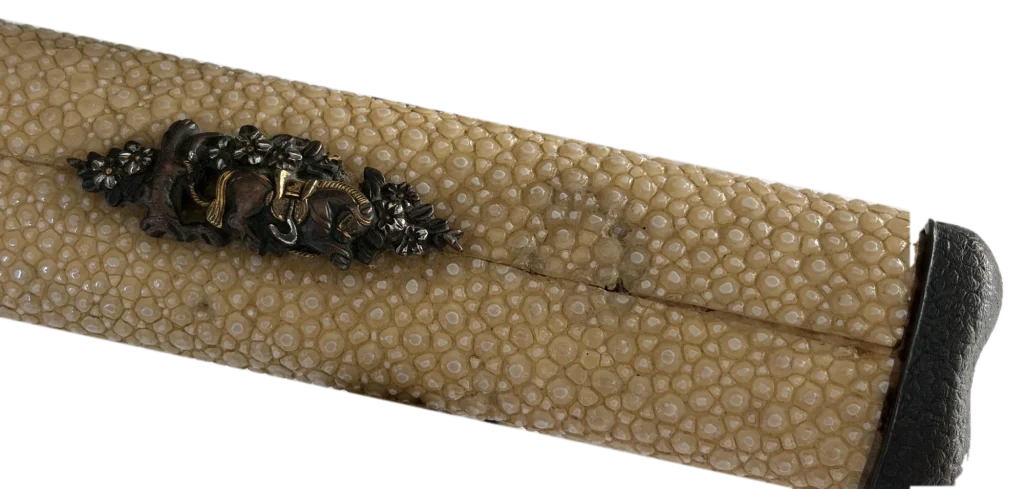
The mounting is an aikuchi, without a tsuba: hilt and saya meet directly. The hilt is covered in pale rayskin and left without a wrap. A menuki shows a saddled horse among blossoms. The saya is lacquered black and carries a kozuka with a hut, a pine and a mountain in gold. The fittings at the end of the hilt and the mouth of the saya are of patinated shakudo, with a textured surface.
The Tanto Signed Kagemitsu
Tanto. Signiert Bishu Osafune ju Kagemitsu (備州長船住景光), datiert Gentoku 2, achter Monat (元徳二年八月日, 1330). Hira-zukuri, Ko-Itame mit Mokume, Choji-Gunome. Ubu-Nakago mit zwei Mekugi-ana. Koto, Kamakura-Zeit. Ohne Papier. Aikuchi-Koshirae mit offenem Same, Kashira und Koiguchi aus patiniertem Shakudo, Menuki mit gesatteltem Pferd, Kozuka mit Landschaft in Gold. Privatsammlung, erworben in Europa.
In the collection
- Type
- Nihonto › Tanto
- School
- Bizen Osafune
- Period
- Kamakura
- Blade period
- Koto
- Tradition
- Bizen