Eine Familie, zwei Städte
Three Blades of the Mishina
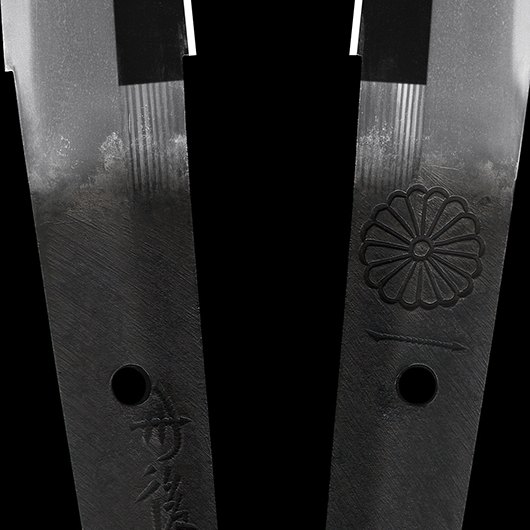
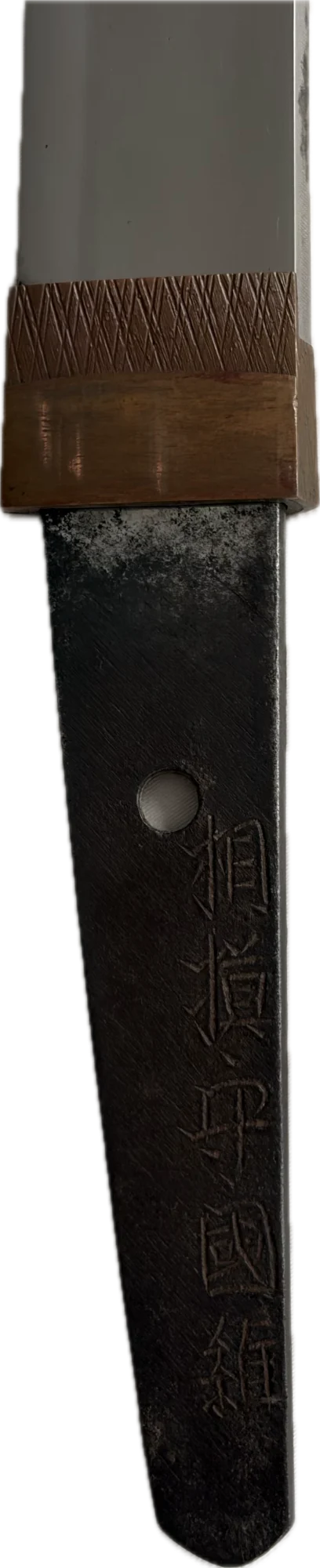
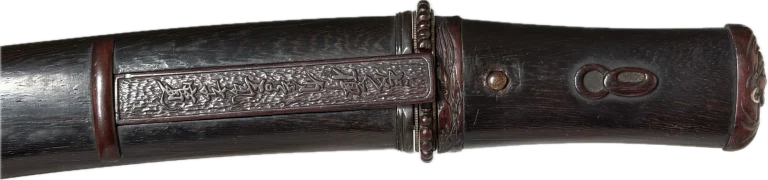
Three blades in this collection come from one family of swordsmiths, the Mishina. A tanto in a wooden mounting, attributed to the first Iga no Kami Kinmichi in Kyoto. A wakizashi signed Tango no Kami Kanemichi, with the imperial chrysanthemum on its tang. And a wakizashi by Sagami no Kami Kunimasa, a pupil of the family’s line in Osaka. Set side by side, they show how far one family reached, and how little three blades can say about it on their own.



Die Familie
The family came from Seki in Mino. Its founder, Kanemichi, moved with his sons to Kyoto and built a large school there. The four sons were Iga no Kami Kinmichi, Izumi no Kami Kinmichi, Tanba no Kami Yoshimichi and Etchu no Kami Masatoshi. Together with Omi no Kami Hisamichi they are usually counted as the five smiths of Kyoto, the Kyo-Gokaji, although the sources do not agree on the names (Nagoya Touken Museum).
From Kyoto the family spread. Tango no Kami Kanemichi was the second son of Tanba no Kami Yoshimichi and moved to Osaka in the Kan’ei era (Sesko 2022). Kunimasa worked in Osaka in the Kanbun era as a pupil of the second Tanba no Kami Yoshimichi of the Osaka line, as his sayagaki and the wazamono lists record.
Der Titel und die Chrysantheme
The first Iga no Kami Kinmichi, who died in 1629, forged a thousand tachi for Tokugawa Ieyasu before Sekigahara. The court gave him the title Nihon kaji sosho, master swordsmith of Japan, and the right to cut the imperial chrysanthemum on his tangs. With the title came an office. Applications for honorary titles from swordsmiths across Japan went through the Kinmichi line in Kyoto to the court (Sesko 2013).
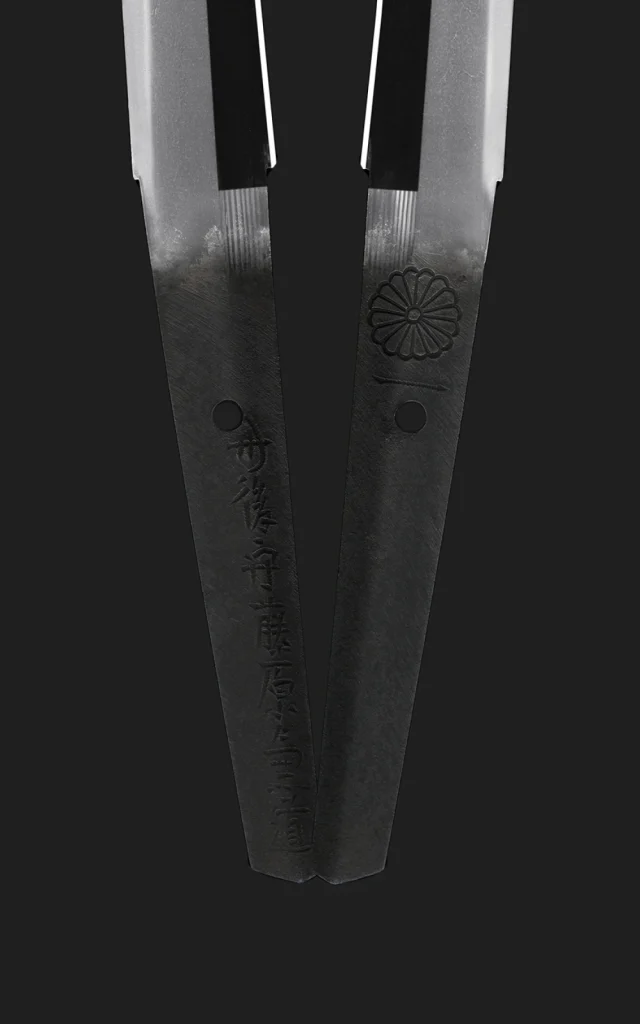
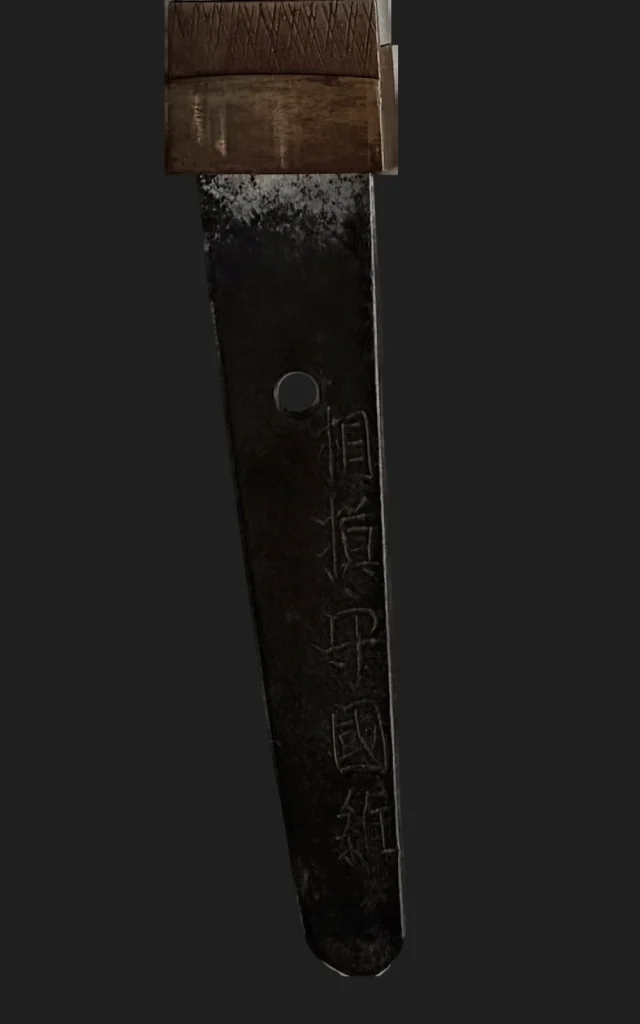
Iga no Kami, Tango no Kami, Sagami no Kami: the three smiths held titles of this kind, governors of provinces they never governed. The Kanemichi tang carries the signature on one face and the chrysanthemum on the other, with the character ichi below it. The tang of the Kinmichi tanto is signed, but corrosion has taken the signature.
Drei Klingen, drei Handschriften
The blades do not look alike. The Kinmichi tanto is short and cut in nagamaki-zukuri, its hamon straight for most of its length before it opens into one large wave. The Kanemichi wakizashi shows a broad notare with sudareba, the pattern of a bamboo blind for which the line of Tanba no Kami Yoshimichi is known, and the round turn of the classic Mishina boshi. The Kunimasa blade has a small, irregular gunome midare.
Whether anything beyond the name joins them, a habit in the point, in the shape of the tang or in the cut of the signature, has to be seen in hand. Three blades from three generations and two cities are a beginning for that comparison, not its end.
Was offen ist
The attribution of the tanto to Kinmichi comes from a Japanese expert who examined it; it has not been to shinsa. Sesko records two smiths who signed Tango no Kami Kanemichi, and the paper names the smith, not the generation. The name 國維 is read Kunimasa in the wazamono lists, which also give Kunikore. Each of these questions belongs to its own page; together they are what this study will follow.