Zwischen Osaka und Iyo
A Wakizashi by Sagami no Kami Kunimasa
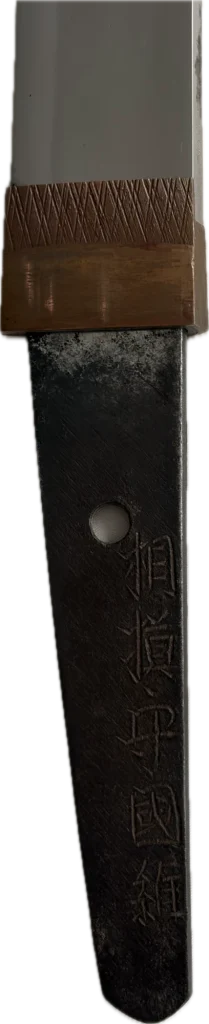
A hira-zukuri wakizashi in a plain shirasaya. The tang carries five characters, 相模守國維. Sagami no Kami, governor of Sagami, is a court title granted to the smith. It says nothing about where he worked. The name is read Kunimasa. Its last character, 維, looks close to the 綱 of Sagami no Kami Kunitsuna, a smith of the Echizen Shimosaka line, and the two names are easily taken for one. They belong to two different men.
Der Schmied
Kunimasa worked in Osaka around the Kanbun era, 1661 to 1673. He was a pupil of the second Tanba no Kami Yoshimichi, of the Osaka line of the Mishina. In his later years he worked in Iyo, on Shikoku. The wazamono lists, which ranked Edo-period smiths by the cutting quality of their blades, include him under this name.
The Mishina appear twice more in this collection, in the tanto attributed to Iga no Kami Kinmichi and in the wakizashi by Tango no Kami Kanemichi. Both belong to the Kyoto line of the family.
Die Klinge

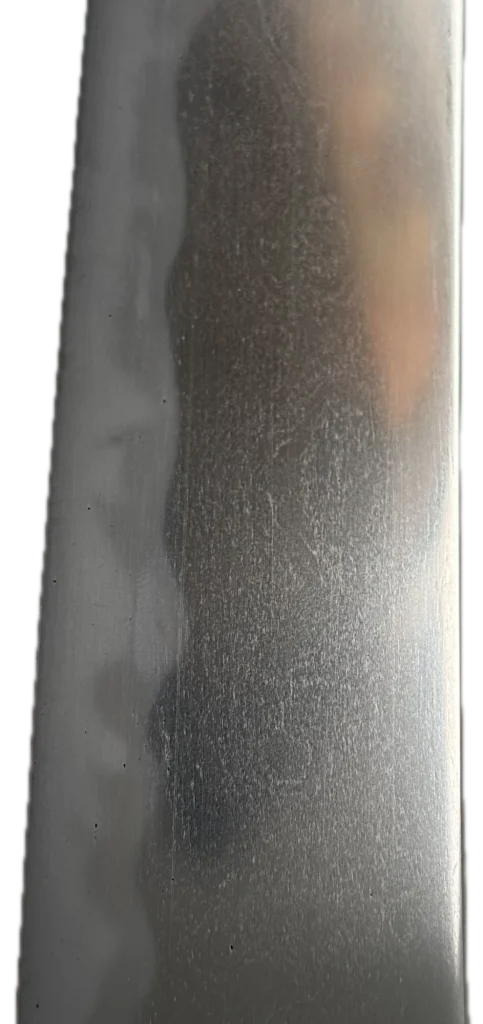
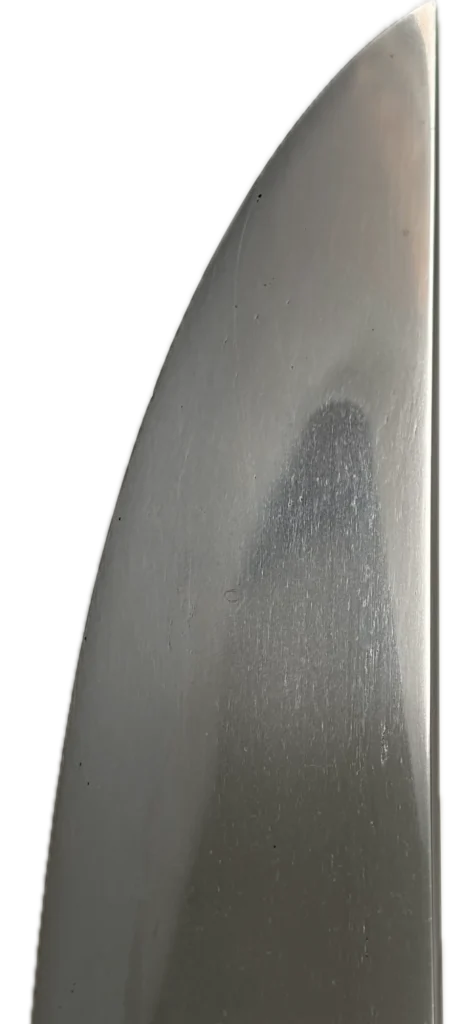
The habaki is copper, its upper band filed in a fine zigzag. The jigane is itame. The hamon is a small, irregular gunome midare worked in nie. In places it calms almost to suguha, and sunagashi run through it.
Papier und Saya
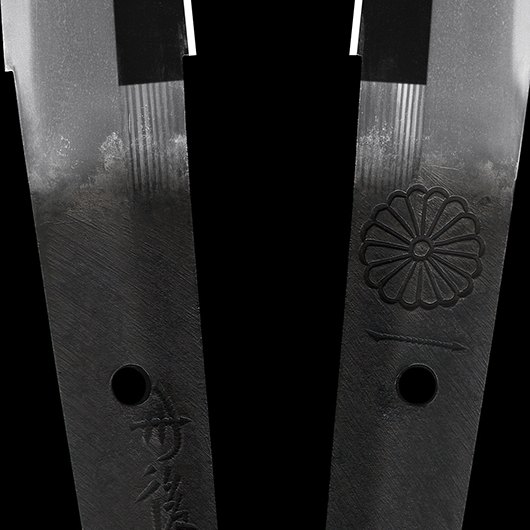
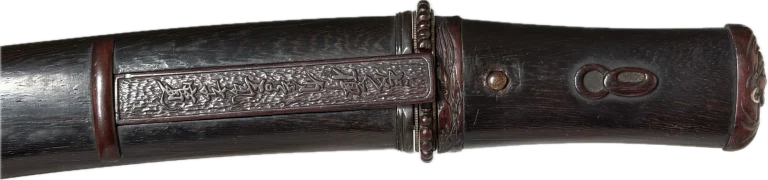
The NBTHK issued a Tokubetsu Kicho paper for the blade, a grade the society gave until 1982. The paper records the signature with the same 維. A recent sayagaki on the shirasaya names the smith, his teacher and his years in Osaka and Iyo, and describes the hamon as ko-gunome midare.
The Kunimasa Wakizashi
Wakizashi. Signiert Sagami no Kami Kunimasa (相模守國維). Hira-zukuri. Itame, Ko-gunome-midare mit Suguha-Anteilen, Sunagashi, Nie-deki. Kupferne Habaki. Shirasaya mit Sayagaki. Osaka, Kanbun-Zeit. Shinto. NBTHK Tokubetsu Kichō. Privatsammlung, erworben in Europa.
In the collection
- Type
- Nihonto › Wakizashi
- School
- Mishina
- Period
- Edo-Zeit › Frühe Edo-Zeit
- Blade period
- Shinto