School
Mishina
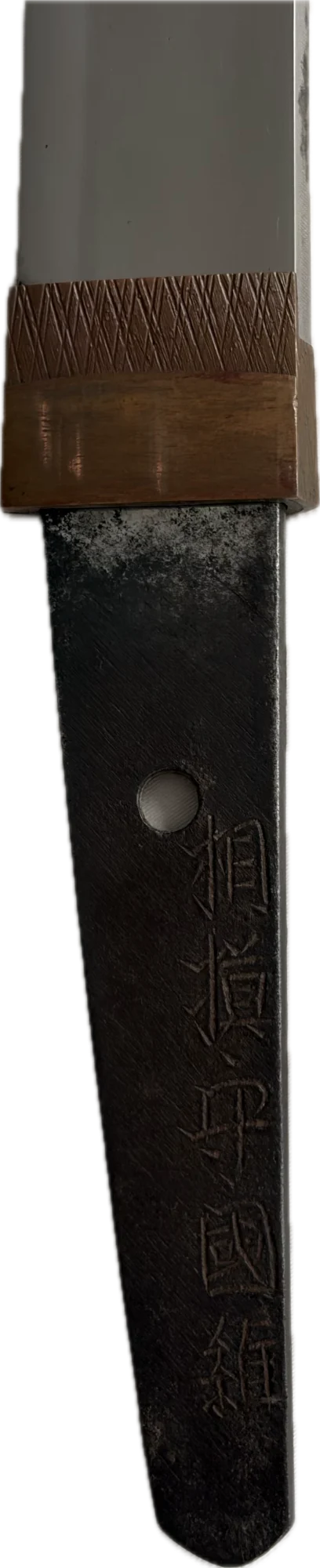
Mishina, also read Sanpin, is the name of a family of swordsmiths from Mino who became one of the founding lines of the new swords of Kyoto. Markus Sesko, in his Masters of Keichō Shintō, writes that the Mino master Kanemichi brought his four sons to Kyoto in 1593 and settled in the Nishinotoin district. A translation from the NBTHK's journal places the move earlier, in the Eiroku era (1558 to 1570), and links it to service as a smith of the imperial court.
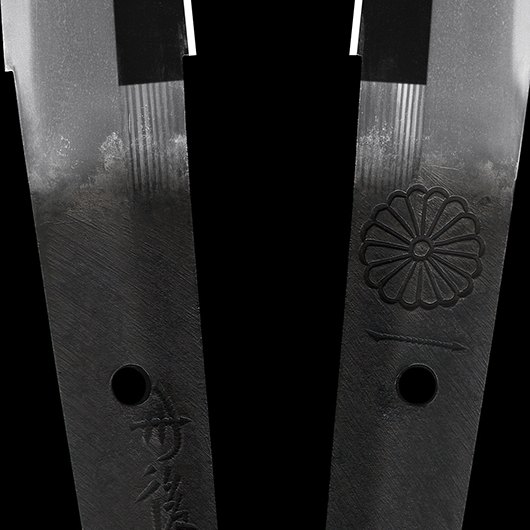
The four sons founded lines of their own: Iga no Kami Kinmichi, Rai Kinmichi, Tanba no Kami Yoshimichi and Etchu no Kami Masatoshi. Several received court titles, and Sesko notes that Kinmichi was allowed to cut the imperial chrysanthemum on his tangs. The NBTHK sees in Kinmichi's striped hamon the beginning of sudareba, the "bamboo blind", which Yoshimichi's family made its own. The boshi named after the school runs in a shallow wave, rises to a pointed tip and turns back.
In the collection the line appears in a wakizashi by Tango no Kami Kanemichi, a son of Yoshimichi, with the chrysanthemum on the tang and a textbook sudareba.
3 pieces