Wo die zwei Hälften sich treffen
A Wakizashi by Kanenaga in a Mounting with Shell Inlay
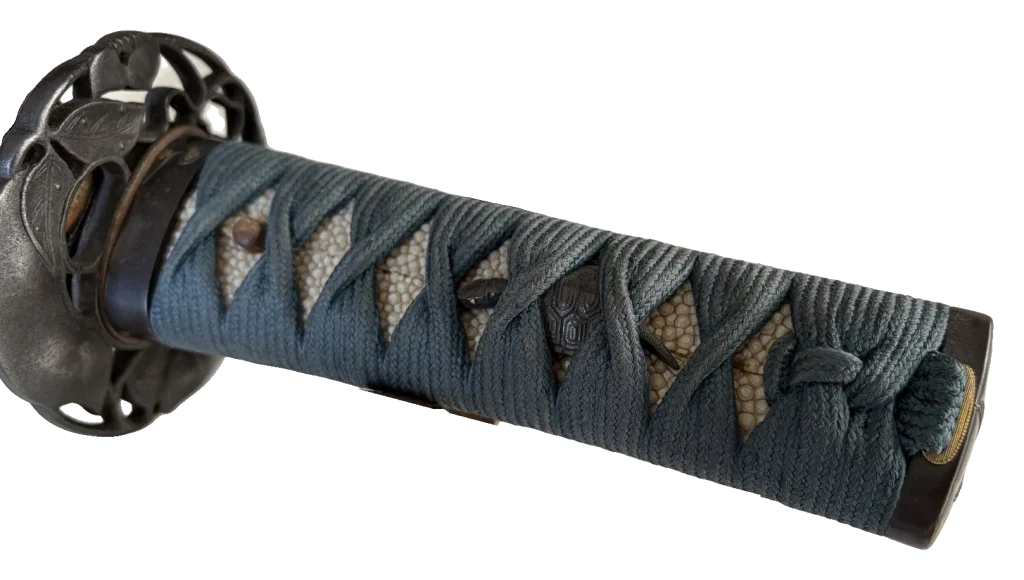
A wakizashi in a black saya scattered with fine flakes of shell. A turtle sits under the wrap of the hilt, and a goose flies across the kashira. The blade is signed Kanenaga, a smith of Mino. Blade and mounting come from different centuries, and this page reads them together.
Die Klinge
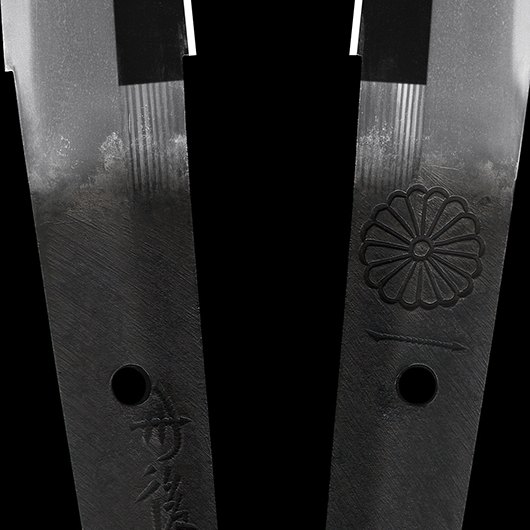
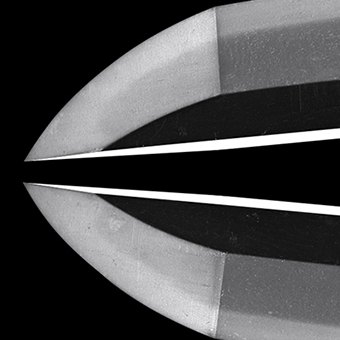
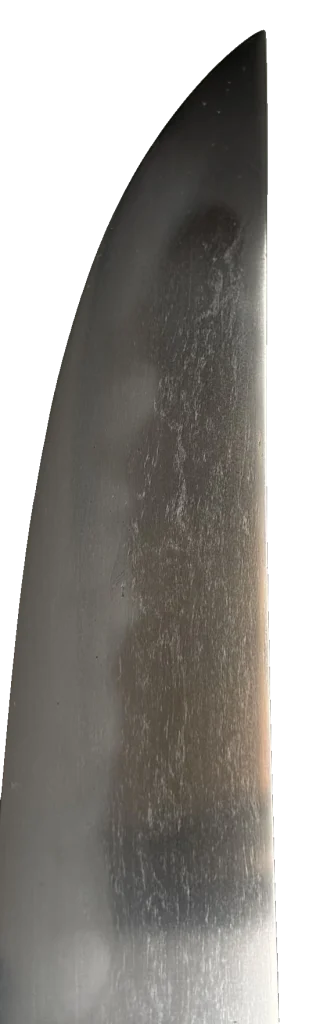
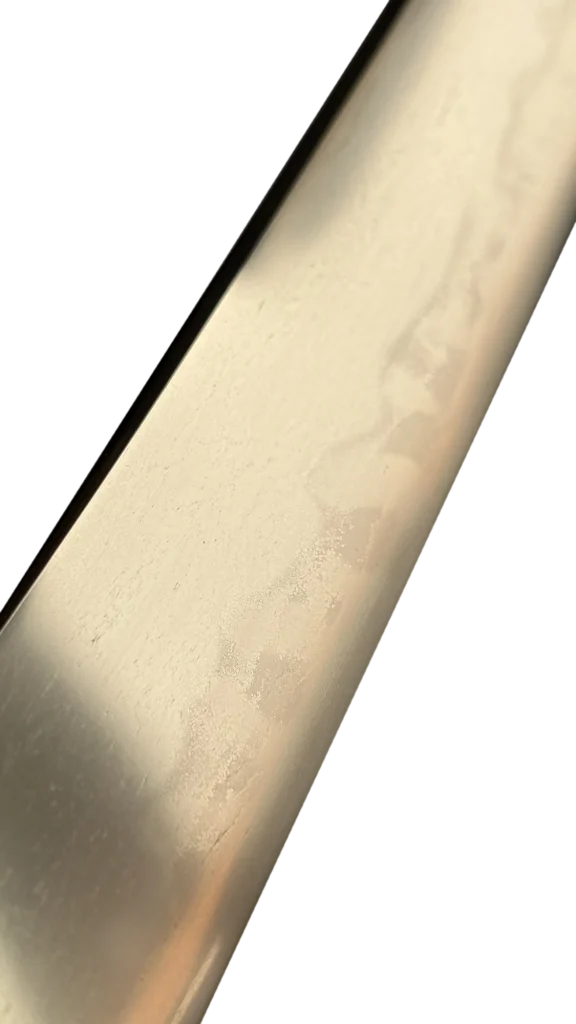
The blade is hira-zukuri, without a ridge line. The tang is ubu and signed Kanenaga. [zu prüfen: Kanji 兼長, Foto der Angel noch nicht im Ordner] The ground is itame with mokume. The hamon is togari-gunome, a row of pointed heads rising along the edge. The collection dates the blade to around 1550.
Mino
From the Bunmei era to Bunroku, the later fifteenth and the sixteenth century, the Mino smiths had their best time, and Seki was their centre. The age of the tachi gave way to the uchigatana, the demand for swords rose sharply, and the number of smiths grew with it (Gifu Prefectural Museum, Mabuchi 1980). Many Mino names begin with the character kane, 兼, and Kanenaga is one of them.
Die Montierung
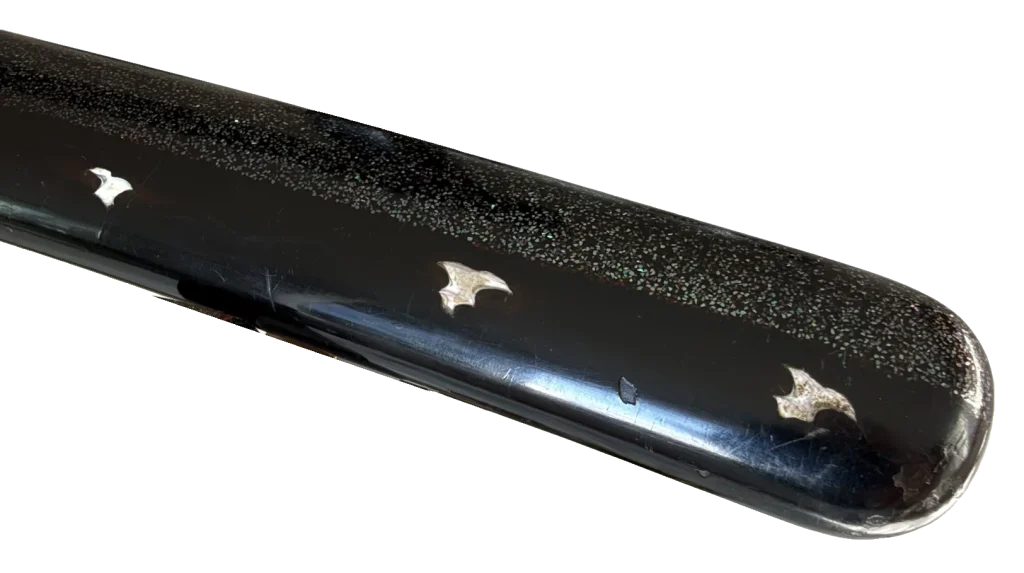
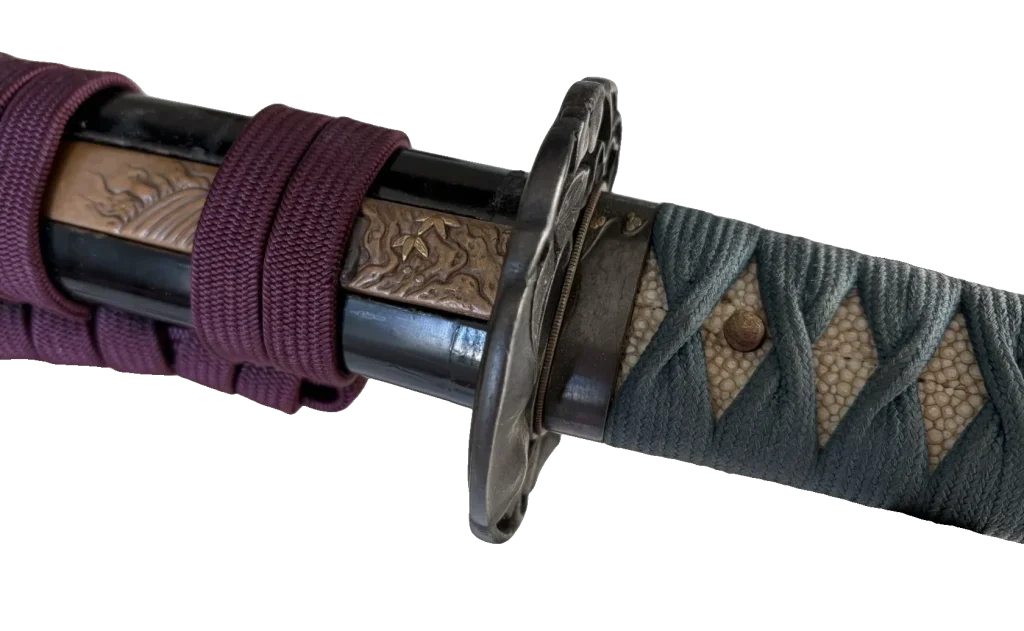
The saya is lacquered black and sprinkled with fine flakes of shell that catch the light in green and blue. Larger pieces of shell are set into it, shaped like birds in flight. The tsuba is iron, pierced with leaves and vines. Under the pale blue-grey wrap lie menuki in the form of turtles. The kashira carries a goose in flight, its neck bent down.
The kozuka is copper and shows a bear in a cave among rocks, with bamboo above. The mounting is of the Edo period. A blade of the sixteenth century in a mounting of a later age is no mismatch. It is what happens to a sword that stays in use: the blade is the lasting part, the mounting the part that changes.
The Kanenaga Wakizashi
Wakizashi. Signiert Kanenaga (兼長, zu prüfen), Mino. Hira-zukuri, Itame mit Mokume, Togari-Gunome. Ubu-Nakago. Koto, um 1550. Ohne Papier. Koshirae: schwarze Lack-Saya mit Perlmuttsplittern und Perlmutteinlagen, Eisen-Tsuba durchbrochen mit Blättern, Menuki in Schildkrötenform, Kashira mit Wildgans, Kupfer-Kozuka mit Bär in einer Höhle. Montierung Edo-Zeit. Privatsammlung, erworben in Europa, zuvor in einer europäischen Sammlung.
In the collection
- Type
- Nihonto › Wakizashi
- Period
- Muromachi
- Blade period
- Koto
- Tradition
- Mino