Feuer über der Klinge
A Wakizashi by Tsunahiro

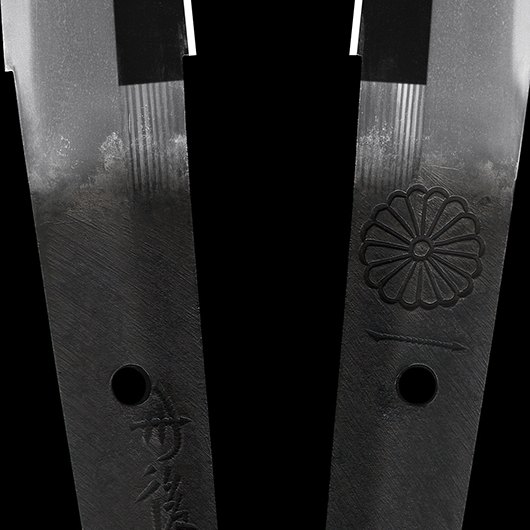
Most blades keep their hardening at the edge. This one does not. Patches of hard steel climb from the hamon into the body of the blade and float there, some joined to the edge, some free of it. The tang is signed Tsunahiro, a name of the Soshu smiths of Odawara.
Die Klinge
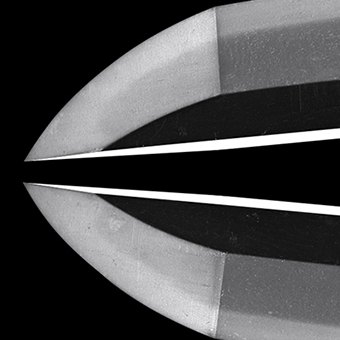
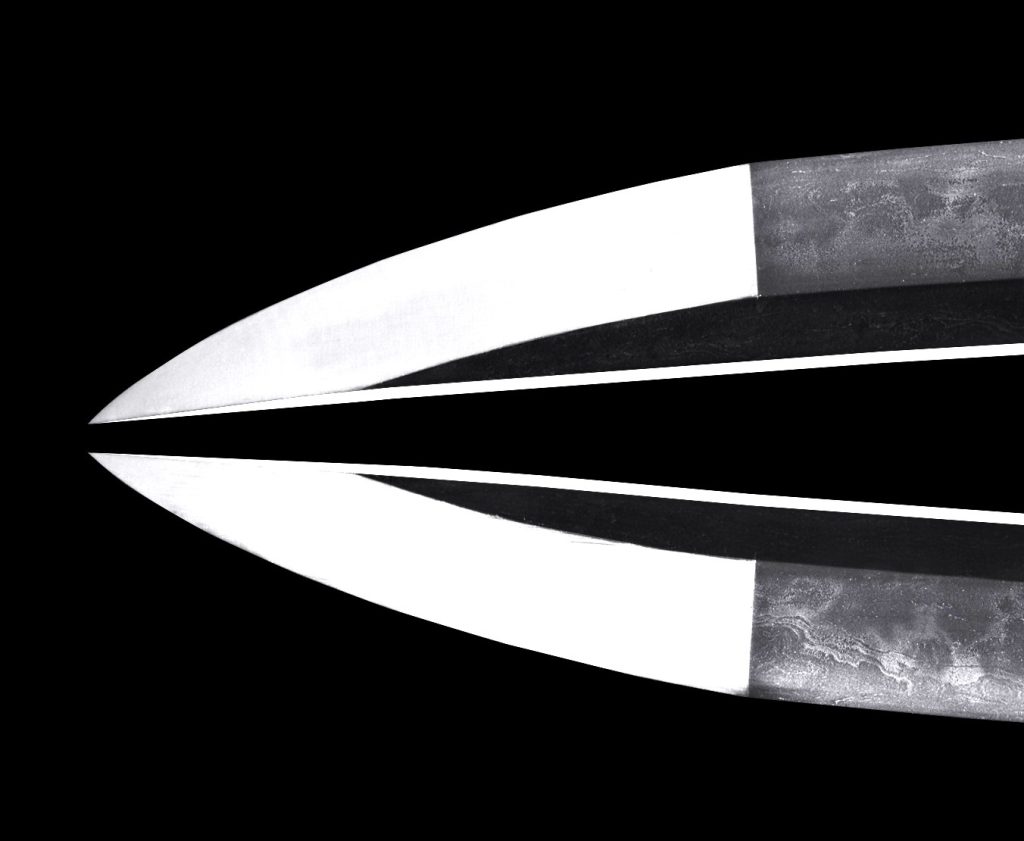
The blade is shinogi-zukuri, with a ridge line on each side. The tang is ubu, in its original shape. The ground is itame. The hamon is hitatsura, full hardening, worked in nie: islands of bright, hardened steel spread across the ji, so that the whole surface changes as the blade turns in the light.
Tsunahiro und Odawara
Tsunahiro is a name carried through many generations. The first is said to have served the Hojo of Odawara and to have received the character tsuna of his name from Hojo Ujitsuna (Aomori Prefecture). The Met describes the Tsunahiro school as active from the sixteenth century to the nineteenth, and gives blades in hitatsura to its early generations.
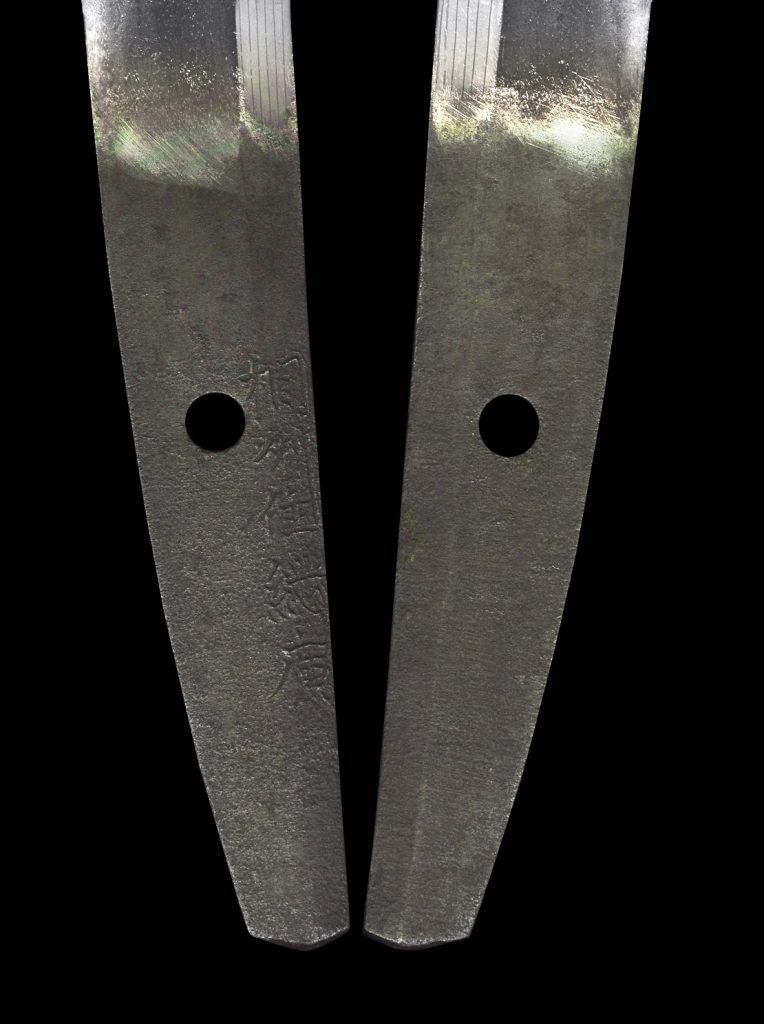
The tang is signed 相州綱廣, Soshu Tsunahiro, Tsunahiro of Sagami province. The signature names the line, not the man. Which generation cut this blade, the tang alone does not say. The collection places it in the Muromachi period.
Die Montierung

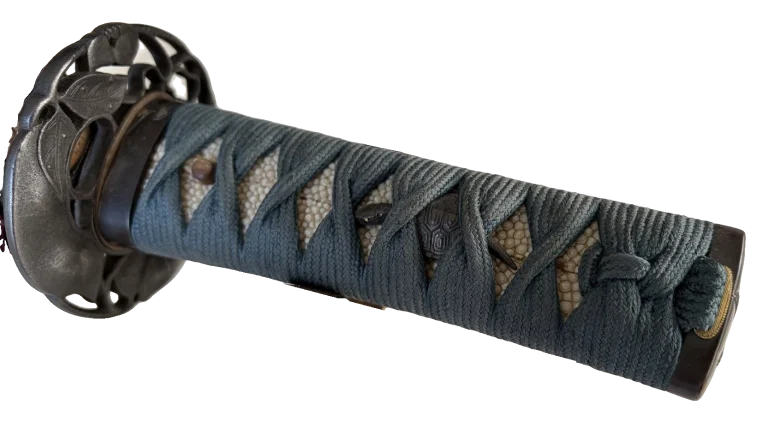
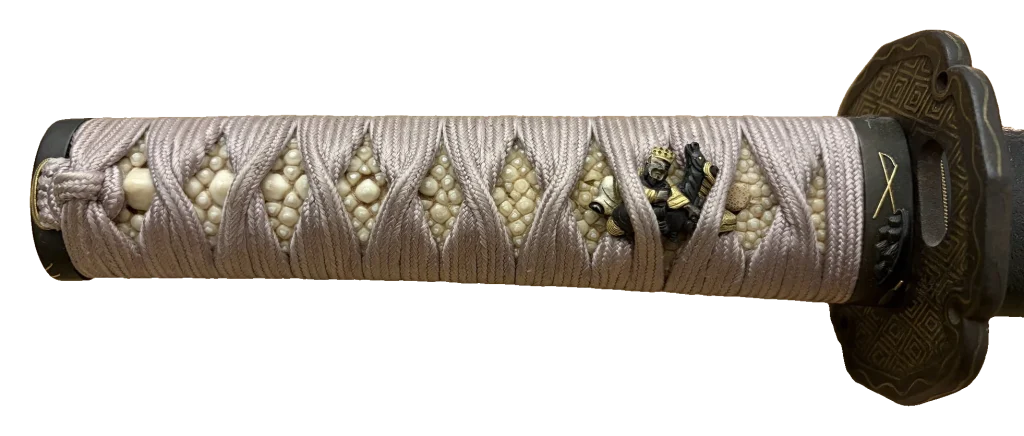
The blade has worn more than one set of fittings. When it came into the collection, it carried a pair of gold menuki with shishi, now shown on their own page, and an iron tsuba with descending geese of the Toryusai school. Both have been taken off. The mounting it wears today is a quiet one: a black saya, a hilt wrapped in pale lilac silk over white rayskin.
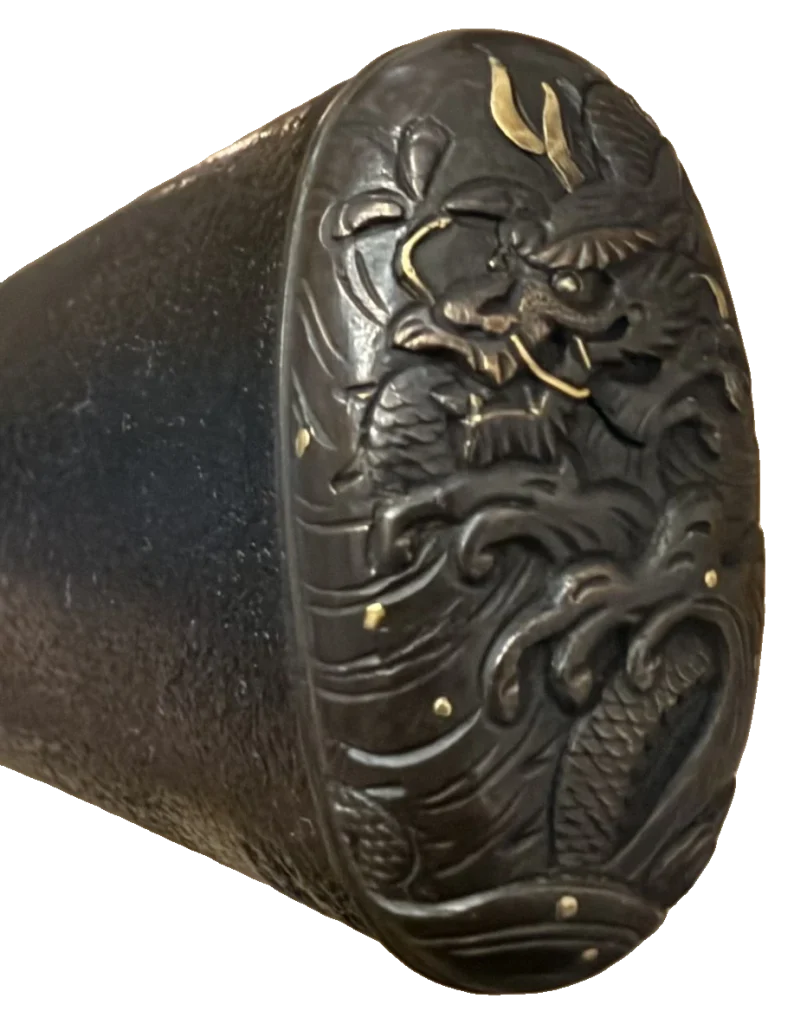
The tsuba is iron, in four lobes, and covered with a fret of squared spirals in gold lines, the old pattern of thunder and lightning. The fuchi and kashira belong to the tea ceremony. On their dark ground lie its utensils, small and finely cut in gold and soft metal, among them a flower in its vase and the charcoal for the fire. At the tip of the saya, the kojiri shows a dragon rising from waves.
Under the wrap sit the menuki: a bearded rider with a crown, in shakudo and gold, on a dark animal, a mule or a donkey.
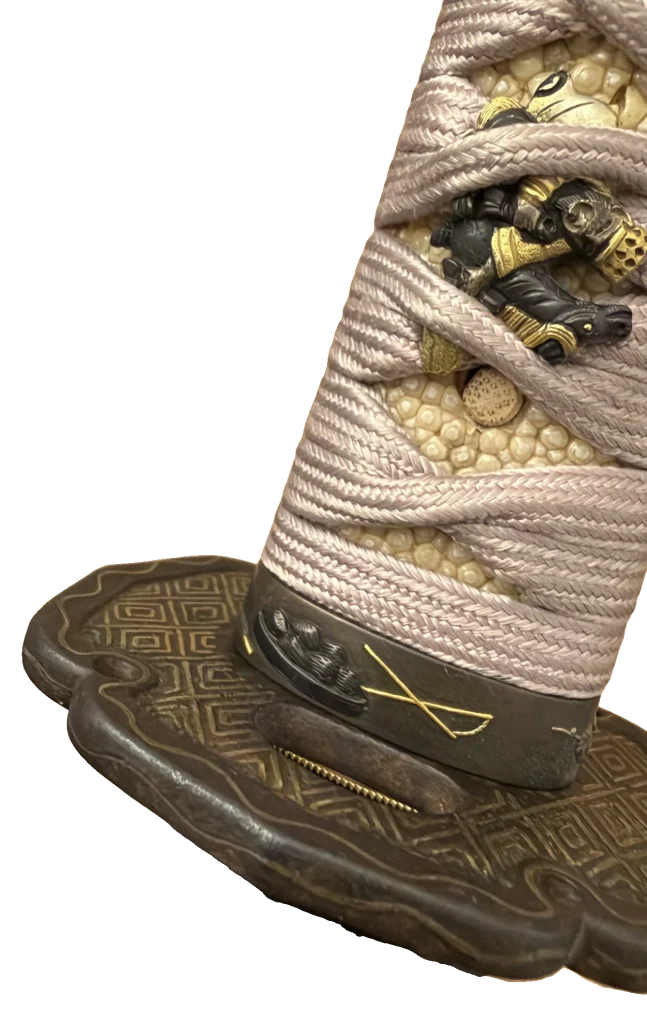
Only the wrap is new. The old silk had decayed with age and had to be replaced. The rayskin beneath it is original, and the rest of the mounting is as it came.
The Tsunahiro Wakizashi
Wakizashi. Signiert Tsunahiro (相州綱廣), Soshu. Shinogi-zukuri, Itame, Hitatsura in Nie-deki. Ubu-Nakago. Koto, Muromachi-Zeit. Ohne Papier. Tsuka-ito erneuert über originalem Same; Eisen-Tsuba mit Raimon-Muster in Gold, Fuchi-Kashira mit Geräten der Teezeremonie, Menuki mit gekröntem Reiter auf Maultier oder Esel, Kojiri mit Drache in Wellen; früher mit Shishi-Menuki (Kyo-Kinko) und Rakugan-Tsuba (Toryusai). Privatsammlung, erworben in Europa.
In the collection
- Type
- Nihonto › Wakizashi
- Period
- Muromachi
- Blade period
- Koto
- Tradition
- Soshu