The Objects Were There
For a long time I looked at tosogu as pictures. A dragon. A crane under a pine. A sage by the water. I asked what they showed.
Only later did I begin to ask a different question: what did they see?
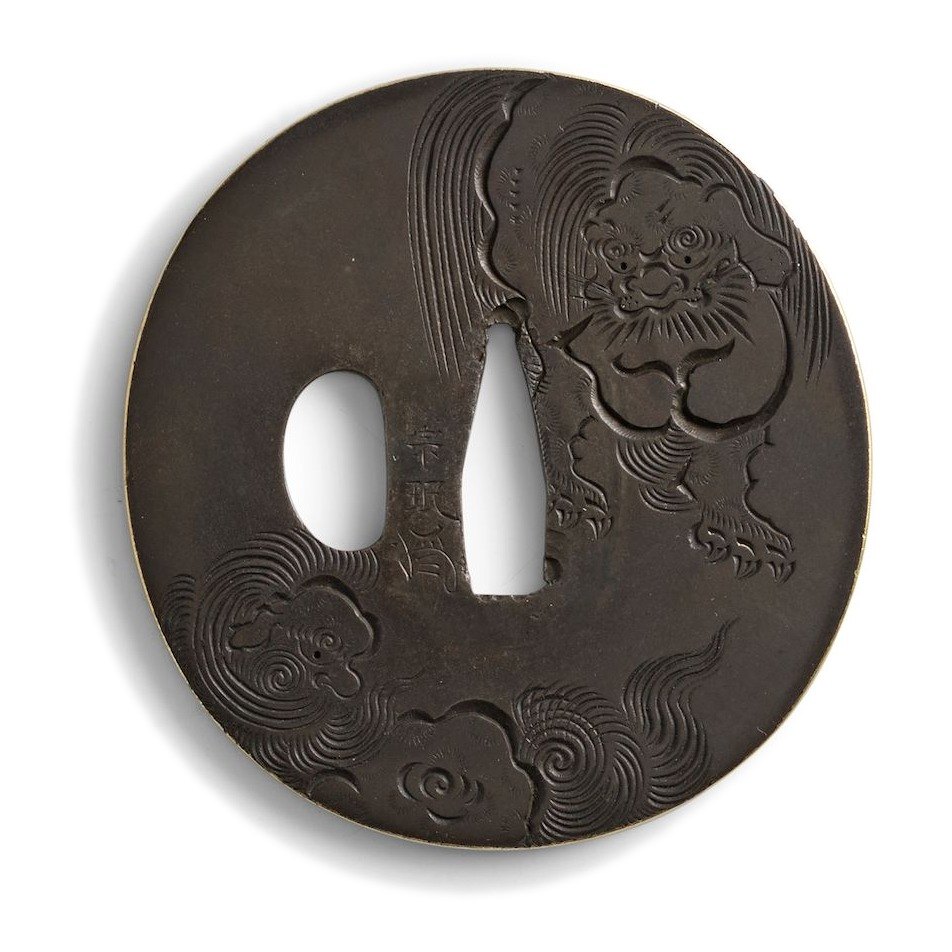
A tsuba was made in one century, worn in another, and lies on my desk in a third. It has passed through workshops and families, through wars and long years of peace, through shops in Tokyo and auction rooms in Europe. It cannot tell me any of this. And yet it carries all of it.
That is what I mean when I call them silent witnesses.
Traces
The first thing that changed was how I looked at wear.
On a small kozuka in the collection, two farmers work a field in gold. The ground around them is nanako, a surface of tiny raised grains, and it is worn. In places the grains are almost gone. At first I saw only damage. Now I see a thumb. Someone drew this little knife from its pocket in the scabbard, again and again, for years. The wear is not a flaw in the picture. It is part of its story.
An unsigned blade in the collection has had its tang shortened, and two holes for the peg show that it was fitted more than once. Whatever name it carried went with the piece of steel that was cut away. What remains is the work itself, and a school given to it by experts some seven centuries later.
Hidden Things
Some witnesses keep their testimony out of sight.
On the tang of a wakizashi by Tango no Kami Kanemichi stands a chrysanthemum crest, read as the mark of a privilege of his family. And it was made to be hidden. Once the hilt was in place, no one could see it. Only the owner knew.
I find this moving. A sign of honour, made not for others but for the sword itself.
The blade is one of three from one family of swordsmiths in the collection.
The Second Life
Then there is the life these objects lived after they left Japan.
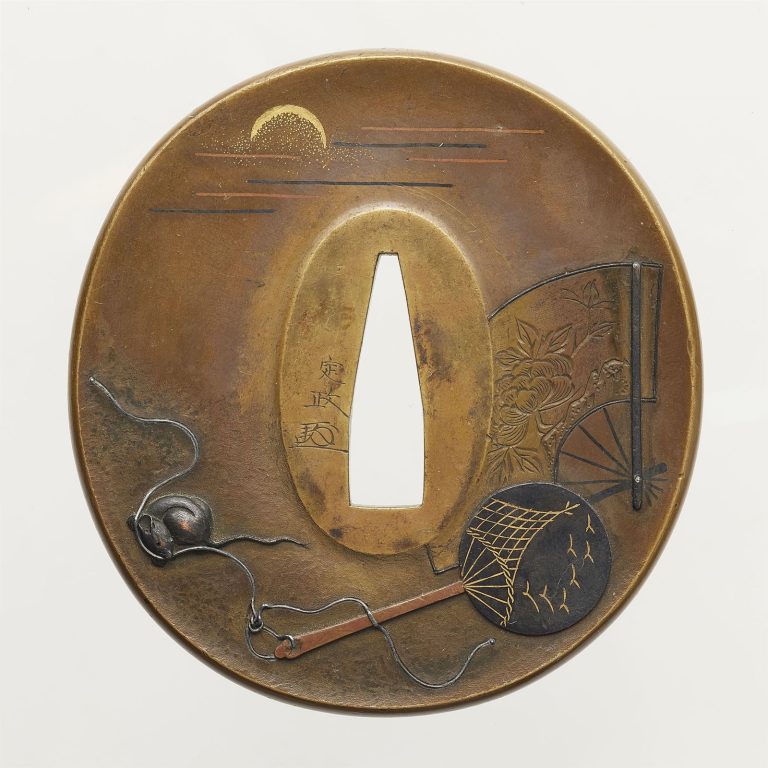
A small guard in sentoku shows a silver rat at the cord of a war fan and a gold moon in mist. It belonged to the German collector Walter Fahrenhorst. Before I held it, it was held by people whose names I know only from catalogues.
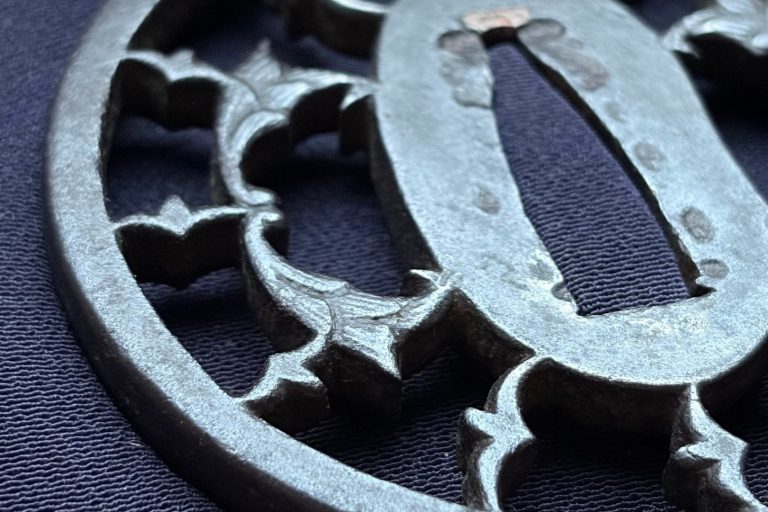
An iron guard with interlocking rings came to me in a box inscribed in the summer of 1964 by Satō Kanzan, one of the great authorities on the Japanese sword in the twentieth century. His brush on the lid is another layer of the story: a man in Tokyo, looking at this guard and writing down what he saw.
Every owner adds something. A box. A label. A number in a catalogue. Sometimes only a scratch. The object keeps its form, but it gathers time.
Listening
I have come to think that collecting is a form of listening.
Not to what the object says. It says nothing. But to what it has been through, and to what it still holds: the hand of the maker, the taste of the first owner, the care of those who kept it, the attention of those who wrote about it.
Perhaps this is why tosogu touch me more than many larger works of art. A painting in a museum has one wall. A tsuba has known many hands.
And now, for a while, mine.
I do not own it in the way one owns a thing. I am the latest witness to a witness. One day it will pass on again, and carry a little of my time with it.
That, I think, is the quietest form of greatness.
This is the last part of the ode. It began with The World of Tosogu.