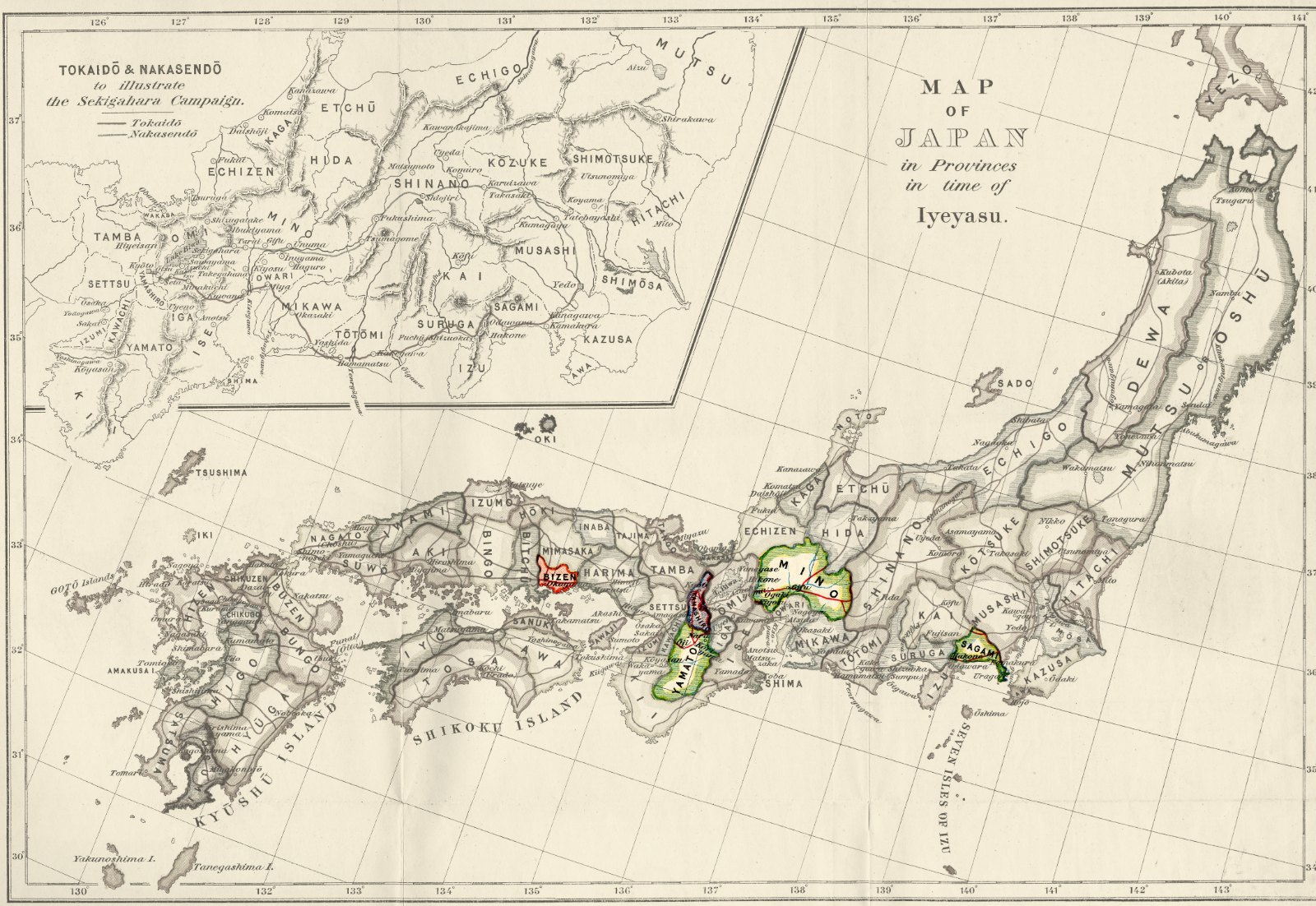
Most Europeans who come to Japanese blades learn five names before they learn to look. Yamato, Yamashiro, Bizen, Soshu, Mino. Together they are the gokaden, the five traditions of the Japanese sword, and they arrive like a map: five provinces, five ways of forging, five families of steel. Tanobe Michihiro, who wrote on fine swords for the NBTHK for a quarter of a century, calls them perhaps the fastest way into the Japanese sword. The map is useful. It is also younger than it looks.
Five places
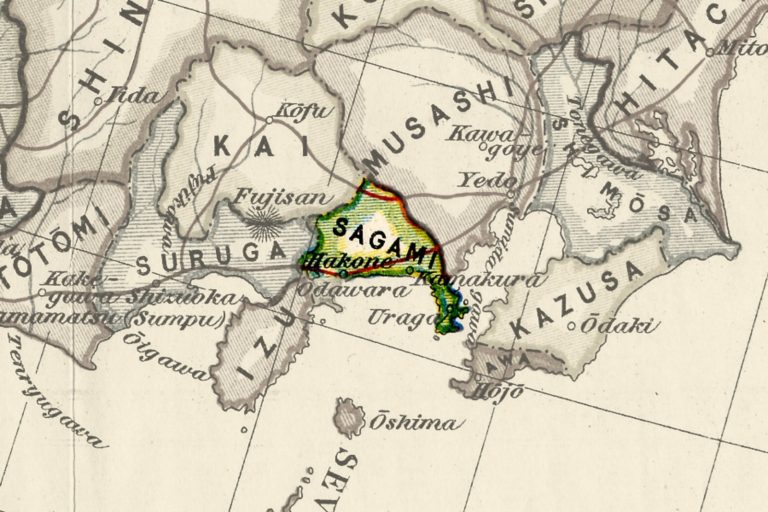
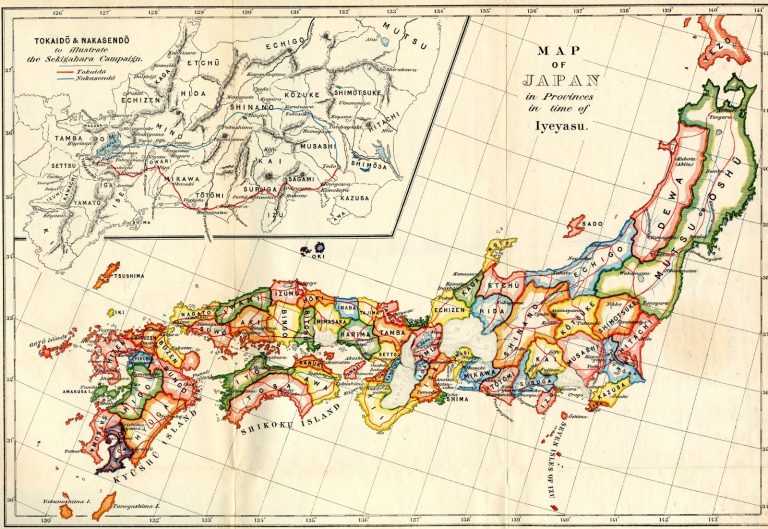
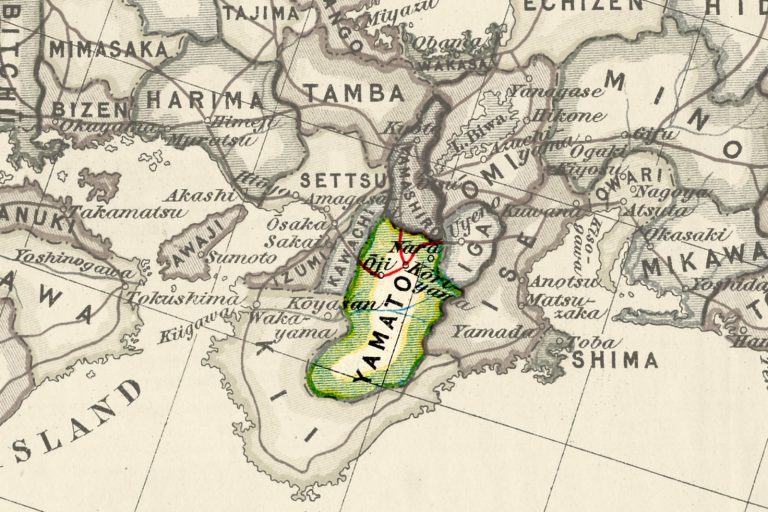
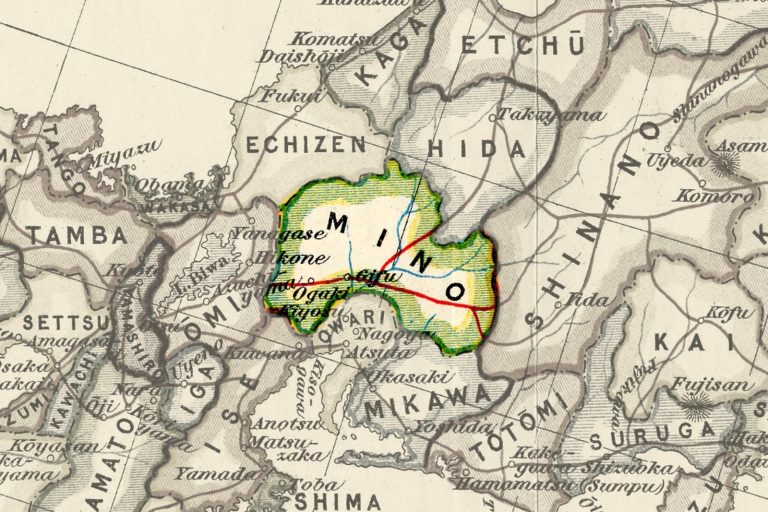
The five names stand for places. Yamato is the old province around Nara, where the early capitals stood and where great temples kept armed monks and smiths to arm them. Yamashiro is the province of Kyoto, seat of the court from 794 until 1869, whose smiths made slender, quiet blades. Bizen, in today’s Okayama, had iron, water and the roads of the Inland Sea, and the smiths of its villages along the Yoshii river left more old blades than those of any other province. Soshu is Sagami, the province of the Kamakura shogunate, where smiths around Masamune made the crystals of the hardened steel shine. Mino, with its centres at Seki and Akasaka, came last. Its early smiths joined the grain of Yamato to the temper of Soshu, and in the wars of the sixteenth century their successors worked for a market that wanted many swords quickly.
Each tradition is also written with the syllable den, transmission: Yamato-den, Yamashiro-den, Bizen-den, Soshu-den, Mino-den.
What the map does
The map tells a beginner where to look. How high the ridge line stands, and how wide the flat between ridge and back. Whether the grain of the steel, hada, is straight, fine or swirling. Whether the line of the hardened edge, hamon, the temper line of the older English books, runs straight or in waves, and whether the activity in it runs along the edge or across it. Whether the hardened steel shows single bright crystals, nie, or a soft mist, nioi. Whether a pale reflection, utsuri, stands in the steel above it. Appraisers learn the traditions before the schools, and the schools before the smiths.
Overviews commonly give the five traditions about four fifths of all old blades, koto nihonto.
When the map was drawn
Swords were sorted long before anyone spoke of five traditions. The oldest surviving sword book, a list of smiths known as the Kanchi’in-bon Mei Zukushi, rests on knowledge gathered up to the early fourteenth century and describes smiths from the Heian period onward. The surving copy from 1423 quotes a text from the year 1316; A later treatise, revised by Takeya Ri’an of Owari from a lost work of the early Muromachi period, walks through the country province by province. It begins with Yamato, then Yamashiro, Sagami, Bizen and Bitchu, passes through many further regions, and ends with Mino and Owari. Province was the first order. A sword was a thing from Bizen, Bizen-mono.
The five as a system came much later. Markus Sesko credits it to Hon’ami Koson, who lived from 1879 to 1955. Sesko also describes a manuscript dated 1610 that arranges the great smiths by the five elements: Bizen as wood, Yamashiro as fire, Kyushu as earth, Sagami as metal, Yamato as water. Mino is missing, though Mino was by then one of the largest centres of production. Sesko reads the old scheme as a memory aid and advises against taking its esoteric frame too seriously.
This series keeps the older order and begins, as the treatise does, with Yamato.
Where the ground is soft
Even inside one tradition the ground gives way. Two old texts tell how the Mino smiths began, and they differ by ninety years and by the province the first smith came from. No blade by him survives. The youngest of the five traditions has the least certain beginning.
The edges are softer still. Tanobe, in his volume on Yamashiro, counts the Enju school of Higo, far away in Kyushu, as part of the Kyoto tradition, because its blades follow the Rai school of Kyoto and its founder was born into it. In his volume on Yamato he follows the Nara smiths out into the provinces: to Satsuma, to Etchu, to Echizen and Kaga, to Bingo, to Suo, and to Mino itself. Schools that other books list as side schools, wakimono, become in his account branches of Yamato.
The collection at the edges
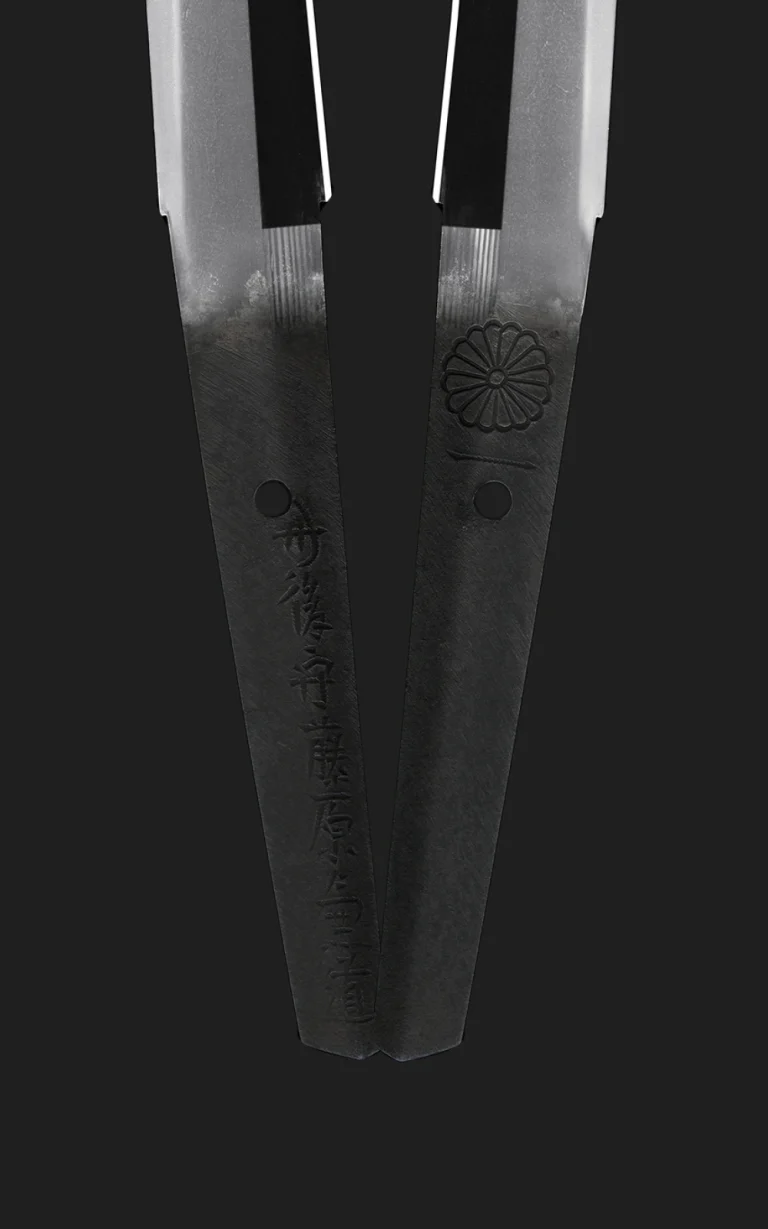
Three blades in this collection sit where the map is thin. An unsigned wakizashi is given by its paper to the Enju of Higo. A hira-zukuri wakizashi is attributed to the Fujishima of Kaga, a school that most lists treat as a side school and that Tanobe traces to Yamato. A wakizashi by Tango no Kami Kanemichi belongs to the Mishina, a family from Mino that left for Kyoto at the end of the sixteenth century. It was forged in the seventeenth, among the new swords, shinto, which the five names were never meant to sort.
The five traditions describe tendencies of place and time. They were never rules a smith had to keep. Smiths moved, married into other families and copied what sold. Some, like Shizu Kaneuji, carried one tradition into another within a single life.
Learning the map in Europe
For a European collector there is a further point. The map is how most of us learned. It came in books, translated, in a fixed order, often before we had held a single blade. In Berlin a small study group has met already many times since December 2022 at the Samurai Museum. And the author is one of the three, that initated it with great support of Peter Janssen. Its first evening put the five traditions on a single sheet: one blade for each, and a few lines on what to look for. Every later evening took one tradition and opened it again. That is how the map is learned here: together, from books and rubbings and the few blades on the table, without a teacher who learned it from his own. It works like a grammar learned before the language, and it carries the risk of any grammar: to see the rule and miss the sentence.
The fittings
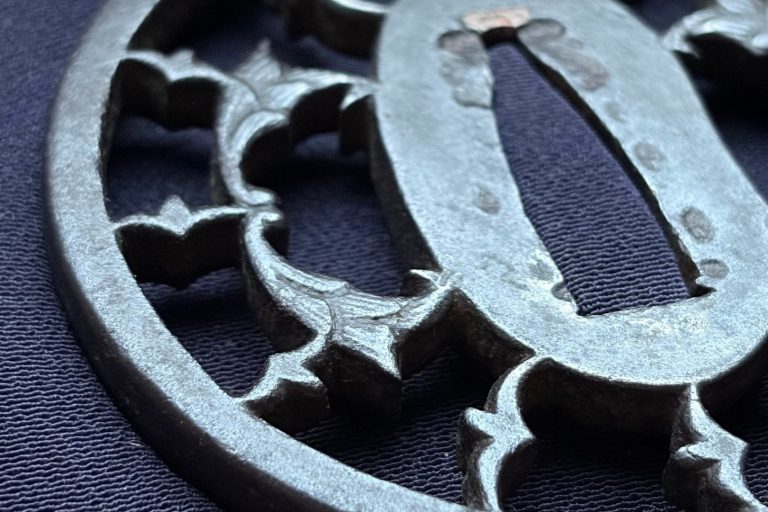
The same cities made fittings. Kyoto was home to the Goto and to the metalworkers of the capital, the Kyo-kinko. Mino gave its name to an early style of carved fittings, Mino-bori, and the first Goto master is said to have come from that province. The fittings were never sorted into five traditions. They are known by schools and families, by masters and their pupils. Read beside them, the blades show how much of the gokaden is an order laid later over a world of workshops.
This series
This series follows the five traditions one by one and ends with what they leave out. Each part starts from a place, looks at what was made there, and asks what the name adds and what it hides. Each ends with a few things to look for, the way that first evening did.
An overview of the series, with the blades of this collection set on the map, is on the page The Gokaden.
Sources
- Tanobe Michihiro, The Japanese Sword: A Journey Through the Five Traditions of Japanese Sword Making. The Yamashiro Tradition; preface by Watanabe Taeko (Kanchi’in-bon, Hiden Shō, Kaifun Ki); chapter on the Enju school, p. 202.
- Tanobe Michihiro, The Japanese Sword: … The Yamato Tradition, ch. 1, p. 12 (gokaden as the fastest way in; spread of Yamato to other provinces).
- Markus Sesko, “Thoughts on the Gokaden” (2018).
- Malcolm E. Cox, Mino To (1993); Tokuno Kazuo, Mino Tō Taikan (1975); Sugawara Hirokuni, Kotō Mei Zukushi Taizen (1792).
- Pages of the collection: Enju wakizashi, Fujishima wakizashi, Kanemichi wakizashi, the Mishina study.
The Five Traditions: all parts
Overview of the series, with the blades of the collection: The Gokaden