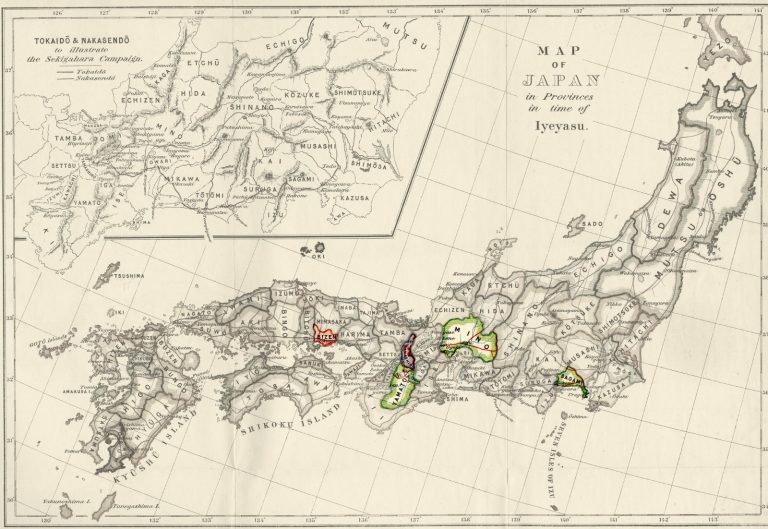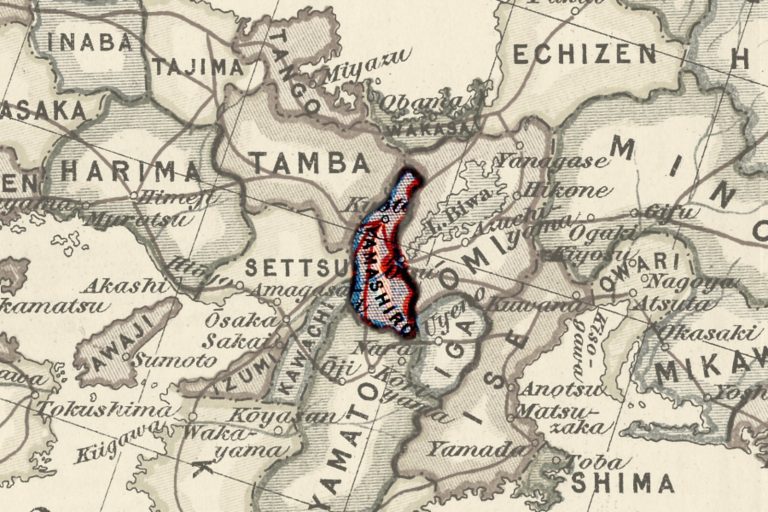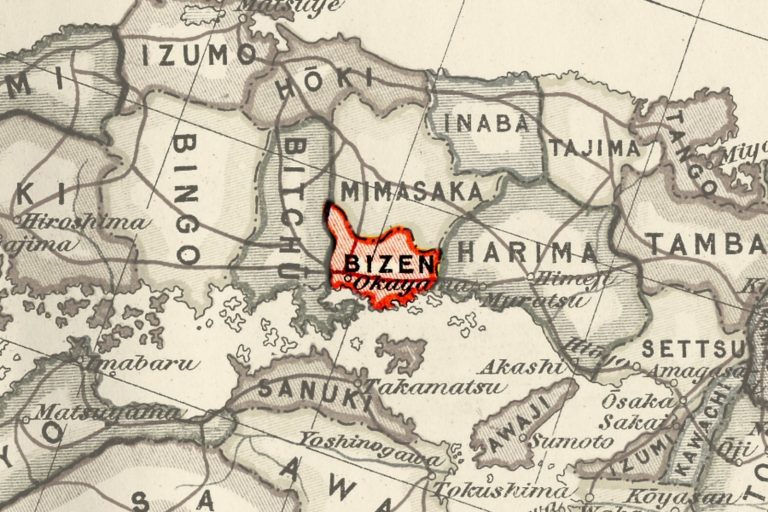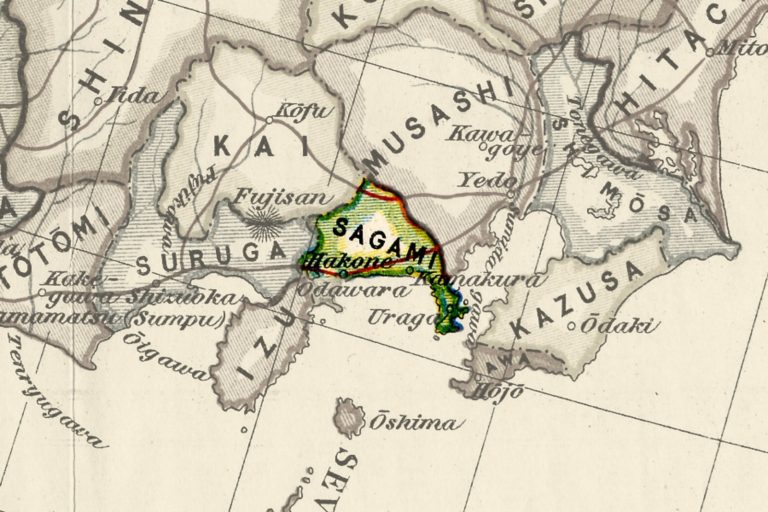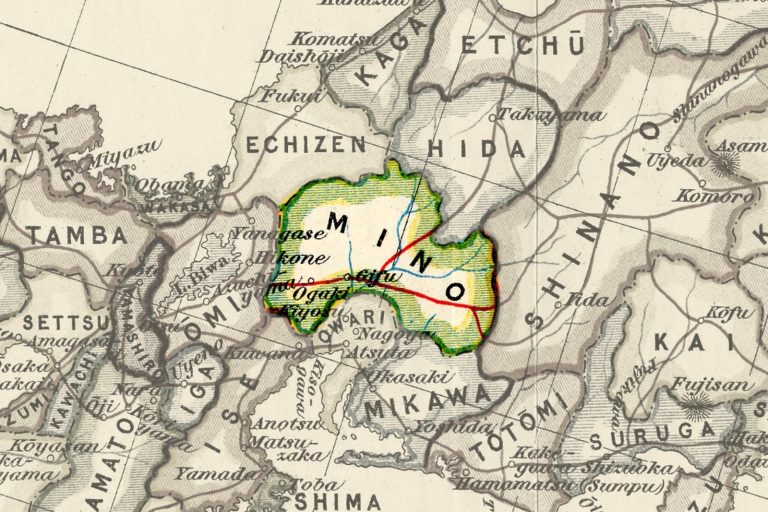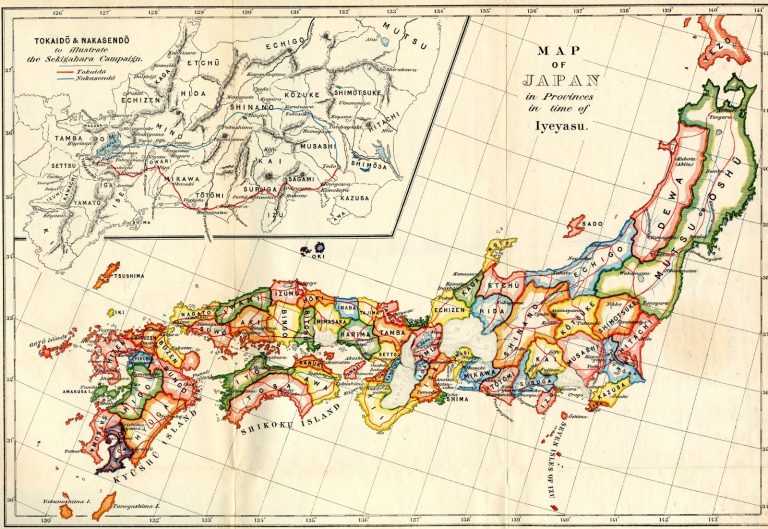
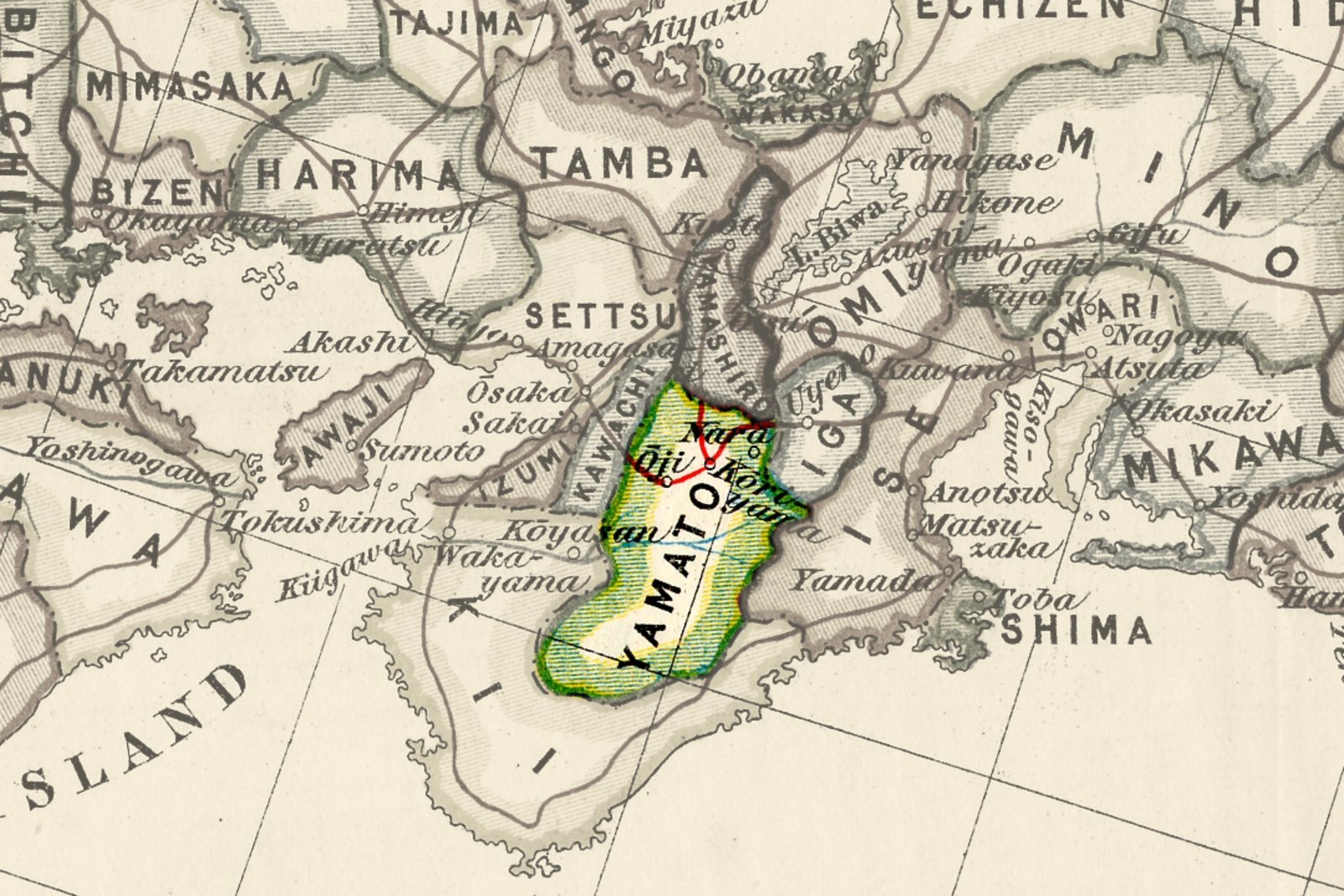
Yamato is called the temple capital. Nara was the seat of the court for most of the eighth century. The court left in 784 and settled in Kyoto ten years later, and the great temples stayed. The Kofuku-ji and the Todai-ji held estates across the province, and from the end of the tenth century they defended them with armed men: low-ranking monks and warriors under temple command. By the Kamakura period the Kofuku-ji controlled much of Yamato and kept the shogunate’s governors at a distance. Someone had to make the swords. Their work is the Yamato tradition, Yamato-den, the first of the gokaden in the old order of the sword books.
Swords for monks
That is the first thing to understand about Yamato blades. Tanobe Michihiro, in his volume on the Yamato tradition, ties their character to the people they were made for. The smiths worked for temples, and temples wanted weapons for their monks. Swords made for use, and for a patron who did not trade them, were often left unsigned. In Bizen and Kyoto, where smiths sold to a wider market, signatures were the rule.
The temples also held on to what they had. Yamato blades show little of the changing fashions of their time. Where Bizen work can be flamboyant and Kyoto work graceful, Tanobe describes Yamato as plain and sincere, and full of fine nuance. The word he uses for its spirit elsewhere, pragmatic, he puts in quotation marks himself.
Five schools in one basin
Five schools carry the name, the Yamato-Goha. Each sat in its own part of the Nara basin, and most are tied by tradition to a temple.
The Senju’in, in a valley at the foot of Mount Wakakusa, are the oldest. Their reputed founders worked at the end of the Heian period, but no signed blade by them is accepted, and the earliest signed Senju’in works Tanobe names are two tachi of the early Kamakura period in the Tokyo National Museum. The Taima worked in the west, near the Taima-dera, a temple attached to the Kofuku-ji. A sword book of 1570 already noted that the Taima smiths seldom signed. The Tegai took their name from the Tengai gate of the Todai-ji. The Hosho worked in the Takaichi district in the middle of the basin, and the Shikkake in the east.
The look of a Yamato blade
What the five share is easier to see than to say. A Yamato tachi has a high ridge line and a wide surface between ridge and back, shinogi-ji, wider in proportion to the blade than in other traditions. Tanobe reads this as an inheritance from the straight swords of the earlier period, whose ridge sat close to the edge.
The grain runs straight, masame, or it is a wood grain pulled long, nagare. The straight lines of the steel carry into the hardened edge. The temper line is mostly straight, suguha, and along it the activity follows the grain: frayed lines, hotsure; small crescents, uchinoke; double lines, nijuba; drifting streaks of crystals, sunagashi. The crystals are strong. Among the five traditions, Tanobe places Yamato second only to Soshu for the amount and prominence of its nie. In the point the temper line often runs straight off the back, yakitsume, or turns back only briefly, and it is broken up by brushed lines, hakikake.
The Hosho school shows how far a tradition can turn its own habit into a mark. Hosho blades are forged in pure masame, and very often the steel has opened along its welds. In any other blade these splits are faults. In Hosho work, Tanobe notes, they have been read as a characteristic from early on.
A blade with two faces
The Tegai school left more signed masterpieces than any other Yamato line. Its founder Kanenaga, traditionally dated to the end of the thirteenth century, has one blade designated a National Treasure and many more under the protection of the state and the NBTHK. Tanobe suggests that he worked not only for temples but also for warlords, and was freer to meet their orders.
One of his blades has a name and a story. Its temper line differed on its two sides, lively on one and calm on the other. In 1574 Hosokawa Yusai had it shortened and gave it the name Konotegashiwa. The name comes from a poem in the Man’yoshu about an evergreen in the hills of Nara. Its leaves have no front and no back, so that either side may pass for the face, and the poem likens them to flatterers. The blade passed to Yusai’s son, then to Tokugawa Ieyasu, and to the Mito branch of the Tokugawa. In the great Kanto earthquake of 1923 it was damaged by fire and lost its hardening. The two faces survive only in an old drawing.
Yamato beyond Yamato
The temples owned land far from Nara, and their smiths followed the estates. Tanobe traces Yamato schools in Satsuma, in Etchu, in Echizen and Kaga, in Bingo, in Suo, and in Mino. The Nio smiths of Suo worked in a province full of Todai-ji estates. A legend gives them their name: when the Nio hall of a local temple caught fire, the smith Kiyotsuna cut through iron chains with his sword to save the guardian statue. Tanobe finds the legend the more romantic explanation and a place name, Nibo, the more likely one.
At the edge of Yamato itself there was a smith who did not fit. Ryumon Nobuyoshi, working in the Yoshino district around 1290, made blades with a lively, clove-shaped temper and a reflection in the steel that belong to Bizen. One of his tachi once bore the date 1298; it seems to have been removed, perhaps to make the blade look older, and for a time the blade was given to a Bizen smith of the same name. Tanobe thinks Nobuyoshi either spent time in Bizen or came from there. The tradition had a stranger in it from the start.
In the collection
The collection has no blade from the five Yamato schools. It has one that Tanobe’s map sends back to them: a hira-zukuri wakizashi attributed to the Fujishima of Kaga, without paper. Most lists file the Fujishima among the side schools. Tanobe places their origin in Yamato, with the Shikkake. The last part of this series looks at his reasons.
Of fittings, Yamato offers little. The Nara school of sword fittings shares the name of the old capital, but Nara is here the family name of its masters, who worked in Edo. The temples of Nara armed their monks with blades and left little ornament.
What to look for
- A high ridge line and a wide flat between ridge and back.
- Straight grain, masame, or grain pulled long, nagare, running into the edge.
- A straight temper line with frayed lines, double lines and streaks of crystals that follow the grain.
- Strong crystals, nie, in the edge and in the steel above it.
- A point whose temper runs off the back or turns back briefly, with brushed lines.
Sources
- Tanobe Michihiro, The Japanese Sword: A Journey Through the Five Traditions of Japanese Sword Making. The Yamato Tradition: ch. 1 to 4 (origins, character, common features), pp. 12–16; Senju’in and Ryumon Nobuyoshi, pp. 17–24; Taima, pp. 28–29; Tegai and Konotegashiwa, pp. 38–41; Hosho, pp. 58–60; Fujishima, pp. 122–125; Nio, p. 144.
- Collection page: hira-zukuri wakizashi, attributed to Fujishima.
The Five Traditions: all parts
Overview of the series, with the blades of the collection: The Gokaden