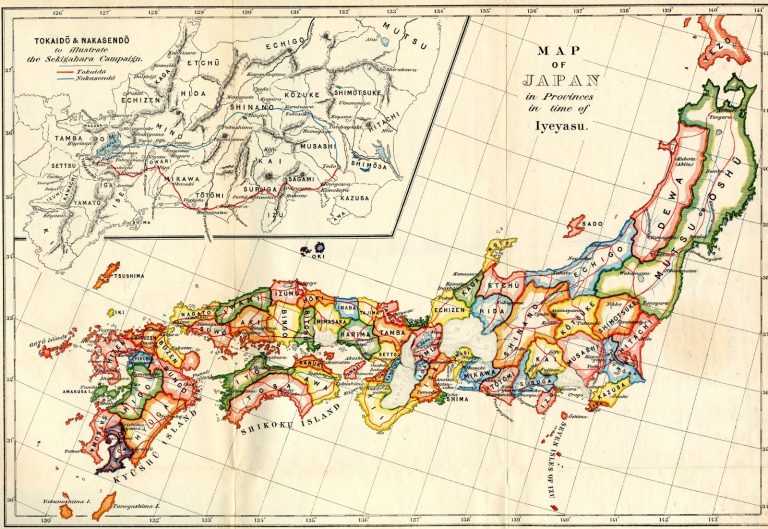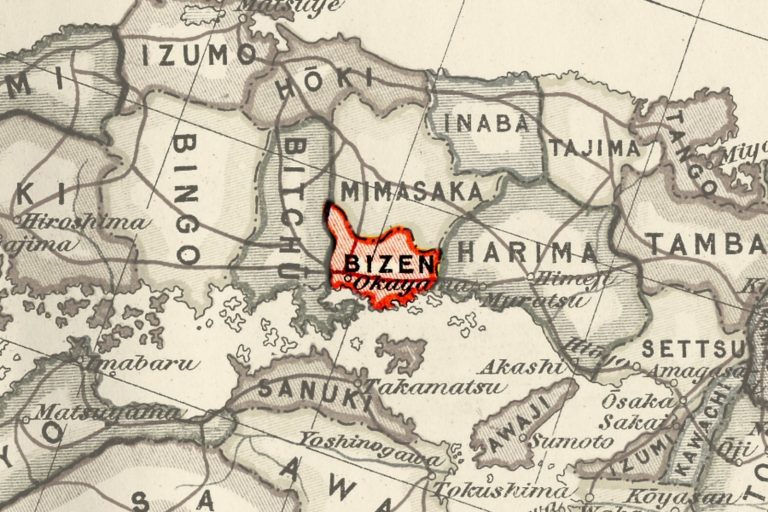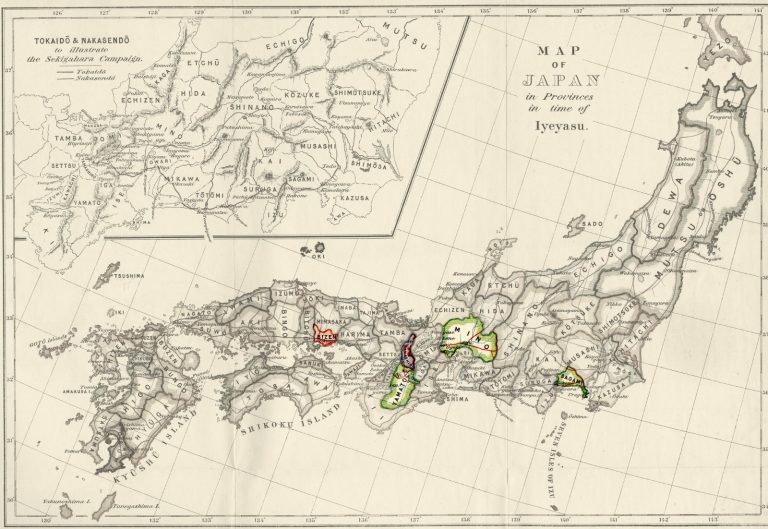
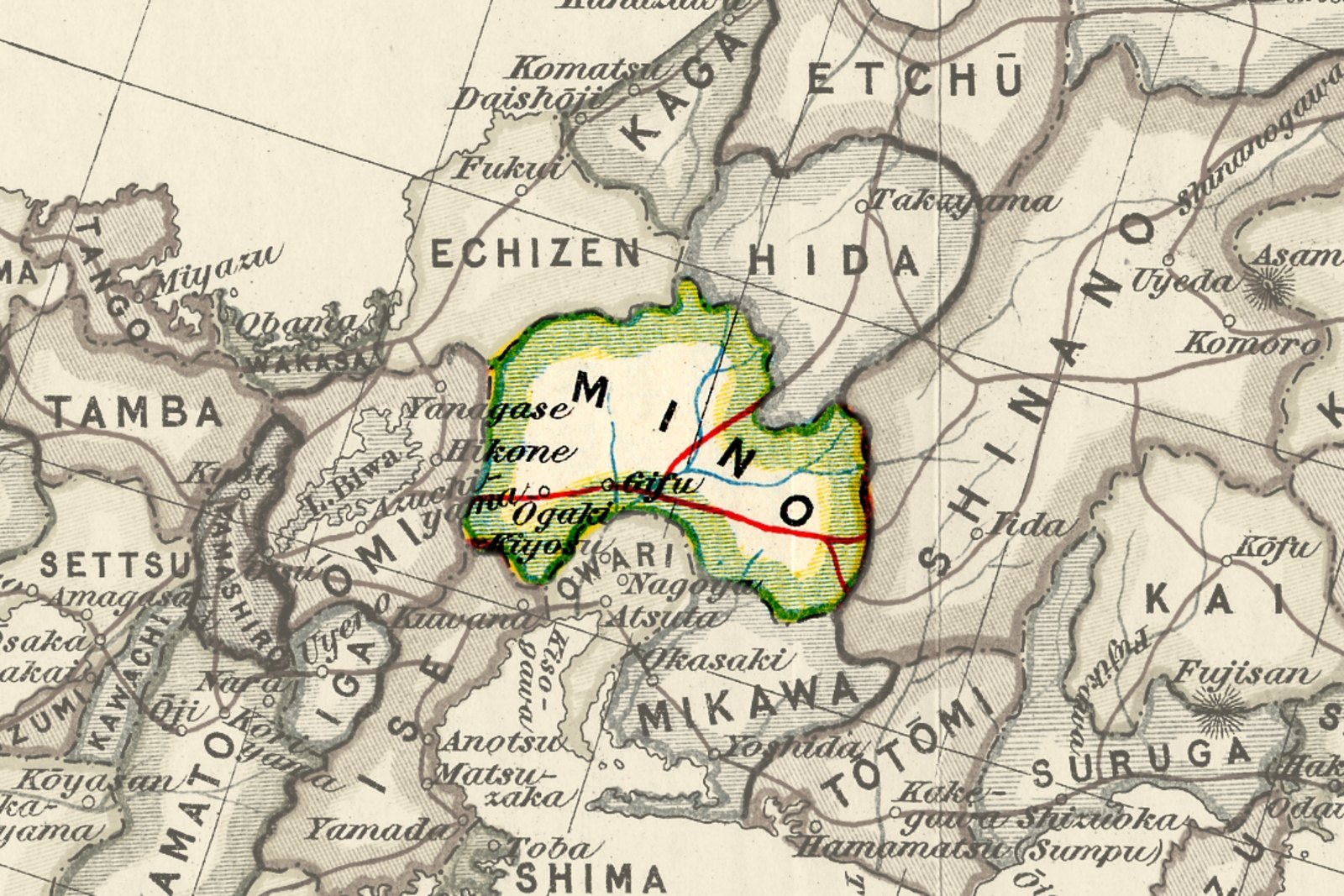
Mino is the last of the five traditions. Its centres were Seki, a town on the Nagara river in today’s Gifu, and Akasaka to the west. In the wars of the fifteenth and sixteenth centuries Mino supplied swords to an age that needed them in great number, and only Bizen has more recorded smiths. Its blades were made to be used, and many of them were.
Two beginnings
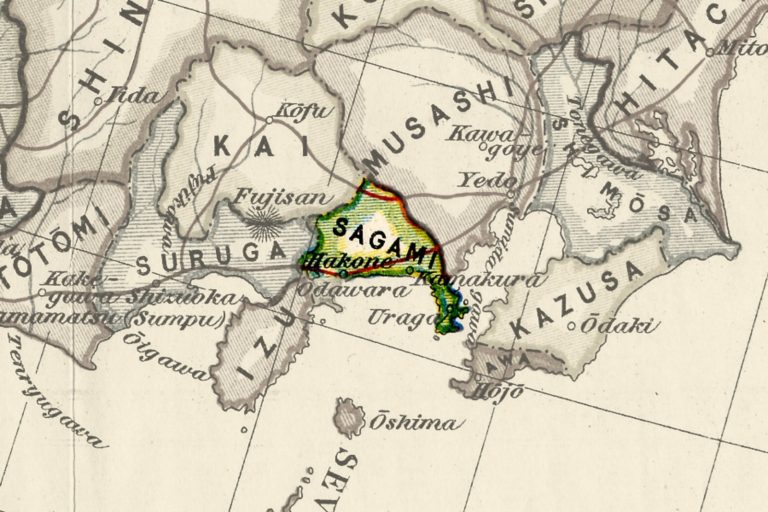
How Mino-den began is told twice. A sword book printed in 1792 has the first smith, Motoshige, arrive at Seki in 1229, from Hoki, with roots among the Senju’in smiths of Yamato. An account written down in 1450 by the Sanami, one of the lines of Seki smiths, has Motoshige come around 1319, and from Kyushu. No blade by him survives. Of Kinju, the next great name, there are five signed blades and no date. What fixes him in time are rubbings of lost blades, dated 1346, 1363 and 1369, and the dates of a son.
Neither account wins here. Both are told by people with families and schools to honour, and both were written long after the fact. That the youngest tradition has the least certain start is worth keeping in mind for all the others.
Yamato in Mino
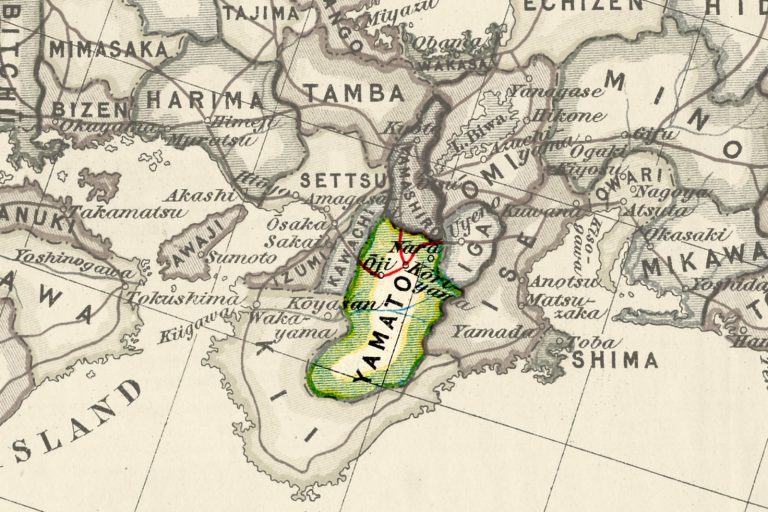
Tanobe Michihiro, following the smiths of Nara out into the provinces, ends his list with Mino: the Shizu and the Akasaka-Senju’in carried the Yamato tradition there. The best known of the Shizu, Kaneuji, is by tradition a smith from Yamato and a pupil of Masamune. In his blades the grain of Yamato meets the temper of Soshu. The study group in Berlin used one of his blades on its first evening as the example for Mino: grain in the Yamato manner with straight lines, a temper wild and in strong crystals, Soshu in all but name.
The marks of Mino
Later Mino work has its own marks. Straight grain, masame, shows in the ridge area even where the rest of the blade has a wood grain. The steel often carries a pale, misty reflection, shirake-utsuri, that drifts like fog and does not answer the temper line as the reflection in old Bizen blades does. The temper line rises in rounded and pointed waves, gunome and togari-gunome. In the Kanemoto line it grew into the regular pattern called three cedars, sanbonsugi. In the point the temper often swells like the head of a Jizo statue, jizo-boshi. Kanemoto and Kanesada are the best-known names of this later period.
Mino smiths also worked in other traditions’ styles when the market asked. There are Mino blades in the manner of Bizen, of Soshu with hitatsura, and of Yamato with a straight temper. The tradition was practical in this sense too.
A town of kane
Many Seki smiths began their names with the same sound, kane, most often written 兼. A tanto in this collection is signed Kanetaka, written with another character for kane, 金, metal. The Kanetaka smiths belonged to the Sanami, the line that wrote down the later of the two founding stories. The Gifu Prefectural Museum traces the Sanami back to the Shizu smiths of Naoe, the line of Kaneuji. The tanto sits today in an Edo-period mounting in the Higo manner.
Leaving Seki
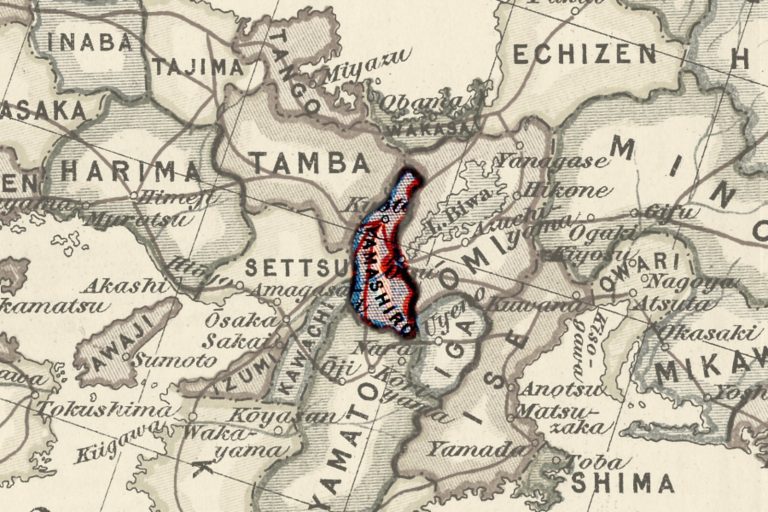
In the late sixteenth century the guild that had held the Seki smiths together lost its hold, and many left for new castle towns. One family went to Kyoto. Its founder, Kanemichi of Seki, moved there with his sons at the end of the sixteenth century. One son, Iga no Kami Kinmichi, received with his title the permission to cut the imperial chrysanthemum on his tangs. Another, Tanba no Kami Yoshimichi, is remembered for the temper pattern called sudareba, like a bamboo blind. Three blades of this family, the Mishina, are in this collection: a tanto attributed to Iga no Kami Kinmichi, a wakizashi by Tango no Kami Kanemichi, a son of Yoshimichi who moved on to Osaka, with the chrysanthemum on its tang, and a wakizashi by Sagami no Kami Kunimasa of Osaka. They are Mino blades by descent and shinto blades by date, and the five traditions were never meant to sort them.
Fittings from Mino
Mino gave its name to an early style of carved fittings, Mino-bori. Tradition has the first Goto master, Yujo, come from Mino, and the Goto, the most formal of all fitting schools, are often traced back to this style. If it holds, the practical tradition of blades and the most courtly tradition of fittings have a root in the same province.
What to look for
- Straight grain, masame, in the ridge area, even where the rest of the blade shows a wood grain.
- A pale, misty reflection in the steel, shirake-utsuri.
- A temper line of rounded and pointed waves, gunome and togari-gunome; in the Kanemoto line the three cedars, sanbonsugi.
- A temper in the point that swells like a Jizo head, jizo-boshi.
- Signatures that begin with kane.
Sources
- Tanobe Michihiro, The Japanese Sword: … The Yamato Tradition, ch. 1 (Shizu and Akasaka-Senju’in), p. 12.
- Mabuchi Takashi, “Mino no tōken”, Gifu Prefectural Museum, Research Report 1 (1980).
- Malcolm E. Cox, Mino To (1993) and Supplement (1994); Tokuno Kazuo, Mino Tō Taikan (1975); Sugawara Hirokuni, Kotō Mei Zukushi Taizen (1792).
- Markus Sesko, on Tango no Kami Kanemichi and on the chrysanthemum of the Kinmichi line, as cited on the Kanemichi page.
- Wikipedia (en), “Japanese sword” (recorded smiths by tradition).
- Collection pages: Kanetaka tanto; Kanemichi wakizashi; the Mishina study.
The Five Traditions: all parts
Overview of the series, with the blades of the collection: The Gokaden