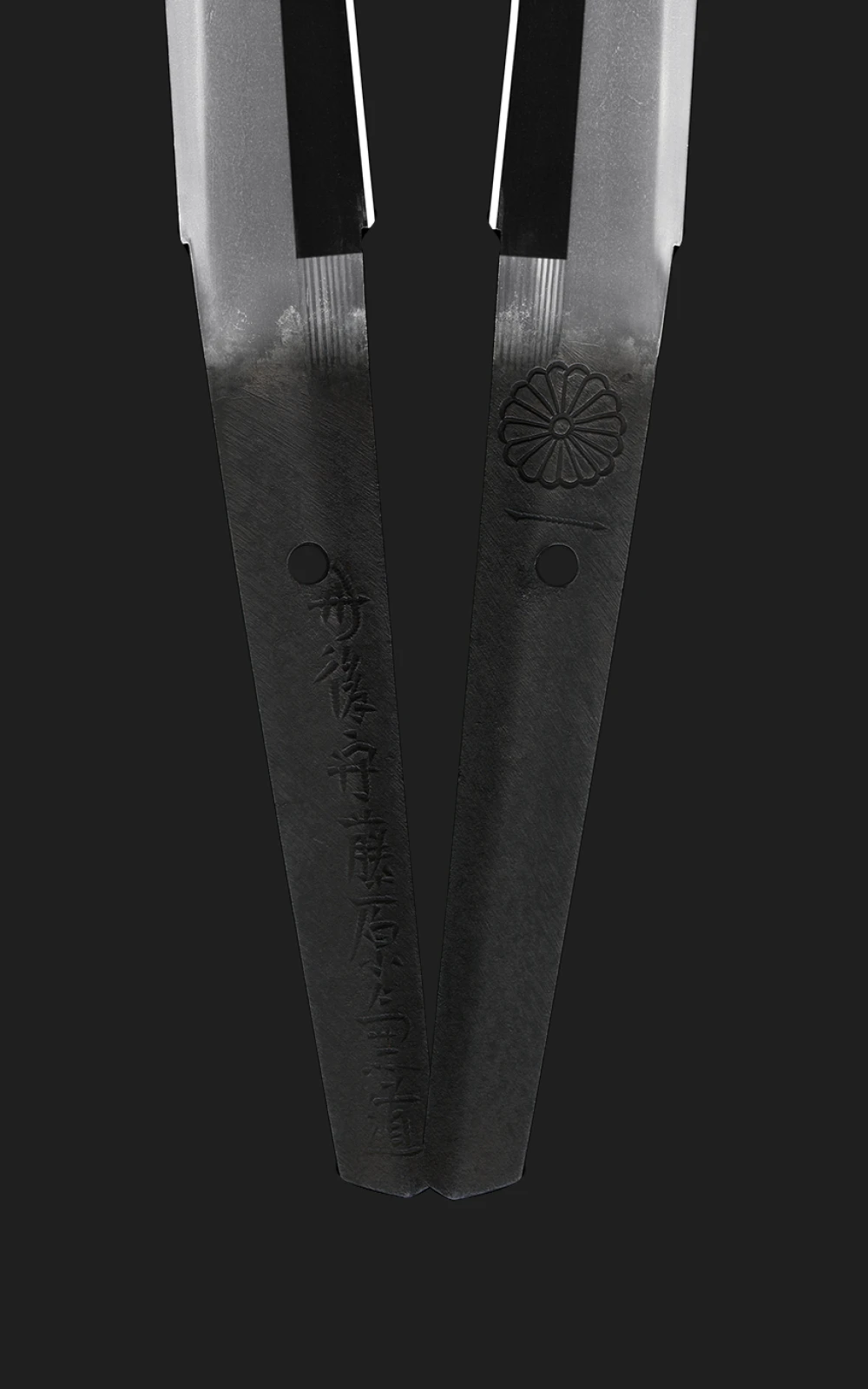
For most of the Edo period, a swordsmith who wanted a title such as Izumi no Kami or Sagami no Kami sent his application to one house in Kyoto. The house belonged to a family of smiths from Mino, the Mishina. How did one family come to stand between the forges of Japan and the imperial court?
From Seki to Kyoto
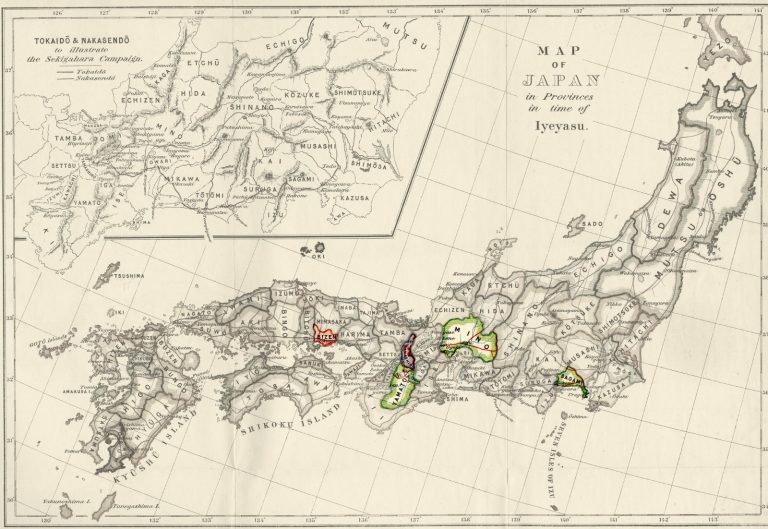
The family begins with Kanemichi, a smith of Seki in Mino. Mishina is said to have been his family name. He moved with his sons to Kyoto, to Nishinotoin Ebisugawa, and founded a large school there (Nagoya Touken Museum). The sons took titles of their own: Iga no Kami Kinmichi, Izumi no Kami Kinmichi, Tanba no Kami Yoshimichi and Etchu no Kami Masatoshi. The museum calls the youngest, Masatoshi, the most accomplished of the four.
With Omi no Kami Hisamichi they are usually counted as the Kyo-Gokaji, the five smiths of Kyoto. The museum is careful here. The lists in the books differ, and only Iga no Kami Kinmichi and Omi no Kami Hisamichi appear in every one it checked.
An office for titles
The first Iga no Kami Kinmichi, who died in 1629, forged a thousand tachi for Tokugawa Ieyasu before the battle of Sekigahara. The court then gave him the title Nihon kaji sosho, which Markus Sesko renders as master swordsmith of Japan, together with the right to cut the imperial chrysanthemum on his tangs. Sesko reads the title as a homage to an older one, granted by Emperor Gotoba to Bizen Nobufusa.
The title was not only an honour. It came with a function. A smith who wanted an honorary title sent an application to the office of the Kinmichi line and paid a fee. The office collected and sorted the applications and passed them on to the court, where they went through several hands before approval. The Kinmichi line acted, in Sesko’s words, as the official liaison at court for the honorary titles of all swordsmiths. It was only the second generation that signed the title on its tangs; the third changed its characters.
The Nagoya Touken Museum tells the same story in another tone. From the second generation on, it says, a smith who wanted a court title had to become a pupil of Iga no Kami Kinmichi. Sesko speaks of an application and a fee, the museum of an apprenticeship. Both describe the same position: whoever wanted a title passed through this house.
Kyoto and Osaka
The family did not stay in one city. Tango no Kami Kanemichi, the second son of Tanba no Kami Yoshimichi of Kyoto, moved to Osaka in the Kan’ei era (Sesko 2022). The line of Tanba no Kami Yoshimichi continued there, known for the sudareba, a hamon like a bamboo blind. Its second master taught Sagami no Kami Kunimasa, who worked in Osaka in the Kanbun era and later in Iyo, and whom the wazamono lists rank among the swordsmiths whose blades cut well.
What three blades can show
This collection holds a blade from each of these places: a tanto attributed to the first Kinmichi, a wakizashi by Tango no Kami Kanemichi with the chrysanthemum and the character ichi on its tang, and a wakizashi by Sagami no Kami Kunimasa. Each title on these tangs belongs to the system that the Kinmichi office administered. The blades themselves cannot show how each title was obtained.
What they can show is range. A short tanto with a straight hamon that opens into one wave, a wakizashi with sudareba and the round Mishina boshi, a blade with a small irregular gunome. One family, three hands, two cities. Whether a common habit runs through them is a question for the blades in hand, not for the books.
The three blades are set side by side on the study page: Three Blades of the Mishina.
Sources
- Markus Sesko, How honorary titles were conferred (2013). markussesko.com
- Markus Sesko, Not your usual hataraki (2022). markussesko.com
- Nagoya Touken Museum, The Mishina school (Japanese). meihaku.jp
- List of Wazamono. en.wikipedia.org
- NBTHK papers of the Kanemichi and Kunimasa blades in this collection.